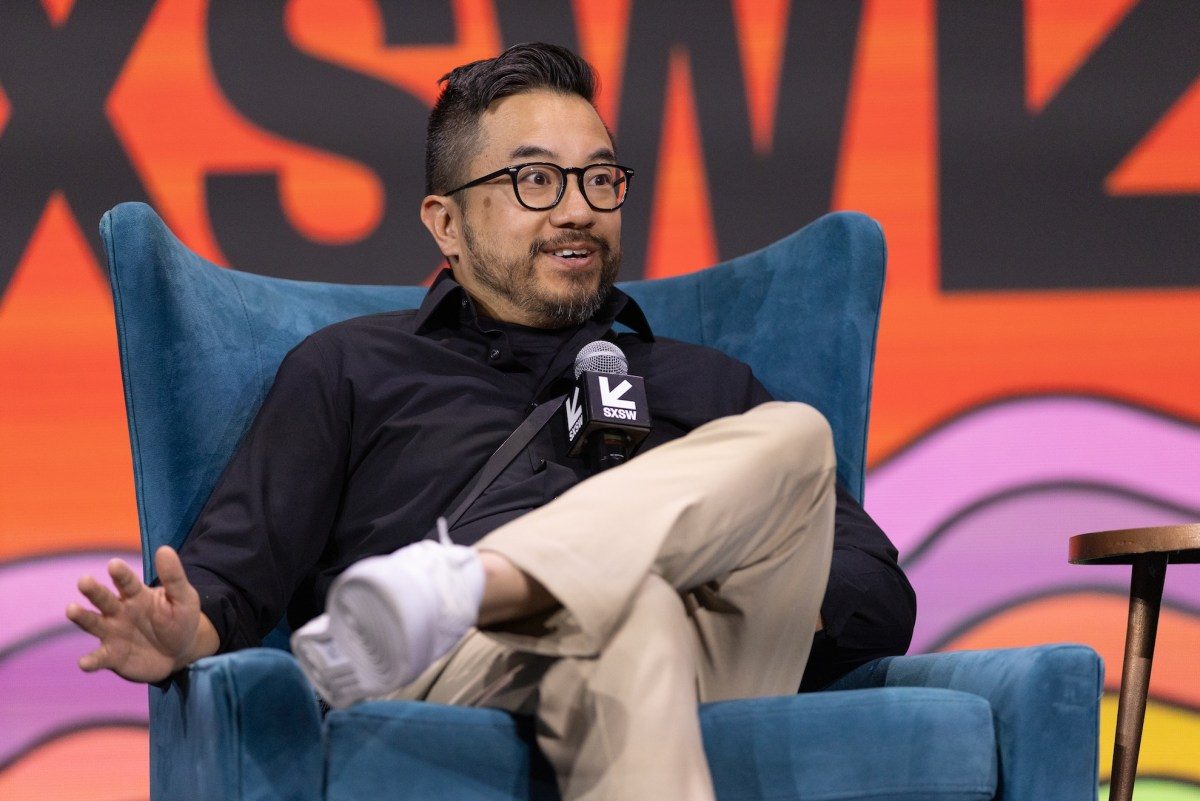
Y Combinator CEO Garry Tan spends between $100,000 and $200,000 annually exclusively on tokens for his personal and professional AI agents, as he stated in a podcast episode of The Builders with Walter Isaacson.
While enterprise software budgets traditionally prioritize predictable SaaS subscriptions, intense autonomous agent usage introduces a volatile cost structure driven entirely to context consumption. Intensive operation of autonomous AI agents faces prohibitive token expenses, turning deep personal automation into an elite privilege rather than a standard corporate tool. The underlying question is whether high-frequency autonomous agents can justify these massive operational costs and escape their current status as an isolated technology playground.
The Economics of Full-Context Agents
Tan explained that his agent infrastructure does not merely handle basic prompt-and-response tasks; it functions across his entire operational and private history.
“It’s read all of my email and all of my Dropbox. It’s read, like, all of my Apple Notes, even my therapy notes going back 20 years,” Tan said, detailing how deep contextual integration drives his token consumption.
Processing two decades of personal notes alongside active email and cloud storage requires massive, recurring compute loads. Beyond personal tasks, Tan has freely shared his set of 23 Claude Code skills, called gstack, on GitHub to illustrate what autonomous workflows require.
At the institutional level, Y Combinator deploys an internal agent named Stray Light. According to Tan, Stray Light has a personality and a company brain holding the total context of every founder Y Combinator has ever backed, every incoming email, and all historical applications. Rebuilding operational workflows around such vast memory banks demonstrates why token expenditure escalates rapidly when systems ingest complete organizational context.
Architectural Shift and Market Barriers
One counterargument suggests that spending hundreds of thousands of dollars on tokens is simply an extreme outlier for tech executives and does not reflect practical enterprise budgeting. However, Tan, an early OpenClaw adopter who is now a power user, noted that treating AI agents like traditional software is an architectural error. Users focused strictly on repeatability and safety compromise the human-like capabilities of autonomous agents.
“It’s too expensive right now,” Tan acknowledged, pointing out that current computation expenses make such deep personal automation an elite privilege that not everyone can afford.
Tan stated that personal AI agents will eventually achieve mainstream adoption only if baseline computation expenses fall. When evaluating the alternative of free agents provided by Big Tech, Tan pointed out that large corporations control underlying algorithms, arguing instead for independent personal systems that users program and control themselves. Until infrastructure costs drop, maintaining an autonomous agent with complete personal memory remains constrained by an annual operational bill reaching $200,000.
What changed
Executive software used to mean predictable SaaS subscriptions for a couple of hundred dollars a month, but now deep personal automation drives Y Combinator head Garry Tan into spending up to $200,000 annually purely on tokens for AI agents. Running a true corporate brain demands feeding autonomous systems two decades of personal notes, emails, and vast historical archives where every interaction relentlessly burns compute. Publishing a set of 23 skills for Claude Code called gstack makes it clear why handling massive context instantly turns autonomous workflows into an elite privilege.