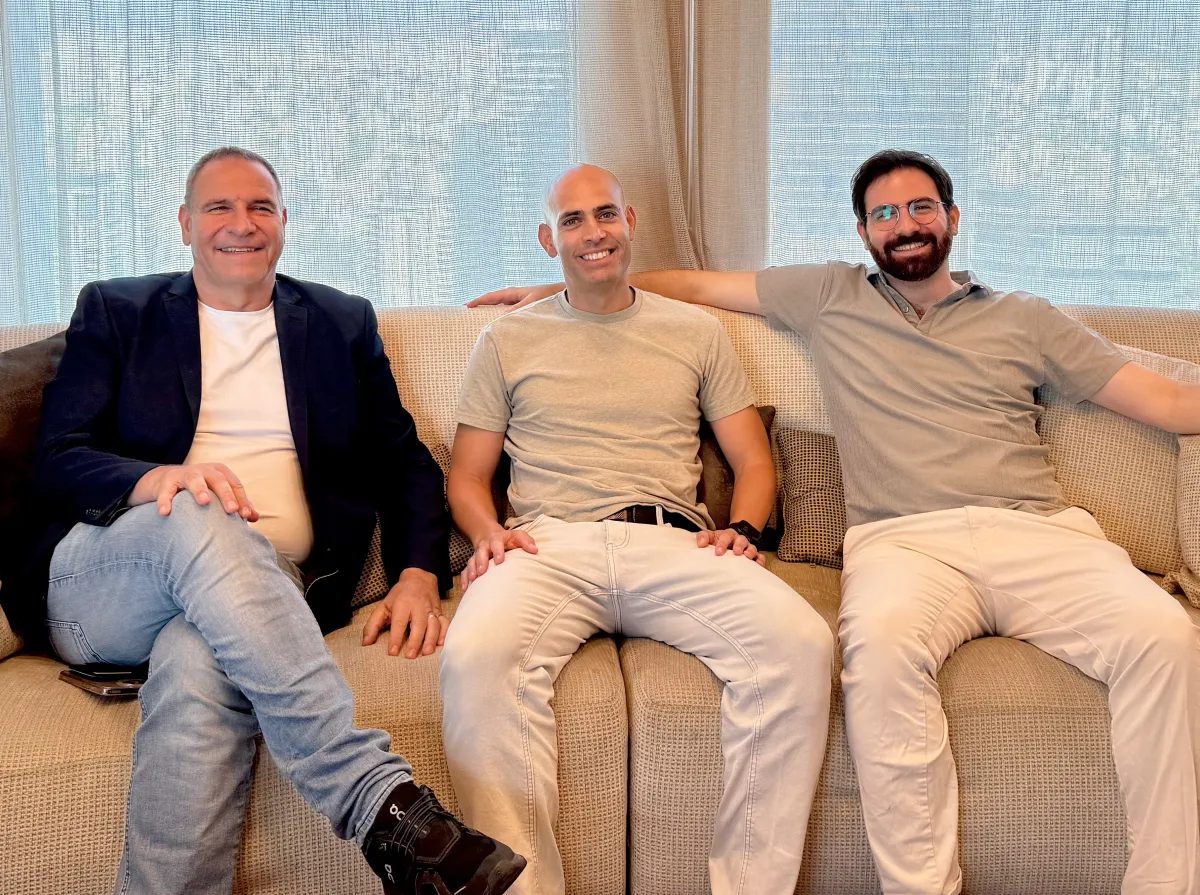
Israeli-American startup 42AI states it is developing a behavioral world model, emerging from stealth with $62.5 million in seed funding. The enterprise is deploying its predictive setup across an initial cohort of financial brokerages to anticipate how individual traders act during volatile market swings. According to the company, the capital injection accumulated across a three-year period, originating from the firm's founders alongside Infinity Group rather than external institutional rounds.
Traditional financial forecasting models extrapolate forward from historical transactional data. As 42AI operates on this alternative hypothesis, past trades fail to capture how human operators behave when stress breaks conventional market patterns. Behavioral world models shift predictive risk calculations from historic records to structured psychological baselines. The core operational question for brokerage balance sheets remains straightforward: can behavioral modeling reliably price operational trading risk before external market shocks trigger margin failures?
Transforming Indirect Signals into Risk Probabilities
To construct its predictive architecture, 42AI avoids relying solely on standard trading logs. Instead, the system monitors how an individual responds to seemingly unconnected events, tracking steps like completing Know Your Customer procedures, account onboarding, interactions with customer support, and direct cash transfers. As 42AI co-founder and CTO Ehud Ezra explained, initial communications provide vital behavioral markers, including voice tone, customer sentiment, and contact frequency during onboarding.
“Behavior is not deterministic; it’s constantly probabilistic,” 42AI’s CEO and co-founder Amit Gal-Or told TechCrunch.
The venture translates these qualitative interactions into mathematical representations of individual traits. These data points flow into a transformer-based world model designed to project decision distributions under shifting market environments. A separate language model operates alongside the core architecture to supply natural-language rationales explaining each generated prediction. The foundation of this system took three years to assemble, integrating insights from psychological literature, neuroscience, genetics, and contributions from external domain specialists, including 2011 Nobel Chemistry laureate Dan Shechtman. According to the startup, aggregated customer records have expanded to incorporate nearly 30 million individuals.
How do these psychological distributions translate into actual balance-sheet metrics for enterprise brokerages?
Ten large brokerages currently utilize 42AI's software to supervise margin requirements, manage day-to-day liquidity reserves, and execute hedging exposure. The corporate deployment relies on existing records rather than personally identifiable information. In live operations, as Amit Gal-Or stated, the architecture registers a 98% accuracy level in trade forecasting, though he clarified that this figure reflects whether aggregated order volume falls inside an expected band rather than forecasting individual tickets. In technical evaluations, the software delivers an F1 score between 0.8 and 0.85 when projecting order flow direction and trading size.
Commercial Returns and Situational Limits
Brokerages compensate 42AI through either a flat fee structure or a performance-tied cut of generated value. On the vendor side, Amit Gal-Or confirmed the startup produces annual revenue exceeding seven figures. On the client side, one participating brokerage generated roughly $30 million in added value through dynamic hedging adjustments orchestrated via the platform. As Ehud Ezra noted, the mathematical simulations enforce strict personality bounds, ensuring risk-averse personas do not arbitrarily trigger aggressive risk-seeking parameters during simulations.
“A week from now, you might be a different person, but your tendencies will always play out in certain areas to a probability or distribution,” his co-founder and CTO Ehud Ezra added.
Despite capital commitments, the system faces structural analytical boundaries. As Amit Gal-Or acknowledged, an isolated algorithm hits a natural ceiling because it cannot observe the full scope of an individual's lived experience. Ehud Ezra confirmed that predictive accuracy degrades whenever the model lacks real-time situational context, such as an off-platform conversation where a trader executes orders based on unexpected advice from a colleague or personal friend.
While 42AI presents a computational framework designed to forecast human actions across unforeseen crises, the platform's operational precision remains bound to corporate data siloes. The software can calculate behavioral probabilities from internal support calls and onboarding logs, but human execution breaks down the moment external social inputs drive trading decisions outside the view of institutional monitoring systems.
Why it matters
By feeding non-trading reactions into a Transformer architecture, the platform tries to forecast panic before market orders drop, while ten partner brokerages now tie their dynamic hedging directly to these behavioral simulations. Can the architecture hold its 98% accuracy when a genuine systemic panic shatters the psychological baselines mapped across those thirty million profiles?