Adobe is moving past cloud-only generation toward local execution. As Adobe creativity head David Wadhwani stated, the company’s creative agent will eventually surface "in virtually everything we develop." At the Max conference in Miami, Florida, Adobe previewed local Model Context Protocol integrations for Creative Cloud tools, opening native desktop workflows to external agentic systems.
The integrations enable external AI agents from providers like OpenAI, Google, and Anthropic to operate locally within Photoshop, Illustrator, Premiere, and After Effects. Unlike browser-based wrappers, these agents can execute direct modifications to native project files stored on a local machine.
All structural elements—layers, vectors, bins, and sequences—remain fully editable, allowing human operators to take over and manually refine the output at any stage. Furthermore, agents connected to other MCP-capable utilities can orchestrate multi-app workflows. For instance, an agent can pull reference documents from Google Docs, assemble a project layout inside Adobe desktop tools, and distribute the final assets to stakeholders via Slack.
External AI agents from providers like OpenAI, Google, and Anthropic can work locally in Photoshop, Illustrator, Premiere, and After Effects.
Background Workflows and Infrastructure Strategy
Beyond third-party connectivity, Adobe is scaling its own native automation infrastructure. "Always-on" agents were also previewed at the Max event, designed to execute recurring tasks continuously in the background while human operators focus elsewhere.
In operational terms, this shifts low-value asset management to autonomous routines. Organizations can assign an agent to ingest incoming raw files, run continuous quality checks, or format assets for distribution, leaving staff to review the execution plan and approve the final output. For instance, an agent could ingest a batch of raw product photographs, convert them into promotional graphics tailored for multiple social channels, and stage them in a dashboard for daily review.
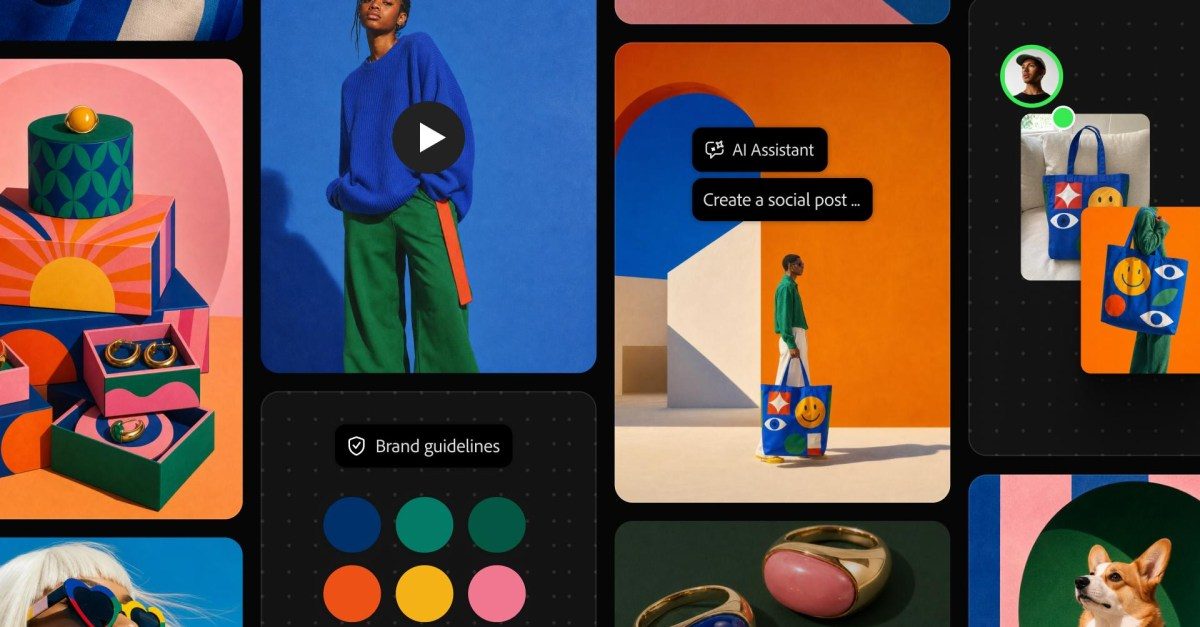
To govern this autonomy, Plan Mode inside the Firefly AI Assistant beta enables users to inspect, modify, and authorize an agent’s execution path prior to execution. The updated assistant also incorporates a Model Selector for routing tasks to specific foundational models or letting the system auto-select based on project requirements, alongside tighter integration with Firefly Boards. Operators can configure persistent brand parameters—such as preferred color profiles, style guidelines, and product specifications—to enforce consistency across all projects. Since its initial rollout earlier this year, the underlying creative agent framework has expanded across Premiere, Photoshop, Illustrator, InDesign, After Effects, and Frame.io, with ongoing deployment into mobile environments like the Premiere mobile editing app.
The Implementation Timeline and Economic Reality
For enterprise buyers evaluating operational expenditures, the transition timeline demands caution. Creative Cloud local MCP integrations are not commercially available; according to Adobe, a private beta will launch in early 2027. Similarly, the company has not committed to a deployment date for "always-on" background agents, noting only that they will arrive via the Firefly AI Assistant first.
This horizon means corporate creative budgets and agency spending will remain insulated from immediate structural disruption. Waiting until 2027 for native desktop agent integration implies that businesses cannot immediately restructure internal design teams or eliminate third-party outsourcing costs today. However, the architectural foundation demonstrated at Max signals that software vendors are laying the groundwork for autonomous asset production, shifting the long-term calculus of headcount and software utility.
What changed
Creative AI from Adobe used to live strictly in the cloud and return flat pixels, but now outside models are being let directly into local Photoshop and After Effects project files with all layers and timelines intact. Using the Model Context Protocol, systems from OpenAI, Google, and Anthropic bypass browser wrappers to manipulate native assets right on client desktop machines. Yet all this promised automation for background workflows and Slack routing will not hit production quickly. Can enterprise teams afford to wait until the closed beta in early 2027 while keeping their current agency and design operations on hold?