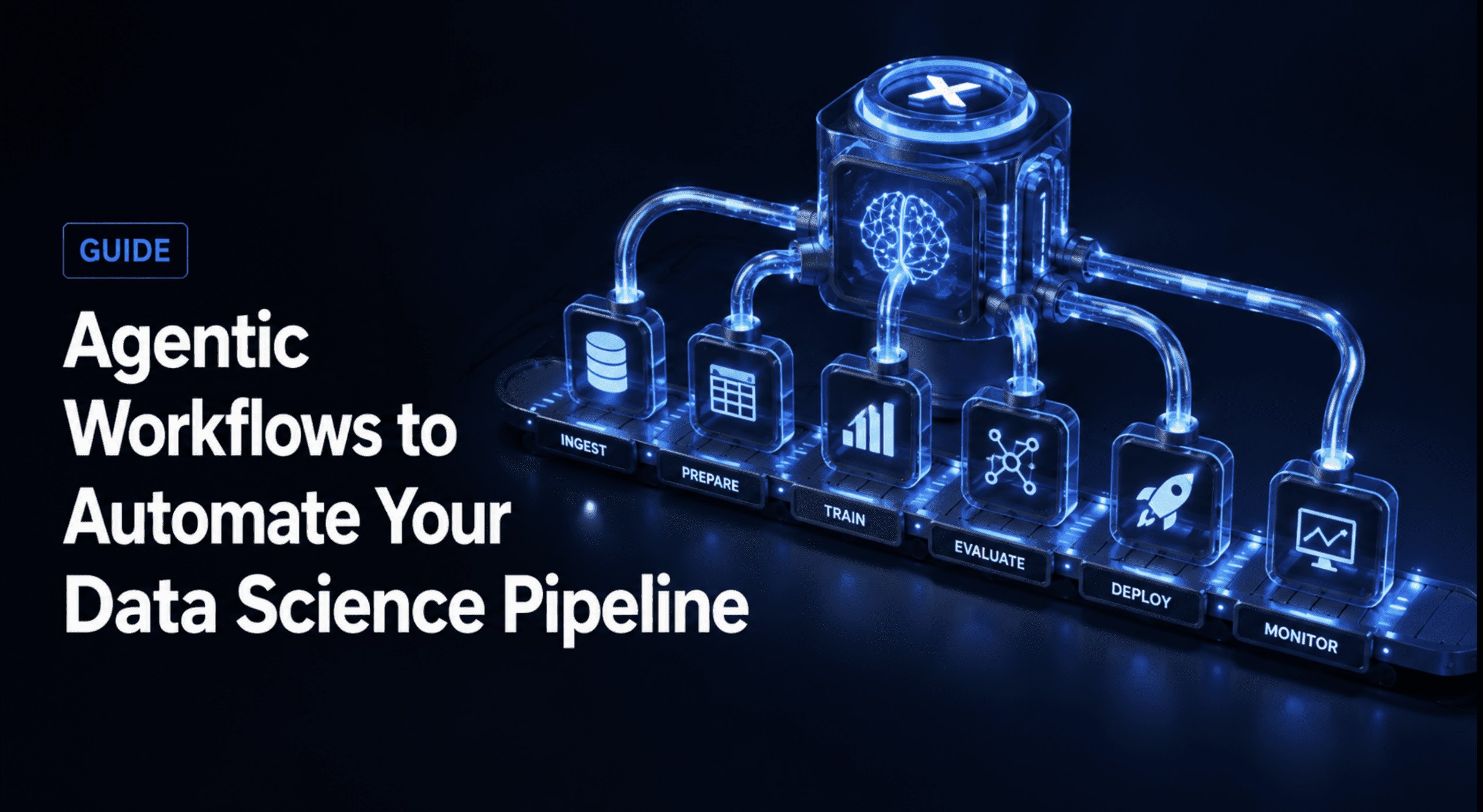
The average data scientist spends approximately 45% of their working hours on data preparation and cleaning. In corporate terms, this is the "economics of downtime." Nearly half the salary of a high-priced specialist is burned in the furnace of formulaic cleaning and manual profiling instead of generating insights. Workflow analysis shows that tasks like null value checks, running repetitive exploratory data analysis (EDA) scripts, and writing validation tests have clear enough algorithms to be delegated to autonomous agents. The goal isn't to replace humans, but to radically slash time-to-insight: the specialist stops being a "data laborer" and becomes a system auditor.
The Mechanics of Autonomy: From Linear Scripts to Self-Correcting Systems
The transition to mature automation involves five stages. At the start, an agent for automated EDA uses a Reasoning and Acting (ReAct) loop to load datasets and independently generate Markdown reports. Where a human previously calculated statistics manually, the agent applies data profiling tools to identify skews and gaps, synthesizing conclusions through a language model. The agent shoulder the procedural weight, leaving the human with the evaluative weight—deciding whether a finding warrants a change in business strategy.
"A data scientist spends nearly half their time on the 'dirty' work of data handling rather than modeling or searching for valuable business patterns."
Implementing agents directly impacts the Total Cost of Ownership (TCO) of ML solutions. Beyond EDA, the workflow covers missing value handling, automatic hyperparameter optimization (Grid Search), and continuous monitoring. Infrastructure players are already in the game: experts note that platforms like Databricks are integrating agentic features to compress the development cycle. For businesses, this means moving from weeks to days: agents catch critical anomalies on the fly while humans focus on architectural concerns.
Paradigm Shift: The Architect Instead of the Craftsman
When routine is automated, the data scientist's role inevitably drifts toward system architecture. The technical entry barrier for these processes is surprisingly low—Python 3.10 and standard libraries like pandas and scikit-learn are sufficient. However, the business output is no longer a raw data dump, but a prioritized list of issues requiring intervention. The core design question is no longer "how do I write this script?" but "how should the agent interpret these results?" This evolution is already visible in leading teams using OpenAI APIs or local solutions like Ollama and vLLM to manage agent calls.
If agents take over the lion's share of the pipeline by classifying issues by severity, human judgment will remain the only unique resource by the end of the next fiscal cycle. The ability to distinguish a statistical anomaly from a new market opportunity is what business owners will still have to pay humans for—and it seems that money will finally be spent as intended.