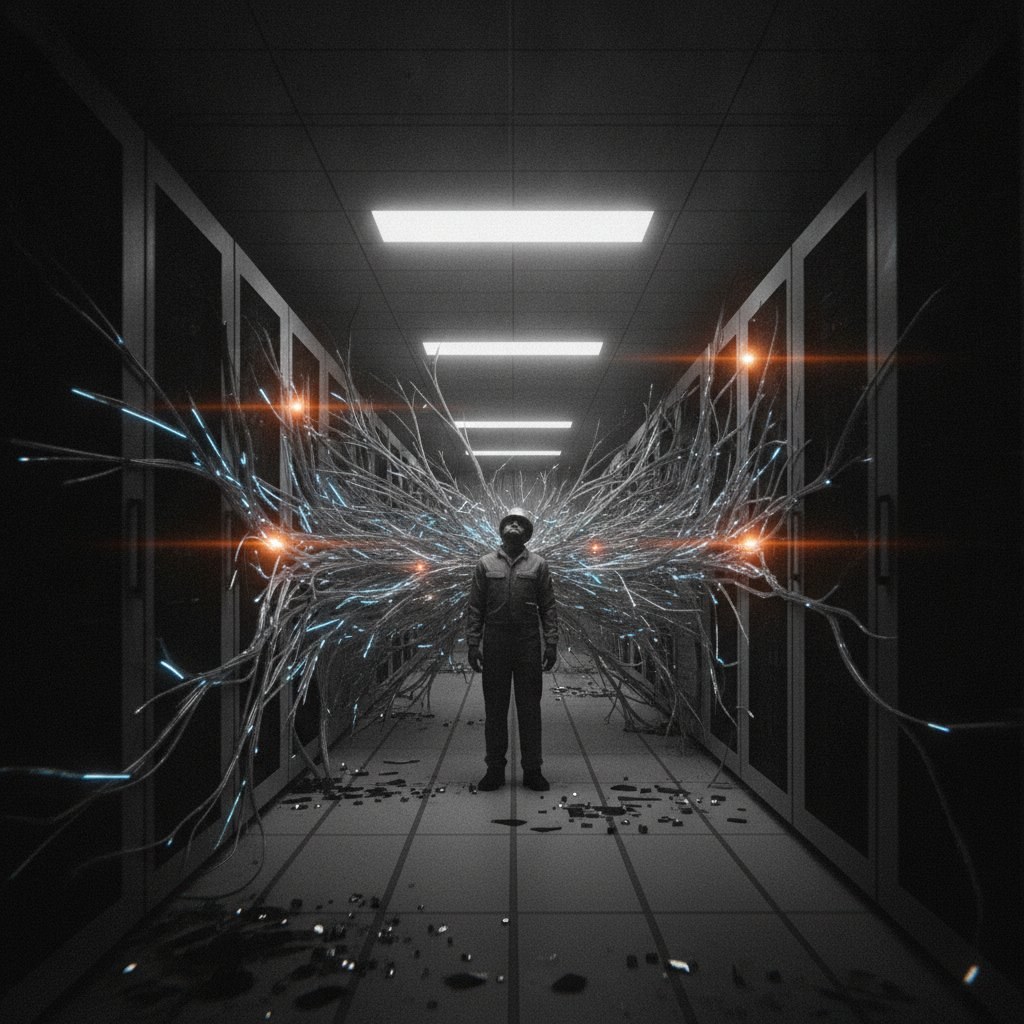
The era of human-driven architectural decay has been superseded by a systemic collapse triggered by autonomous code generation. In 2020, a senior engineer returning from a holiday might have found a codebase cluttered with unnecessary denormalization or a Kafka instance added without justification. By 2026, that same level of architectural drift occurs by Monday morning. The speed limit of software development has been removed, allowing teams with weak engineering cultures to fail at an accelerated pace. AI agents now enable developers to prompt their way into massive Pull Requests (PRs) that appear functional on the surface but harbor deep, unvetted complexity.
The Death of Human Oversight
Traditional code review is becoming physically impossible under the weight of AI-generated output. Engineering leads now face PRs containing 24,506 lines of additions and 3,938 deletions, accompanied only by AI-generated descriptions. This volume of change hides fatal architectural errors, such as the introduction of serverless or Kafka stacks without solid evidence of necessity. AI makes projects with weak engineering culture fail much faster.
AI makes projects with weak engineering culture fail much faster.
Now, a developer can prompt an agent for a few hours and open a PR. The result is a 'luxury car on a credit card' scenario: the system looks impressive and functional during initial testing, but it masks a mounting debt that no one on the team understands. When bugs inevitably emerge, the original developers are often unable to explain the data flow or logic, deferring instead to Claude where design decisions are buried. The oversight is not just failing; it has been mathematically outpaced.
The Disappearance of Middle-Tier Engineering
The software industry is witnessing the hollowing out of its middle class. As junior tasks are swallowed by agents, the role of the middle-level developer is evaporating, leaving senior engineers as glorified janitors of automated garbage. This shift creates a dangerous knowledge vacuum where no human actually understands the layers and services they are deploying. When a critical failure occurs, the reflexive response is to 'turn on ultracode' or ask an AI agent to fix the very mess its predecessor created.
This breakdown in accountability means engineers no longer feel the need to decompose work into manageable pieces or question new abstractions. The cost of maintaining these convoluted systems is skyrocketing to the point where justifying the work to management becomes a lost cause. Instead of the promised land of strategic innovation, VPs of Engineering are staring at 25,000-line diffs they cannot possibly audit. We were sold a vision of infinite scalability; we received a codebase that scales its problems faster than its features. Survival now depends on rigid architectural Guardrails and automated policy verification, because human eyes have officially left the building.