When the Remote Labor Index launched about a year ago, the top-performing system Manus completed just 2.5 percent of professional tasks, but Anthropic's new Fable 5.2 model now finishes more than 41 percent of real freelance projects at professional quality. This shift directly impacts enterprise operational budgets and the unit economics of project outsourcing, forcing leaders to weigh the cost of autonomous inference against human contractor fees.
On the Remote Labor Index benchmark curated by Scale Labs and the Center for AI Safety, Fable 5.2 secures the top spot with a 41.3 percent success rate. The jump in practical execution alters the unit economics of project outsourcing, turning autonomous agents into direct alternatives for outsourced labor pools. What remains at stake for enterprise operational budgets is whether autonomous systems can sustain verified professional standards across extended assignments or if they will continue to fail during complex multi-step delivery.
Shifting the Baseline of Knowledge Work
The Remote Labor Index measures how often autonomous software agents complete real commercial assignments well enough for paying clients to accept the deliverables. The evaluation dataset comprises 240 completed projects sourced from 358 verified professionals on the Upwork platform, representing a combined market value of about $144,000. In practical terms, a single project in the evaluation corpus costs an average of $632.60 and requires a human freelancer an average of just under 29 hours to complete.
To perform the required tasks, evaluated systems receive access to a virtual environment equipped with standard tools such as Blender, GIMP, or Audacity, alongside specialized generation software for visual and audio media.
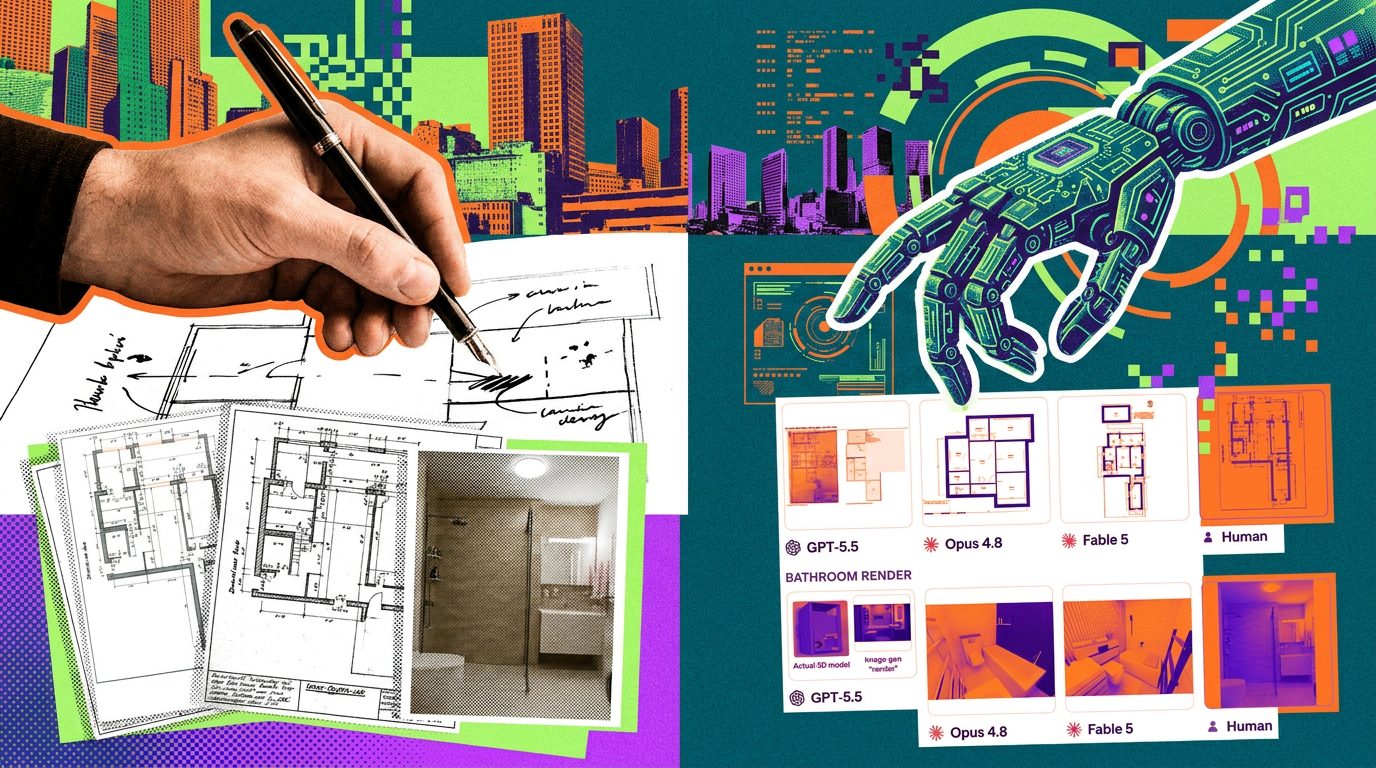
"Scale Labs stated that Fable 5.2 makes its biggest gains in editing audio and music, designing architecture and interior spaces, and creating 3D models."
According to the testing team at Scale Labs, nearly 50 of Fable 5.2's successful runs involved assignments that no automated system in the benchmark had managed to resolve previously. The model handles prolonged workflows that consistently broke prior market architectures.
Divergence Across the Model Leaderboard
The performance spread across leading model providers underscores a steep divergence in real-world task execution. Anthropic's older Fable 5 held first place on the index in July at about 16 percent, while its intermediate predecessor Fable 5.1 settled at just under 18 percent. Today, the closest competing models trail by wide margins: Anthropic's Opus 5.5 stands at 21.25 percent, while OpenAI's GPT 6 Astra achieves 20.83 percent.
Further down the benchmark rankings, Google's top model in the test, Gemini Argon 4, holds fifth place with 17.08 percent. Older industry systems, including GPT-5.2 and Gemini 3 Pro, linger below three percent on the same task distribution.
The benchmark evaluates complete professional assignments worth hundreds of dollars, verified manually by human experts.
Trained human reviewers examine the deliverables directly by opening submitted assets inside professional software environments to compare them against human freelancer work. Verification cannot simply be offloaded to algorithmic evaluation: as the Center for AI Safety noted, attempts to automate the review process with another AI failed because automated reviewers lack the operational competence to audit files inside specialized software, leaving them vulnerable to aesthetically polished submissions that harbor fatal technical flaws.
The Reliability Gap in Production Workflows
The persistence of structural execution errors remains the primary barrier preventing the wholesale replacement of freelance contracting. When evaluated agents fail on the Remote Labor Index, researchers observe that they regularly produce amateur-quality work, submit incomplete deliveries, generate corrupted project files, or create internally contradictory designs. As Scale Labs reports, autonomous agents still barely manage specific creative domains, particularly industrial product design and animations.
What came before
Yet with models still breaking multi-step workflows and handing over incomplete or corrupted files, business budgets will keep paying human experts just to inspect the deliveries. Autonomous agents can now complete over forty percent of contract work, provided people stay around to catch their fatal project errors.
Our stories: Anthropic Claude Fable 5: The High Cost of Performance (July 9).