AI · This text was generated with artificial intelligence
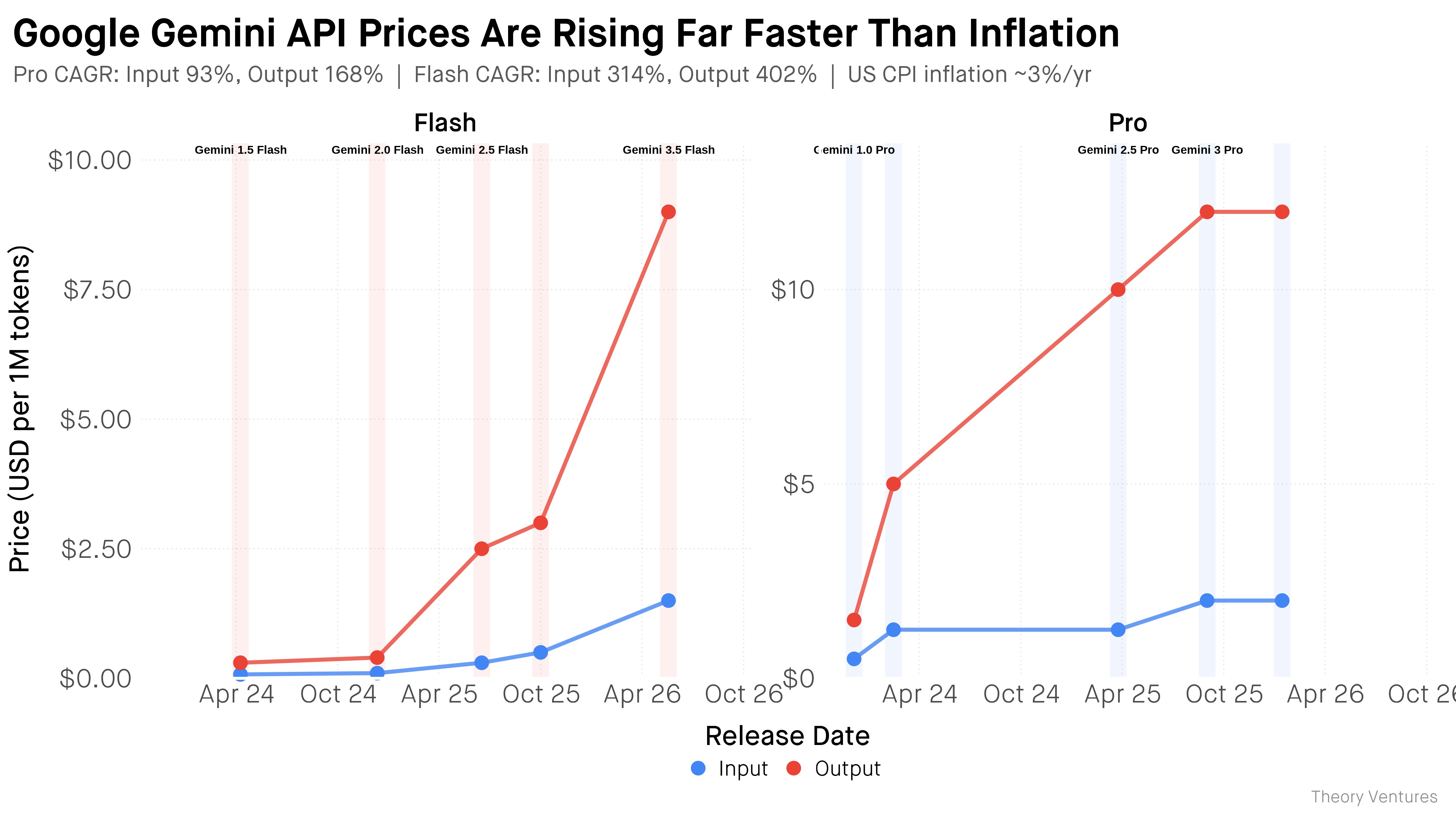
The era of subsidized artificial intelligence is hitting a wall of harsh reality. Top-tier vendors are shutting down their introductory fire sales, pivoting from aggressive market-share grabs to a desperate defense of profit margins. Google has spearheaded this trend with Gemini 3.1 Pro, the cost of which has effectively tripled year-over-year. While Google technically remains the low-cost leader at $2.00 per million input tokens and $12.00 per million output tokens, the trajectory is clear: the days of near-free compute are numbered. Record-breaking capital expenditures are forcing Big Tech to finally clean up their corporate balance sheets.
OpenAI and Anthropic are navigating a severe cash crunch using fundamentally different tactics. OpenAI’s flagship GPT-5.5 has already seen prices climb to $5.00 for inputs and $30.00 for outputs. This looks like a belated attempt by Sam Altman to compensate for years of predatory pricing and hidden subsidies used to hook a massive user base. Anthropic, by contrast, is holding the line with Claude Opus 4.7 at $5.00/$25.00 and even cutting rates on some top-tier models to shed its reputation as a "boutique service for the elite." However, one shouldn't be fooled: vendors only slash prices while investor cash reserves are full. The moment survival becomes the priority, you will be billed in full.
Key Takeaways from the Token Economy
Business logic is finally catching up with the marketing hype. Executives must stop building workflows on the assumption that API costs will drop indefinitely.
The pricing gap between Google and its rivals isn't an anomaly; it's a sign that the chaotic, venture-fueled "land grab" is giving way to a standard high-margin software model.
The "burn cash and see what sticks" strategy is being replaced by efficiency metrics. At current rates, a poorly optimized prompt or an unnecessary call to a "heavy" model is no longer a rounding error—it is a direct hit to your P&L.
The time has come for a financial audit of every AI transaction. If an implementation cannot pay for the rising cost of tokens, it simply has no place in your tech stack.