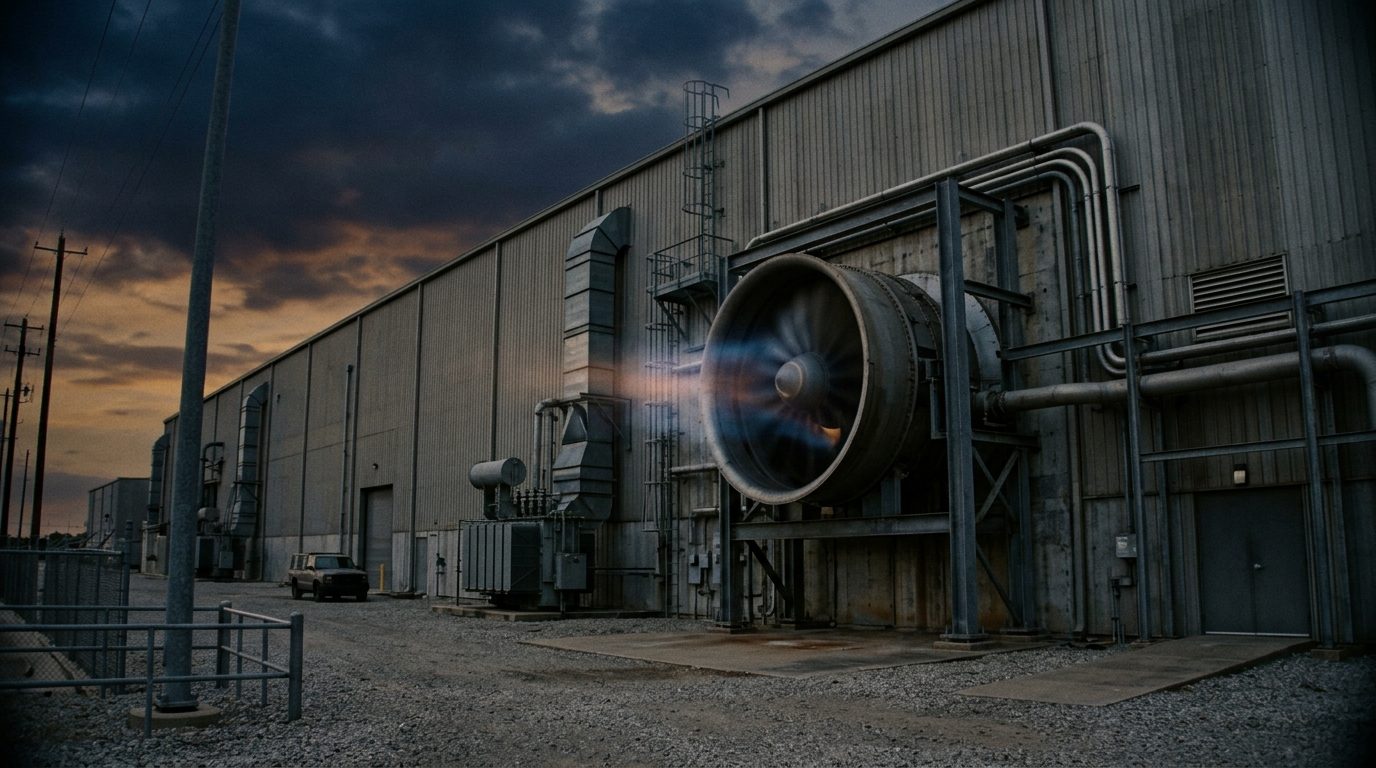
Hooking up 100 megawatts to the grid in Northern Virginia takes about seven years, according to the International Energy Agency, forcing operators to trade conventional utility timelines for on-site power generation. Stuck in years-long lines for grid connections and new turbines, AI data centers are now making their own electricity with converted jet engines, as reported by the New York Times. Pulled from retired aircraft and rebuilt to burn natural gas, these improvised systems represent an immediate engineering bypass for artificial intelligence infrastructure facing severe utility delays.
Grid queues and equipment backlogs threaten to derail deployment timelines across the sector, prompting major AI developers to switch to local gas turbines to accelerate facility launches. The main operational draw of these converted jet engines is deployment velocity rather than long-term infrastructure stability.
"It’s all about getting power as fast as possible. With jet-powered units, they can have a data center running in 24 months."
Rystad Energy analyst Audun Martinsen explained that this compressed schedule allows operators to bring sites online years ahead of regional grid expansions, even as an executive at Mitsubishi Power told Bloomberg that most power capacity is expected to come on by 2031. With government officials encouraging data centers to generate their own electricity, companies are choosing fast capital deployment over utility waiting lists.
Delivery Deficits Disrupt Commercial Leases
Power supply shortfalls have already begun breaking commercial commitments and disrupting major facility leasing arrangements. Last month, Microsoft pulled out as the anchor customer for Nscale’s data center in Loughton, England, after the local utility stated it could not deliver enough power until the early to mid-2030s. The risk of losing foundational enterprise customers has turned on-site generation into an operational necessity.
Elon Musk’s xAI installed eight converted jet-engine turbines in Mississippi to help power its Colossus 2 data center in Memphis. These turbine units come from ProEnergy, which rebuilds a GE engine commonly found on Boeing jets. In 2025, OpenAI followed that deployment model with gas turbines at its first Stargate site in Abilene, Texas. Denver-based startup Crusoe, which builds AI data centers, is constructing that Abilene campus and ordered 13 of ProEnergy’s converted units in April.
How far are operators willing to restructure procurement to bypass equipment delays?
They are scrapping long-term supply agreements to secure immediate hardware. In September, Crusoe walked away from a $1.25 billion deal to buy 29 natural gas turbines from Boom Supersonic, a startup developing a supersonic passenger jet that has begun selling a version of that jet’s engine as a power plant for data centers. A Crusoe spokesperson told TechCrunch that the company still plans to use turbines, choosing faster hardware delivery over unproven supplier commitments.
Operating Costs and Regulatory Liabilities
Converted jet engines carry significant technical and financial trade-offs compared to traditional utility plants. They are less efficient and pollute more than turbines designed for conventional gas plants, and it takes more of them to make the same amount of power, according to the Times.
"They’re less efficient and pollute more than turbines designed for conventional gas plants, and it takes more of them to make the same amount of power."
Operating lower-efficiency aviation hardware increases continuous natural gas consumption and local emissions, driving up operating expenditures for every megawatt produced. While these turbines resolve the immediate risk of seven-year connection queues, the higher fuel burn and emissions footprint leave data centers exposed to severe environmental and regulatory costs.
Why it matters
A seven-year wait for a regional grid connection in Northern Virginia turns the hunt for repurposed jet engines into a practical survival tactic. Major operators building sites like Stargate and Colossus 2 intentionally trade fuel efficiency and emissions control for raw deployment speed. As The New York Times notes, the scramble to beat the utility backlog is already upending long-term procurement, pushing builders to scrap billion-dollar supply deals for whatever converted hardware can be delivered immediately. Will xAI and Crusoe offset the lower efficiency and higher emissions of converted ProEnergy generators before utility power finally arrives toward 2031?