The aggressive expansion of artificial intelligence infrastructure has slammed directly into an antiquated physical limit: the electrical utility network. As gigawatt-scale computing clusters demand unprecedented power densities, operators have found themselves constrained not by GPU availability, but by bespoke mechanical transformers engineered on 1880s principles. Power distribution networks feeding modern facilities remain tied to massive, hand-wound assemblies that stretch project lead times by years.
Conventional substation equipment relies on archaic designs where heavy copper wire coils are wound by hand around a laminated steel core to step down alternating current (AC) voltages. Because large utility-scale units cannot be mass-produced on automated assembly lines, grid operators must custom-order each installation. The resulting supply chain backlogs leave data center developers waiting up to four years for critical equipment, stalling grid interconnects and routine infrastructure modernization.
Modernizing Voltage Conversion With Power Electronics
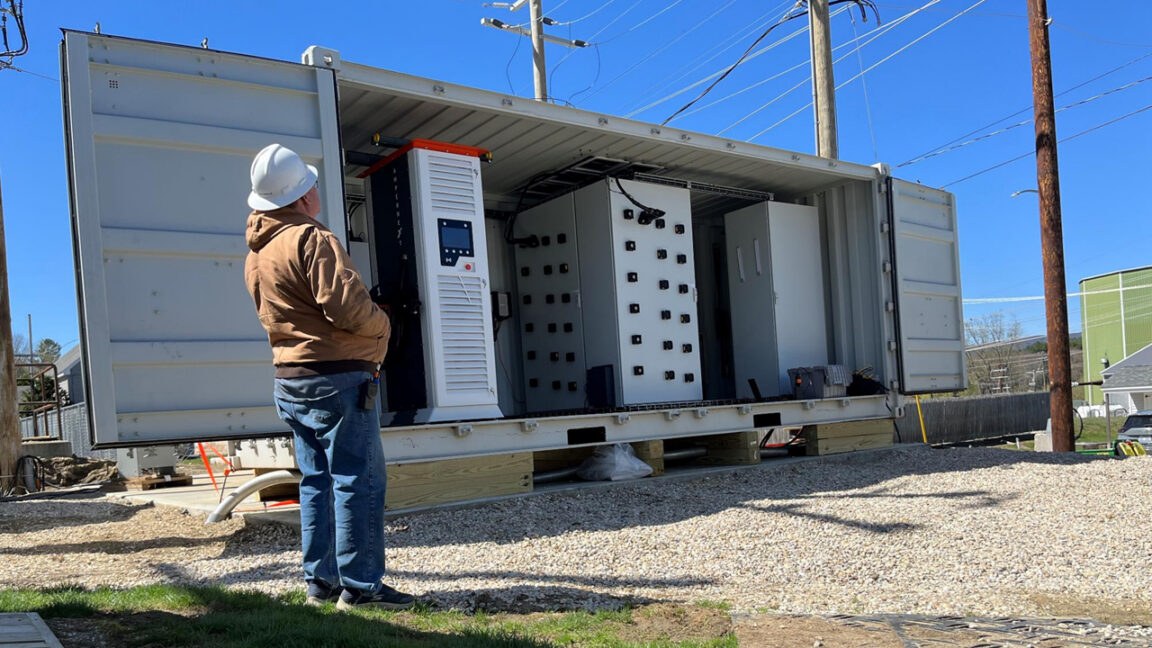
Solid-state power transformers bypass this bottleneck by replacing physical copper windings with high-frequency semiconductor switching. Fabricated with wide-bandgap materials such as silicon carbide, solid-state units shift transformer assembly from slow manual fabrication into standardized electronics manufacturing. The resulting modular hardware is significantly lighter and smaller, enabling operators to hot-swap individual power modules rather than taking an entire substation offline for mechanical repairs.
Crucially, solid-state architecture resolves the fundamental mismatch between legacy utility feeds and AI compute clusters. Modern accelerator racks run on direct current (DC), whereas utility grids transmit high-voltage AC. Traditional data center architecture wastes capital and floor space on multi-stage conversion chains—stepping down high AC voltage, routing it to central rectifiers, and converting it to DC before it ever reaches the server rack.
Solid-state transformers collapse these stages into a single step by stepping down distribution voltages and outputting DC directly to power distribution units. Srdjan Lukic, a professor of electrical and computer engineering at North Carolina State University, highlighted the architectural efficiency:
“It’s kind of this one magic box that eliminates a lot of the infrastructure and also provides one control location that eliminates a lot of the interoperability challenges that you may see in a traditional data center, where various components within the data center are trying to regulate the same thing. Now you have one conversion stage outside the data hall and then you just go straight to the rack.”
Commercialization and Grid-Scale Validation
Surging infrastructure demand has turned computing facilities into what Lukic describes as the primary killer application for solid-state power systems.
For operators and infrastructure funds, the financial payoff centers on capital efficiency and time-to-market. Eliminating multi-stage conversion gear cuts power losses and reclaims physical footprint for revenue-generating compute. By replacing hand-wound copper coils with power semiconductors, solid-state hardware transforms the power distribution chain into a scalable electronics manufacturing model with compressed deployment schedules.