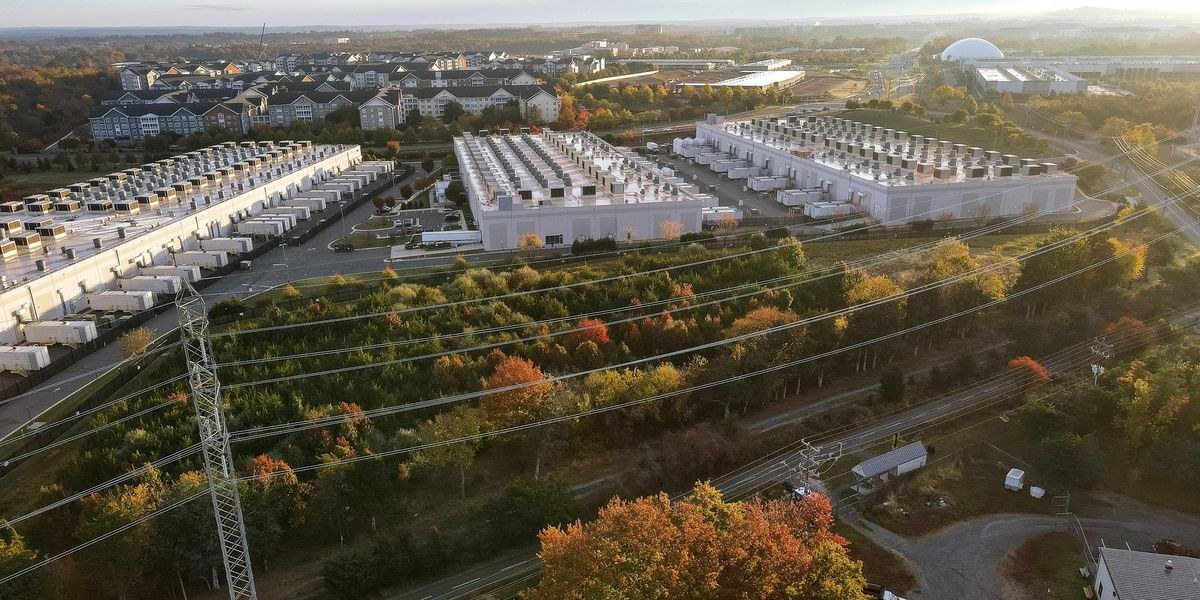
The massive expansion of AI infrastructure is still often portrayed in the media as a simple math problem of increasing generation. According to International Energy Agency (IEA) forecasts, data centers will consume up to 4% of global electricity by the end of the decade. However, this perspective suffers from a dangerous oversimplification: it accounts for volume (TWh) while ignoring behavior. The real threat isn't just how much energy servers consume, but exactly how they consume it. Synchronized, ultra-dense computing loads are beginning to break the operational characteristics of power grids through unpredictable demand spikes that shift at the speed of software code.
The Volatile Nature of Computing
Traditional grid planning has relied on inertia for decades. Industrial and residential loads change slowly, allowing utilities to maneuver their reserves. AI infrastructure introduces chaos into this equation. Model training requires massive clusters of GPUs or TPUs to work in tight synchronization, while inference depends on instantaneous user activity. Both processes are capable of ramping up to peak power in milliseconds—faster than any turbine can "wake up" to respond.
"High-density computing loads trigger step-changes in consumption within millisecond intervals, creating a pulsation that the physics of legacy grids simply weren't designed to handle."
From an operator's standpoint, this isn't just "high demand"; it is "aggressive demand." These sharp fluctuations put colossal pressure on frequency control systems and backup generation. While renewable energy brought instability to the supply side (the wind blows, the power flows), AI is creating a mirror instability on the demand side. We are dealing with a digital "blood clot" that can choke local infrastructure at any moment.
Local Risks and the Economics of Autonomy
The geographical concentration of data centers turns technical spikes into physical bottlenecks. Even if national generation is sufficient, a sudden surge in a specific cluster overloads local substations and transmission lines. This is forcing businesses to pivot toward a "Grid-as-a-Service" model: data centers are transforming from passive consumers into active balancing operators.
Infrastructure owners are now compelled to invest in Battery Energy Storage Systems (BESS), supercapacitors, and microgrids. This isn't philanthropy or corporate social responsibility; it is a brutal survival requirement driven by regulatory pressure and hefty fines for destabilizing the grid. In the coming years, we will see a final rupture between the slow inertia of traditional power and the digital velocity of neural network cycles. The winners will be those who can localize this chaos within their own perimeter without waiting for the external grid to collapse.