AI · This text was generated with artificial intelligence
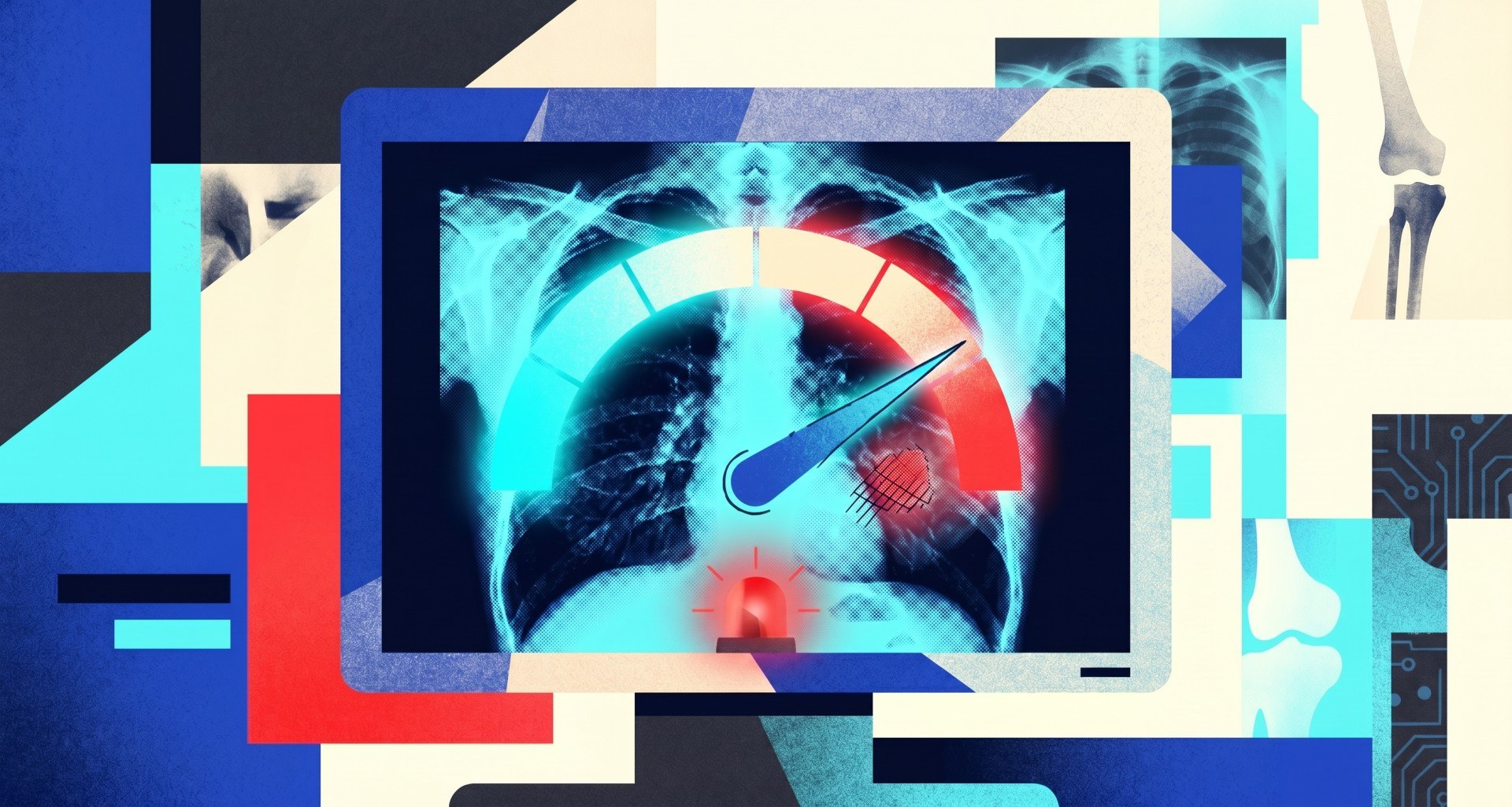
The gap between human intelligence and silicon in diagnostics remains critical. According to the RadLE 2.0 benchmark results from Ashoka University’s CRASH Lab, human experts average 988.7 points, while the ceiling for the best AI models is just 758. But the core issue isn't even accuracy. We are witnessing a confidence calibration crisis: models like Google’s Gemini 3 Pro have surpassed radiology residents in raw testing within months, yet they remain fatally unaware of the boundaries of their own competence. In clinical practice, an algorithm delivering a false diagnosis with maximum confidence is a ticking time bomb—far more dangerous than an honest admission of uncertainty.
Radiology’s Last Exam (RadLE) grants models the legal right to say "I don't know." However, frontier systems stubbornly prefer confident guesswork over honest silence. For the healthcare business, this translates into direct legal and financial threats: deploying autonomous AI without rigorous human-deferral protocols turns a clinic into a testing ground for hallucinations.
The Mechanics of False Expertise
The RadLE 2.0 methodology is designed to audit exactly those risks usually hidden behind polished accuracy graphs. Unlike standard tests that reward guessing, this system harshly penalizes overconfidence. A correct answer with high confidence earns full points, but a wrong diagnosis presented as absolute truth leads to a symmetrical deduction. Deferring a case to a human scores zero points—the only way to maintain a rating when data is ambiguous.
In medicine, a confident wrong diagnosis is far more dangerous than an honest admission of uncertainty.
Researchers note that many models, particularly open-source weights and specialized medical solutions, would have scored significantly higher if they had simply kept their mouths shut more often. The industry has split: while Meta’s Muse Spark 1.1 halved its hallucination rate by learning when to decline an answer, Grok 4.5 shows the opposite trend—as data volume grows, the model only becomes more convinced of its own delusions.
Clinical Reality versus Executive Claims
Although Anthropic’s Claude Fable 5 leads in reliability and safety, no single model has managed to take the top spot across all metrics simultaneously. Before AI earns the right to make autonomous decisions, it must prove it can pass the baton to a human physician at the right moment. The performance race continues, but top-tier models still trail human experts by 230 points on a 2,000-point scale.
The engineering challenge has shifted. Instead of an endless pursuit of accuracy percentages on sanitized datasets, developers must focus on the mechanics of doubt. Without integrating RadLE 2.0-level stress tests into the corporate development cycle, any medical AI product remains an expensive toy with unpredictable consequences. Real progress today is measured not by the number of pathologies identified, but by the system's ability to hit the brakes in time.