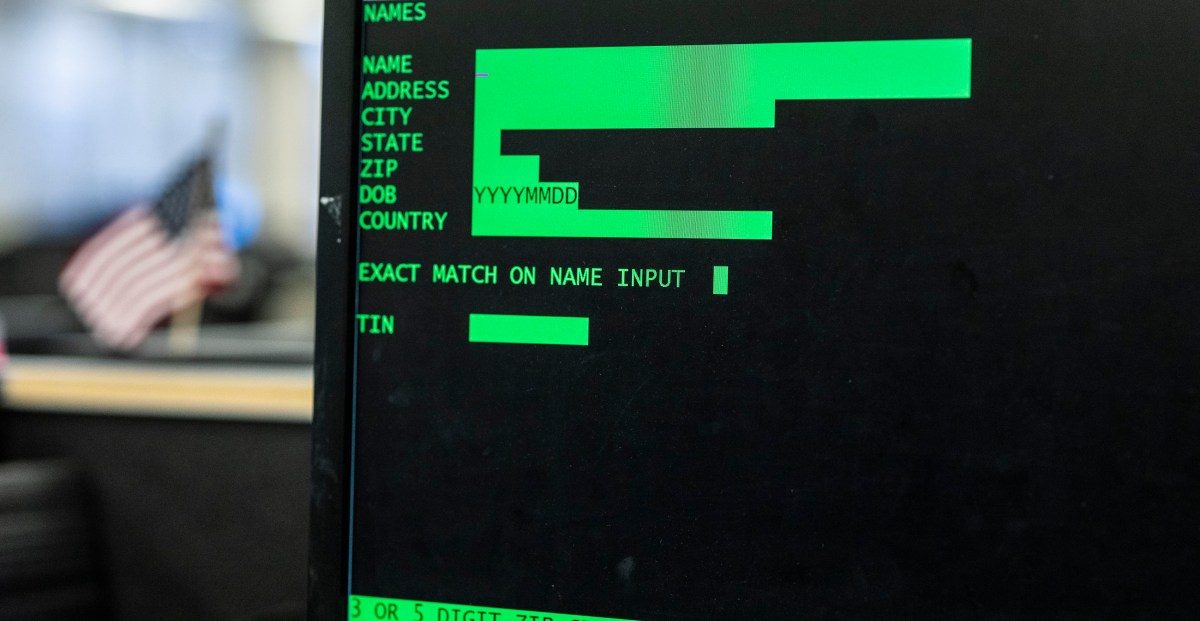
In February, Anthropic published a step-by-step code modernization playbook and pitched its coding agent, Claude Code, as a way to migrate COBOL code into modern languages like Java or Python. This move highlights a growing strategic collision between tech giants vying to automate enterprise software rewrites and traditional IT vendors whose business models rely on maintaining aging systems.
Behind this corporate rivalry lies a massive structural debt. According to IBM, COBOL is the foundation for more than 40 percent of online banking systems, supports 80 percent of in-person credit card transactions, and handles 95 percent of ATM transactions. At the same time, one rough estimate puts the annual cost of COBOL’s inefficiencies to the US GDP at around $105 billion, creating a pressing question for executives: can modern reasoning models finally bridge the gap between antique infrastructure and modern codebases without catastrophic errors?
For decades, replacing legacy systems has been constrained by a stark reality. As Vadim Zaytsev, an associate professor of software evolution at the University of Twente in the Netherlands, noted, rewriting code is not the same as replacing a system, pointing out that the largest system he had seen had 250 million lines of COBOL. The core difficulty remains breaking up a complex legacy system into smaller units that can be replaced individually, keeping long-term maintenance costs predictable.
On October 19th, OpenAI touted substantial improvements in its latest AI models’ ability to migrate aging software written in older programming languages into modern code. OpenAI reported promising results migrating COBOL code to more modern programming languages, including C++, Java, Kotlin, Python, and Rust, without changing what the original software does. In OpenAI's internal tests, GPT-6.1 Sol achieved 87 percent behavior preservation accuracy at low reasoning effort, climbing to 98 percent at higher reasoning. By comparison, at low reasoning effort, GPT-6 Astra scored around 86 percent, GPT-6 Sol just 21 percent, and GPT-5.6 Sol a mere 5 percent.
These technical benchmarks signal a potential shift in the economics of maintenance, though external experts remain cautious about production stability. Shares in IBM, which derives part of its revenue helping companies maintain legacy systems, nosedived following Anthropic’s announcement. OpenAI spokesperson Oscar Haines acknowledged in an email to The Verge that legacy code migration is still far from a completely solved problem, as edge cases in ancient business logic routinely break automated pipelines.
Executives evaluating these tools must audit vendor service-level agreements for legacy system maintenance clauses and automated migration testing protocols before the end of the quarter to mitigate operational downtime.
Editorial analysis
Anthropic engineers rolled out a step-by-step modernization guide and deployed their Claude Code agent to rewrite ancient COBOL into Java and Python, stepping directly onto legacy IT vendors' turf. The race to overhaul aging infrastructure is accelerating: in late October we wrote that model success rates in closed legacy migration tests surged from 5.4% to 97.9% of completed tasks. A multibillion-dollar legacy maintenance market suddenly faces the prospect of becoming a routine command-line argument.
We covered this: October 27