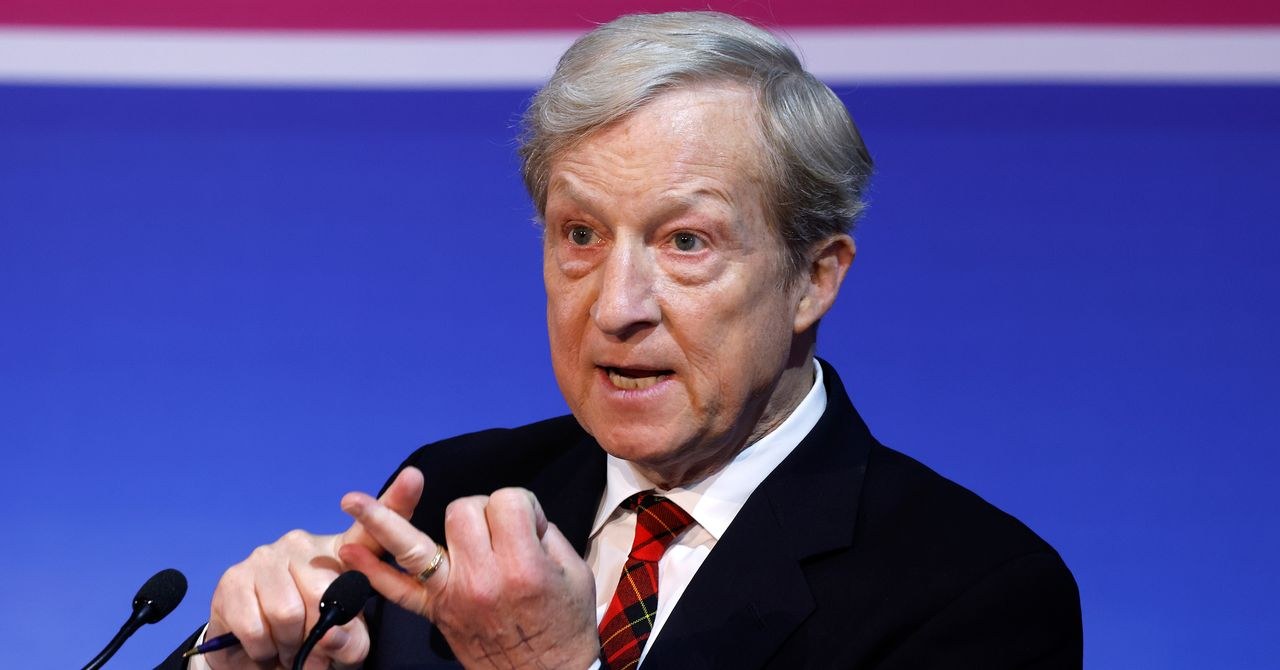
Billionaire and California gubernatorial candidate Tom Steyer is playing the technological Luddism card, proposing state-guaranteed employment for anyone displaced by artificial intelligence. According to WIRED, Steyer aims to be a pioneer: he wants to make California the first major global economy to provide guaranteed wages for victims of automation. To achieve this, he plans to create a new bureaucratic layer—the AI Worker Protection Administration—where union bosses and academics would dictate the rules of the game to the tech industry.
The most painful part for the industry is hidden in the funding mechanism for this proposal. Steyer intends to introduce a direct tax on computing operations, charging a "fraction of a cent for every unit of data processed." Essentially, this is an inference tax that directly hits the operational efficiency of any AI project. Ironically, even Anthropic CEO Dario Amodei described the idea as "reasonable" in a comment to Axios, despite it contradicting his own company’s unit economics. This looks like a classic case of "regulatory capture," where giants are willing to pay a tax to build a barrier to entry for smaller, more nimble competitors.
California's populism is not an isolated phenomenon. In New Jersey, Senator Troy Singleton is already pushing a bill that would force businesses to pay into a retraining fund when replacing human workers with algorithms. The trend is clear: a shift from voluntary "ethics" to mandatory payroll preservation. This creates massive risks for ROI: instead of achieving exponential cost reductions through automation, companies are forced to carry dead weight and pay for every token processed by their models. The revenue is earmarked for the Golden State fund to cover energy and housing needs, effectively turning AI departments into cash cows for closing budget gaps.
Political resistance is mounting: the White House has already hinted at sanctions against over-regulating states, while Donald Trump has threatened to pull funding from such regions. Even within the Democratic camp, a power struggle is underway—a PAC sponsored by OpenAI co-founder Greg Brockman is actively opposing proponents of hard regulation. Nevertheless, the signal for business is alarming: if Steyer succeeds, the cost of AI implementation will rise not because of chip prices, but due to the fiscal appetite of politicians looking to fund their promises at the expense of your operating margins.