AI · This text was generated with artificial intelligence
Alibaba is shifting the focus of the AI arms race from raw logic to operational utility. The release of Qwen3.7-Plus marks a transition from advisor models to cross-platform executors. By integrating visual perception directly into the agentic loop, Alibaba Cloud has built a system capable of navigating graphical user interfaces (GUIs) with a level of autonomy that text-based models simply cannot match. This isn't just another chatbot; it’s an attempt to seize the orchestration layer of desktop and mobile operating systems.
Vision Over Pure Logic
Qwen3.7-Plus’s technical strategy prioritizes the ability to "see" the screen over winning abstract academic debates. While the model may lag behind Gemini 1.5 Pro or GPT-4o in tests of pure logic and scientific knowledge (such as MedXpertQA-MM), it dominates in practical interface management. On benchmarks like AndroidWorld and ScreenSpot Pro, Alibaba's latest creation significantly outperforms Western flagship models. It is clear the company is targeting the workflow automation market, where the ability to recognize UI structures is far more valuable than solving physics equations.
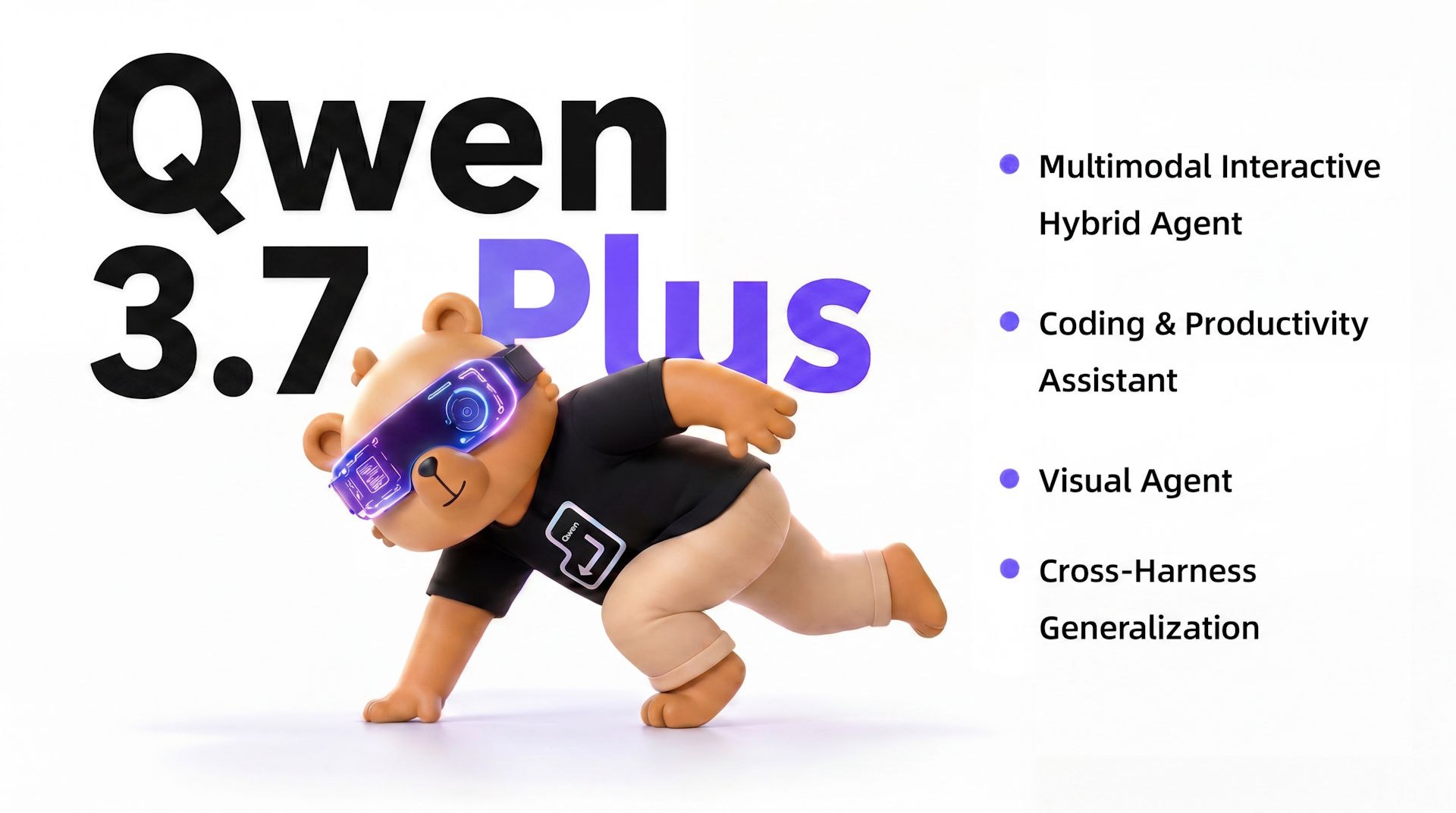
Qwen3.7-Plus represents Alibaba's bet on transforming multimodal AI into a fully autonomous agent by synthesizing vision, coding, and tool-use capabilities.
The shift toward the Large Multimodal Model (LMM) concept allows the system to read screen content and manage applications out of the box. The agent can independently switch into an active mode to work within a cloud console: from purchasing and configuring low-cost virtual servers to managing storage and security groups. For business, this represents a paradigm shift: AI no longer just suggests a deployment strategy; it logs into the console and clicks the buttons itself.
Eleven Hours of Autonomous Coding
Alibaba is backing its ambitions with use cases that test the limits of autonomous programming. In one test, a hybrid agent system was tasked with building an English language learning app from scratch. The system worked for over 11 hours, making more than 1,000 calls and generating over 10,000 lines of code. This wasn't just scriptwriting; it was a full development cycle—from requirement documentation and automated installation to creating test cases and version control. Recreating a native macOS Stocks app solely by analyzing its interface and generating SwiftUI code proves that the model has learned to close the gap between visual design and functional software.
Economic pragmatism completes the picture. Alibaba is positioning Qwen3.7-Plus as a high-efficiency, low-cost alternative to the market’s "ultra-premium" offerings. The company is intentionally sacrificing peak reasoning scores to provide a tool that actually works with chaotic human interfaces at a fraction of the competitors' cost. Success in GUI navigation and long-chain task planning confirms the next stage of AI transformation: it's about execution, not just instructions.