AI · This text was generated with artificial intelligence
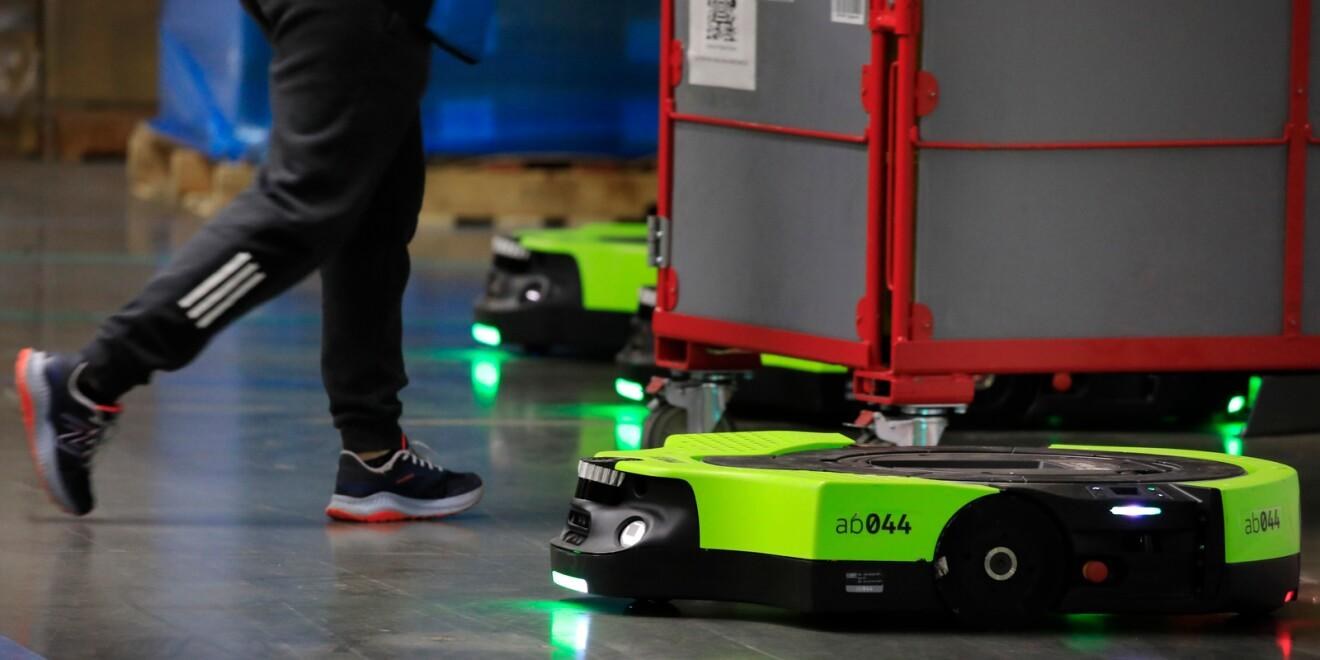
Amazon is shifting its warehouse heavyweight, Proteus, from rigid software protocols to natural language. The company’s vision allows floor staff to assign tasks via voice—just as they would to a human colleague—instead of fumbling with specialized software interfaces. As Scott Dresser, VP of Amazon Robotics, explained, an employee now only needs to state the objective; the robot independently determines priorities, routing, and timing. Technically, this marks a transformation from a deterministic "cart on rails" into an adaptive agent capable of interpreting human intent.
Strategically, this move appears to be Amazon's attempt to radically lower the barrier to entry for personnel. While Proteus was previously confined to loading zones, it is now destined for the "field"—fulfillment centers and sorting hubs where robots work side-by-side with humans. The integration of Vision Language Models (VLMs) serves more than just convenience; it mitigates social friction. When a machine understands commands on the fly, it ceases to be perceived as a dangerous mechanism and begins to mimic a functional team member.
Key updates to Proteus
Transition from rigid algorithms to flexible AI agents based on VLM models. Voice control: Robots recognize natural speech and employee intent. Integration into shared workspaces rather than isolated warehouse sections.
"Now, an employee just has to say what needs to be done, and the robot itself will determine the priorities, the route, and the timing," — Scott Dresser, VP of Amazon Robotics.
Naturally, Amazon emphasizes that these investments aim to support employees rather than replace them. As evidence, the company cites the hiring of hundreds of thousands of new workers since its robotics push began. However, behind this rhetoric lies a fundamental shift: logistics is evolving from a strictly regulated system into a flexible, AI-driven environment. Beyond the updated Proteus, the company’s roadmap includes the tactile robot Vulcan and new container-handling systems.
Testing of these "talking" agents is currently underway in labs, with a full-scale rollout in Europe scheduled for the first half of 2027. By then, Amazon expects human-machine interaction to become the primary warehouse management interface. In our view, this looks like a systematic preparation for full autonomy: in the first stage, robots are taught to understand humans so that in the second, their presence becomes virtually seamless within operational processes.