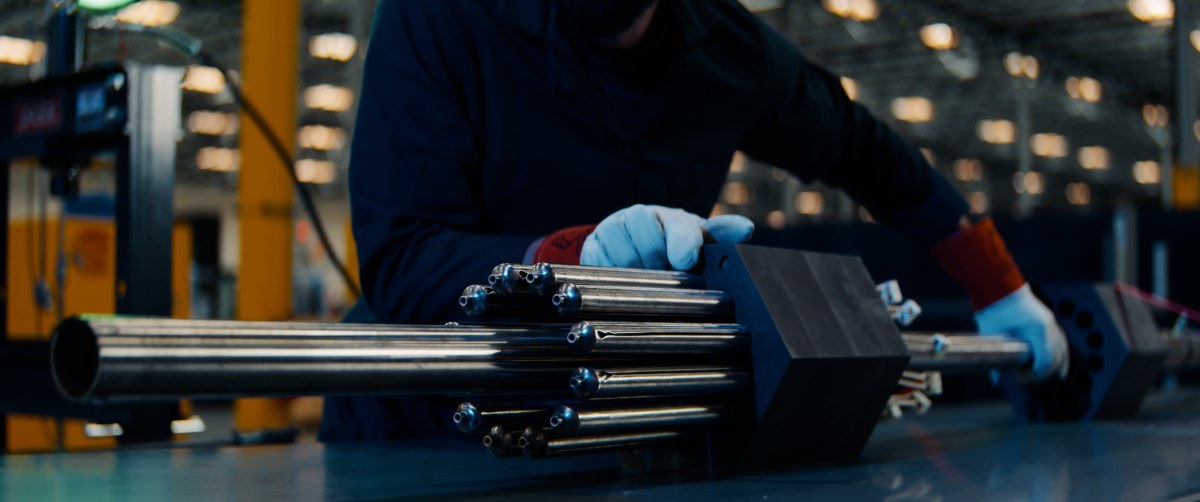
Antares Nuclear is no longer just another PowerPoint startup in the crowded SMR space. By securing $470 million in a Series C round led by Paradigm and Caffeinated Capital, the company has effectively declared that the future of military AI won't be powered by a fragile civilian grid. This capital injection—a mix of $370 million in equity and $100 million in debt—pushes their total war chest to $604 million, signaling that venture capital is finally ready to fund the heavy hardware required for autonomous power.
The strategic pivot here is obvious: if you want to run high-stakes AI clusters and command systems, you cannot rely on the local utility company. Antares is pitching microreactors (100kW to 1MW) as 'energy islands' for U.S. military installations. Their technical bet rests on TRISO fuel—uranium wrapped in ceramic shells that theoretically cannot melt. While the Mark-0 demo reactor successfully reached criticality at the Idaho National Laboratory in June, the real test lies in the Pentagon’s Advanced Nuclear Power for Installations program. As one of three finalists, Antares is slated to deploy its units at Air Force bases in Colorado and Montana by 2028.
Yet, for all the talk of a nuclear renaissance, the economic math remains aggressively speculative. Antares is hiding in the military's deep pockets because their SMRs cannot currently compete with the grid on cost. The venture world is betting that mass manufacturing will eventually drive down prices, but industrial history suggests that 'efficiency' in nuclear construction is a decades-long grind, not a software update. For now, Antares is selling the only thing the military values more than cheap power: the ability to stay online when everything else goes dark. Whether this scales into a viable commercial infrastructure for AI or remains a boutique solution for the Air Force is a $600 million gamble.
If the 2028 deployments succeed, the blueprint for AI infrastructure changes overnight. We are moving toward a world where compute and energy are physically fused into a single, hardened asset. For investors, this isn't just about clean energy; it's about owning the entire stack, from the reactor core to the inference engine, bypassing the limitations of an aging national infrastructure that was never designed for the voracious appetite of modern silicon.