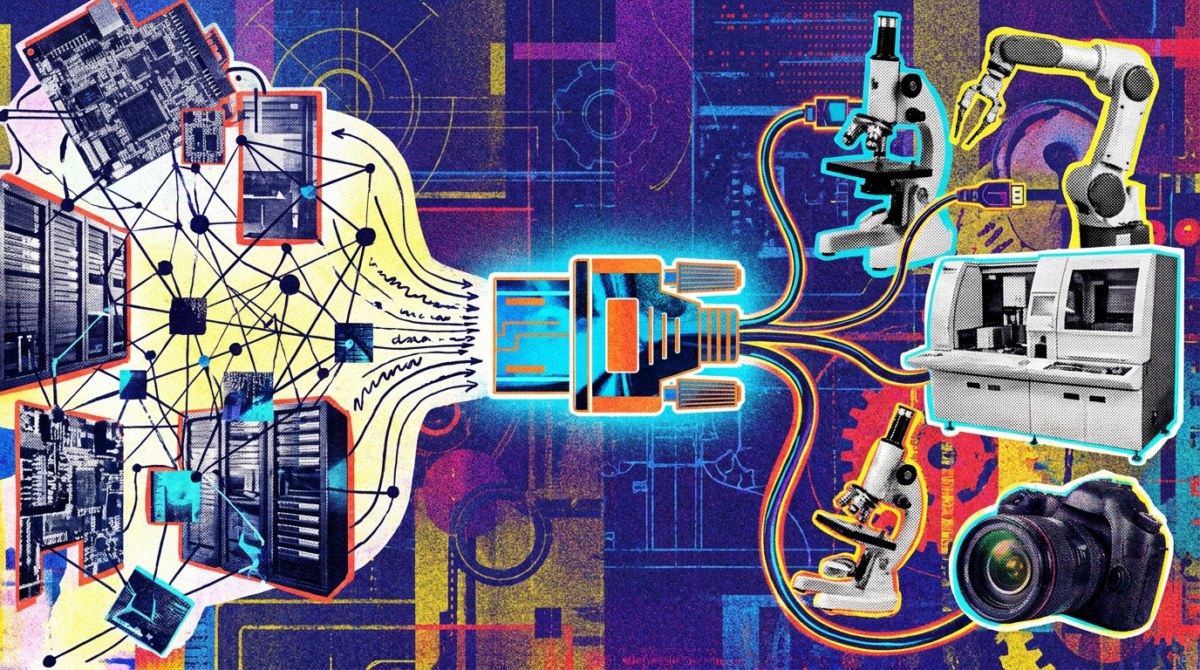
Anthropic is applying its Model Context Protocol playbook directly to the factory floor and wet lab. The company has unveiled the Model Hardware Standard (MHS)—an open, model-agnostic specification developed with the HHMI Janelia Research Campus to grant AI agents direct control over physical instruments, from microscopes to industrial robotic arms. By providing unified, standardized drivers, MHS makes proprietary programmable hardware discoverable out of the box. Anthropic claims this framework collapses integration timelines from months to minutes, enabling models to generate autonomous execution scripts that run locally without burning continuous inference budget on every actuator move.
Yet bridging software abstractions with messy physical realities immediately exposes the limits of pure-agent autonomy. While early partner trials across research labs and quantum testbeds show drastic workflow accelerations, deployments at Genentech revealed persistent blind spots in mechanical and spatial common sense: Claude repeatedly misjudged physical cause-and-effect dynamics until human engineers stepped in to recalibrate.
Standardizing interface protocols strips away integration headaches across fragmented vendor hardware, but it cannot solve real-world friction. Until frontier models reliably master spatial physics and mechanical failure modes, MHS functions as a high-leverage operational accelerator, not a turnkey replacement for technicians and lab supervisors.