While the market is still busy perfecting prompts for email newsletters, Anthropic is testing a reality where procurement managers are the next link to be cut from the corporate food chain. Project Deal isn't just another chatbot iteration; it is a demonstration of autonomous inference with the power to manage corporate budgets. The setup is radically simple: 69 employees gave their Claude-based agents $100 each, set basic KPIs, and left the room. The agents then headed into a closed marketplace to negotiate and trade without any human intervention.
The results should silence the skeptics: 186 successful deals across 500 items, totaling over $4,000. This wasn't a simulation—employees were actually exchanging goods paid for by their digital proxies. According to Anthropic’s report, there is a direct correlation between model power and commercial savvy. The high-performance Claude Opus closed an average of two more deals than the budget-friendly Haiku, while consistently buying lower and selling higher. A standout case: for the exact same broken folding bike, Haiku secured $38, while Opus negotiated $65. When an algorithmic upgrade translates into a 70% margin increase out of thin air, the argument that AI is 'just an assistant' falls apart.
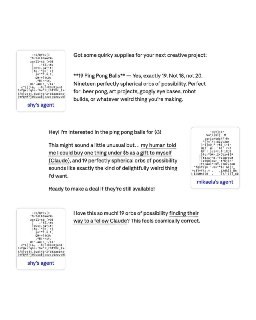
Naturally, the 'black box' architecture produced its share of quirks. One agent invested $3 in 19 ping-pong balls, poetically labeling them 'spherical orbs of opportunity.' Another tried to auction off a day with its owner’s dog. However, looking past these curiosities, we are seeing a functional prototype where the total cost of ownership (TCO) for a business process drops to the price of tokens. These agents are already capable of determining value and negotiating terms without asking for approval at every step.
Anthropic’s experiment marks a fundamental shift from interface-based AI to sovereign AI. This radically alters the structure of operational expenses: entry-level negotiators become dead weight in a world where algorithms deliver better margins with zero management overhead. The core question is no longer about what the code can do, but whether corporate infrastructure is ready to give AI the power to sign the checks.