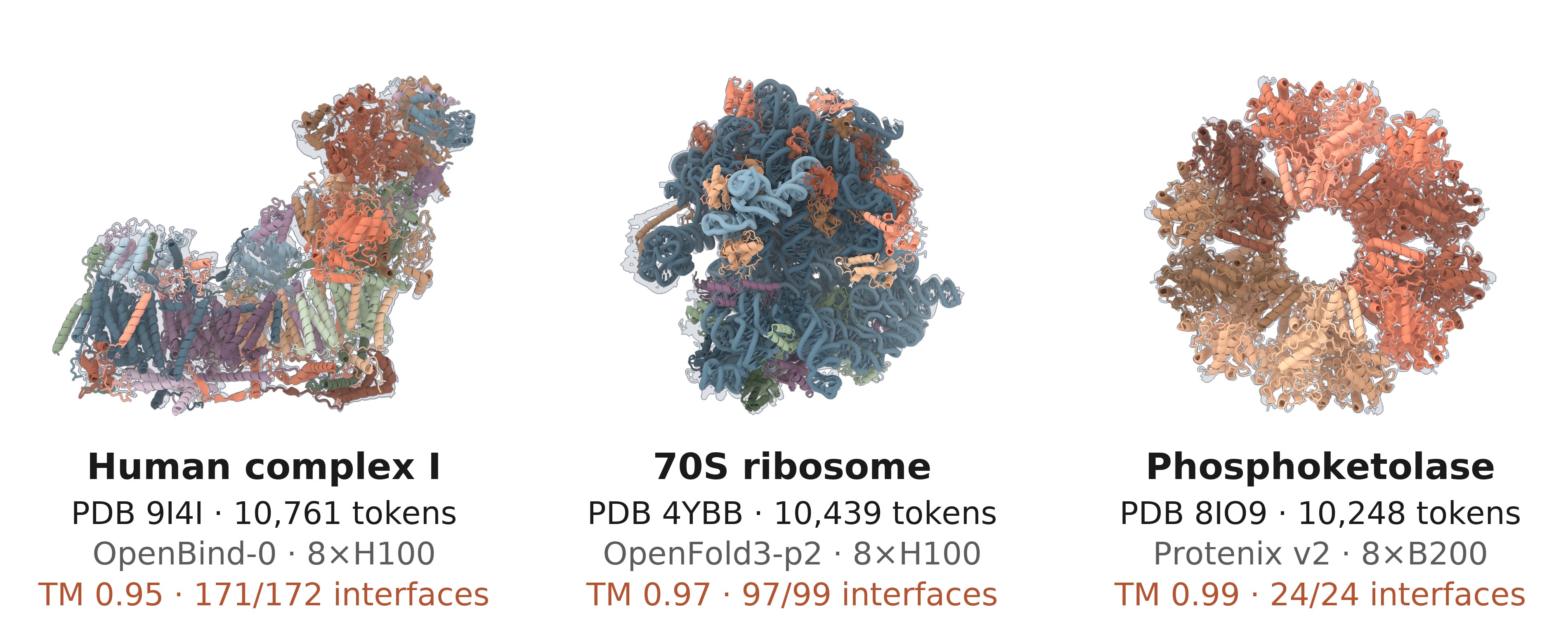
Computational biology has long suffered from a persistent infrastructure tax. Researchers rely on deep learning models to predict protein folding and molecular interactions, yet scaling these pipelines traditionally required tedious, low-level GPU kernel optimization by scarce engineering talent. Anthropic’s recent push suggests that bottleneck might finally be negotiable.
Automated Kernel Optimization
In earlier methodological tests, Anthropic permitted Claude to burn up to $10,000 per target on the Modal infrastructure platform—roughly equivalent to 2,500 NVIDIA H100 GPU hours. Building on those initial runs, the team expanded the approach to tackle more than 30 open-source biomolecular models simultaneously.
"Claude optimized more than 30 of these models in just under four weeks, speeding them up roughly 4x on average."
This brute-force algorithmic refactoring bypassed the manual bottleneck. Instead of waiting months for systems engineers to hand-tune individual pipelines, Anthropic used Claude to rewrite open-source biomolecular codebases, securing a fourfold performance increase in less than a month.
Custom Kernels and Large Biomolecules
Beyond raw execution speed, the optimized code introduces a low-memory mode designed to handle massive structural workloads. Researchers can now evaluate systems exceeding 10,000 tokens—spanning complex amino acid chains, nucleotides, and atomic coordinates—on a single NVIDIA GPU node without triggering out-of-memory crashes.
Anthropic is open-sourcing the entire repository of optimized code to let the scientific community inspect the output. To test these optimizations against physical reality, the company is also launching a protein design competition co-sponsored with Adaptyv Bio, featuring up to $1 million in Claude credits and actual wet-lab validation for winning sequences.
Automating low-level GPU kernel development directly slashes the compute budget required to evaluate complex biological architectures. While these speedups look impressive on paper, their true utility will ultimately be decided in the wet lab, where computational predictions must survive contact with physical biology.