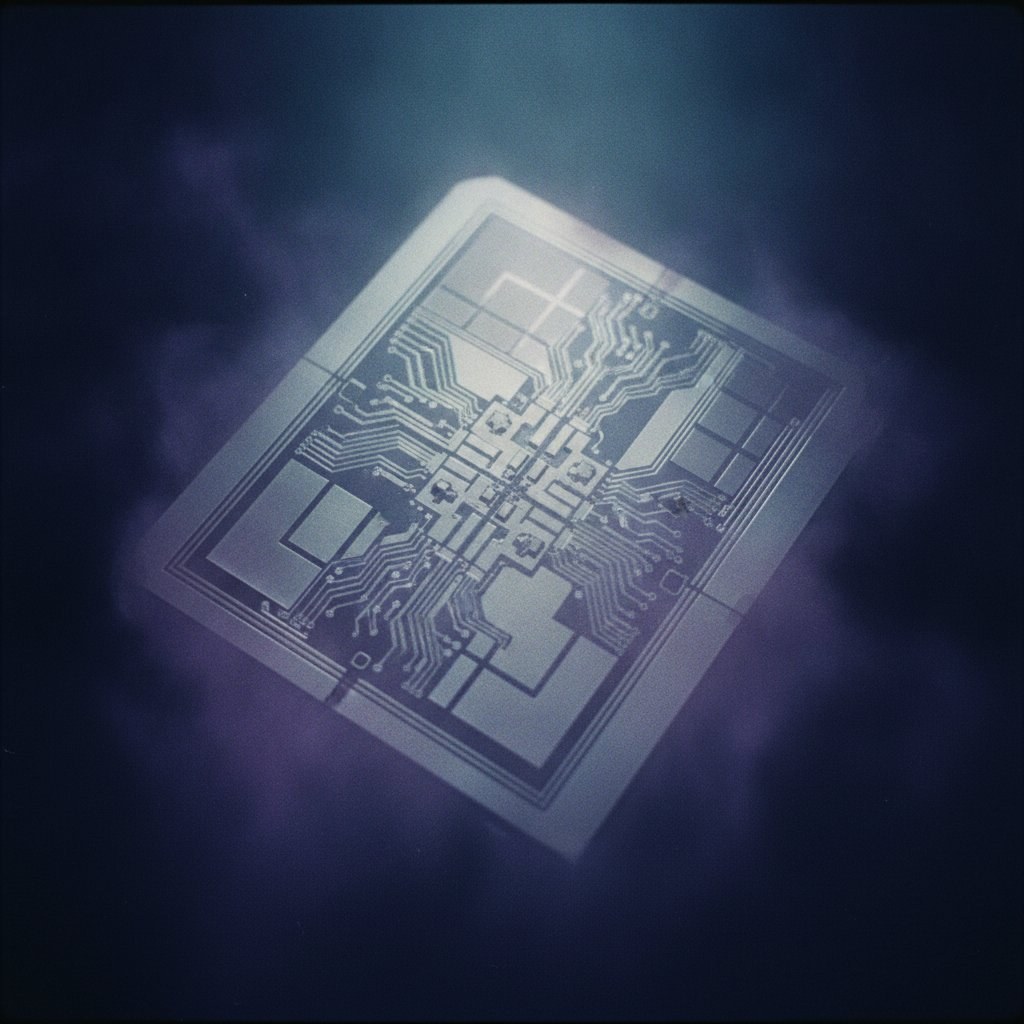
While Silicon Valley remains obsessed with cramming more memory into every chip, researchers from Seoul National University and Sungkyunkwan University are taking a contrarian path: teaching hardware how to forget. Led by Professors Min Hyuk Park and Jung Ho Yoon, the team developed an antiferroelectric-based semiconductor that treats 'natural forgetting' not as a bug, but as a feature. By utilizing a zirconium oxide (ZrO₂)-based antiferroelectric tunnel junction (AFTJ), they created a device that autonomously purges old data, mimicking the biological efficiency of the human brain.
This isn't just another academic exercise in neuromorphic engineering; it is a direct assault on the von Neumann bottleneck. Conventional AI architectures bleed energy by constantly shuffling data between memory and processing units, followed by power-hungry 'reset' cycles to clear the cache. The South Korean team bypassed this by pairing zirconium oxide with amorphous indium gallium zinc oxide (a-IGZO). The result is a two-terminal device that spontaneously reverts to its baseline state once voltage is removed, effectively performing a physical self-clean.
For engineers developing autonomous systems, this Physical Reservoir Computing (PRC) architecture represents a shift from software-defined data management to hardware-level autonomy. By offloading the 'forgetting' process to the physics of the material itself, the chip eliminates the operational overhead of manual resets. It is a pragmatic solution for the Edge AI sector—specifically for wearables and industrial IoT sensors that process continuous streams of speech or biometric data where only the immediate context carries value.
Moving the needle on energy efficiency in Edge AI requires more than just better algorithms; it requires hardware that doesn't hoard useless information. This antiferroelectric approach suggests that the next generation of low-power devices will succeed not by how much they remember, but by how intelligently they can let go of the past.