The infrastructure backing enterprise artificial intelligence has remained shackled to remote data centers, forcing engineering organizations to foot ballooning cloud GPU bills while wrestling with proprietary data leak vectors. As engineering teams hit these cost and governance ceilings, hardware engineered to run frontier models directly on local engineering workstations ceases to be an Apple novelty and becomes a balance-sheet asset. Apple's latest silicon roadmap highlights this tactical pivot, addressing memory-bound inference bottlenecks with dedicated multi-die desktop architectures.
Quad-Die Packaging and Memory Bandwidth
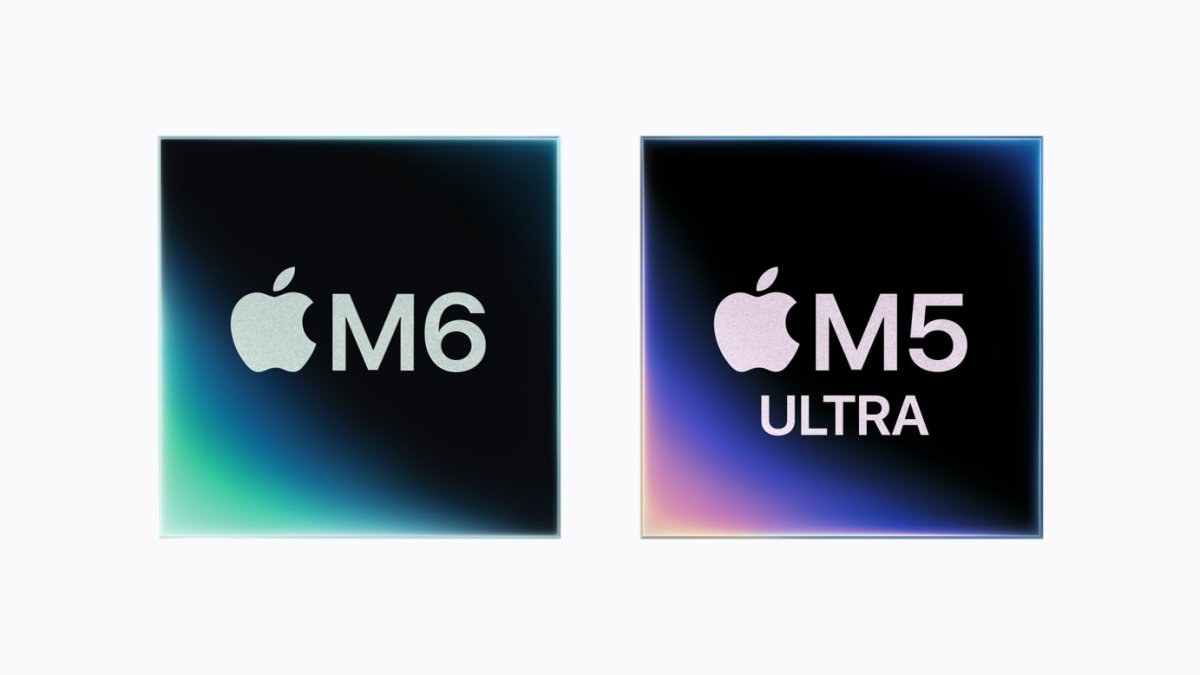
Apple has rolled out the M5 Ultra alongside the M6, powering updated Mac Studio and Mac Mini workstations. The top-tier M5 Ultra stitches two dual-die M5 Max chips into Apple’s first quad-die architecture, configured squarely for high-throughput AI workloads. The package combines up to a 36-core CPU, an 80-core GPU, and a record 1.2 TB/s of unified memory bandwidth—a 50% jump over the M3 Ultra. Crucially, this throughput directly targets the memory bandwidth wall that traditionally throttles local execution and exploratory fine-tuning of frontier LLMs.
"With these frameworks and new chips, developers can run and fine-tune large AI models locally on their Mac," Apple wrote in a press release.
In practical enterprise terms, large language models demand sustained memory bandwidth rather than just raw FLOPS to process tokens without latency penalties. By consolidating 1.2 TB/s of unified memory accessible simultaneously across CPU, GPU, and the Neural Engine, the M5 Ultra enables technical leads to run compute-intensive prototyping, local weights execution, and proprietary data pipelines directly on engineer desks rather than queuing runs on rented Nvidia H100 clusters.
Local Inference and Silicon Efficiency
Alongside the flagship workstation silicon, Apple announced the mainstream M6 on a 2 nm fabrication node. The M6 integrates a 12-core CPU complex, two additional GPU cores, and a Dual 16-core Neural Engine. As Apple Vice President of Silicon Engineering Sri Santhanam noted, this design delivers nearly a 30% increase in peak GPU compute for AI over the M5, accelerating local prompt evaluation and lightweight agent runtimes.
While Apple still leans on third-party cloud infrastructure for consumer-facing features like its Google Gemini-backed Siri rollout, its enterprise hardware value proposition is strictly local. Engineering teams running Apple Foundation Models or proprietary internal checkpoints can orchestrate workloads across CPU, GPU, and Neural Engine cores without telemetry leaving the local perimeter. At an $899 entry point for baseline Mac Mini configurations and high-spec M5 Ultra Mac Studios targeting development seats, local silicon delivers a concrete ROI path against recurring cloud compute overhead.
Audit your development team's exploratory fine-tuning spend and evaluate whether deploying dedicated 1.2 TB/s unified memory workstations offsets recurring multi-tenant cloud GPU expenses while locking down proprietary data pipelines.