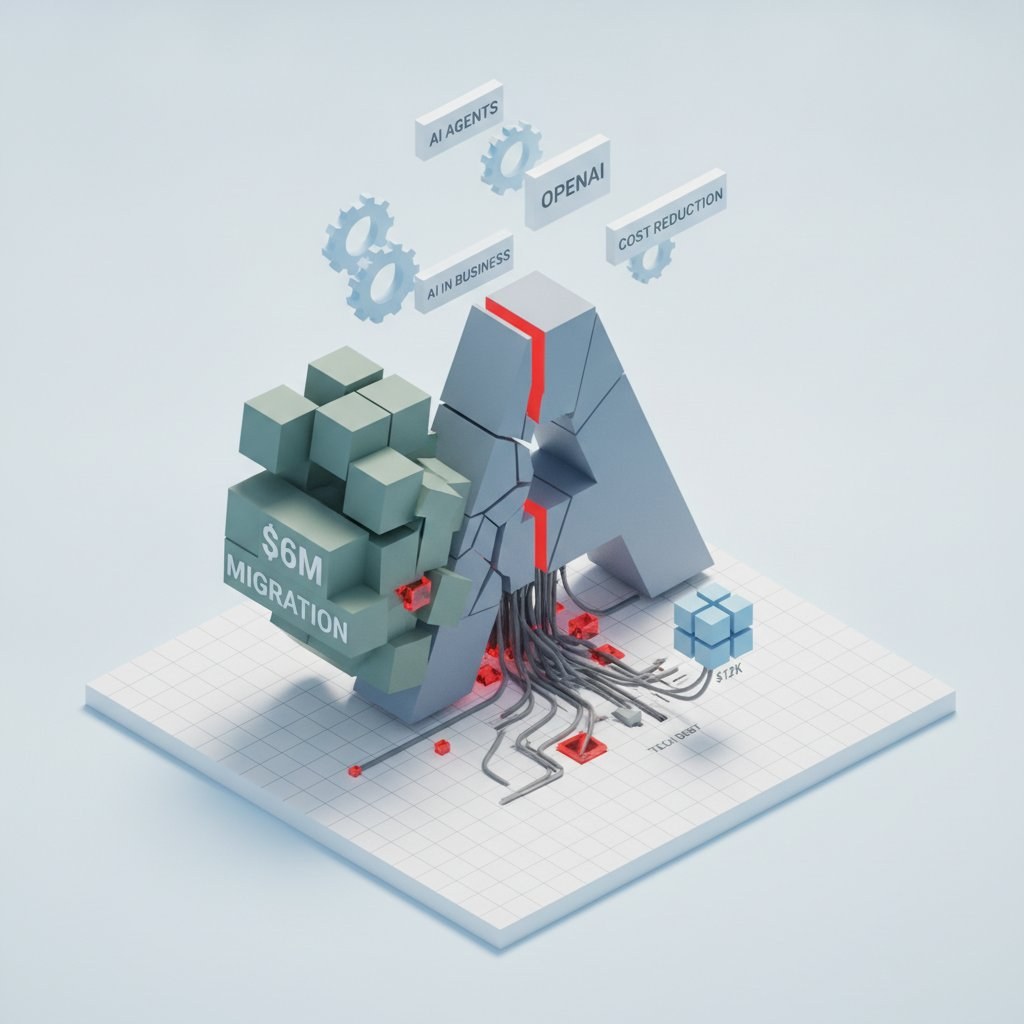
Asana bypassed an estimated five-year, $6 million manual refactoring slog by rewriting its legacy frontend testing framework in just two calendar weeks. Armed with OpenAI Codex and a modest $12,000 in API spend, the enterprise work-management platform eliminated Enzyme—an abandoned testing utility that had choked its stack modernization for years.
The mechanics demonstrate the brutal economics of autonomous refactoring. Using a concise five-sentence prompt across four parallel coding agents, Asana replaced hundreds of developer-hours with batch code generation. Engineering oversight was reduced to twice-daily progress tracking and pull request reviews, wrapping up active development in roughly 1.5 engineering weeks.
While Chief Technology Officer Amritansh Raghav frames this as freeing developers for higher-level craft, the precedent demands skepticism from enterprise architects. Compressing multi-year migrations into automated two-week bursts offloads the entire burden of structural validation onto existing CI/CD pipelines. Without exhaustive manual audits, replacing deprecated tooling via automated sweeps risks substituting visible legacy bottlenecks with insidious, auto-generated technical debt.