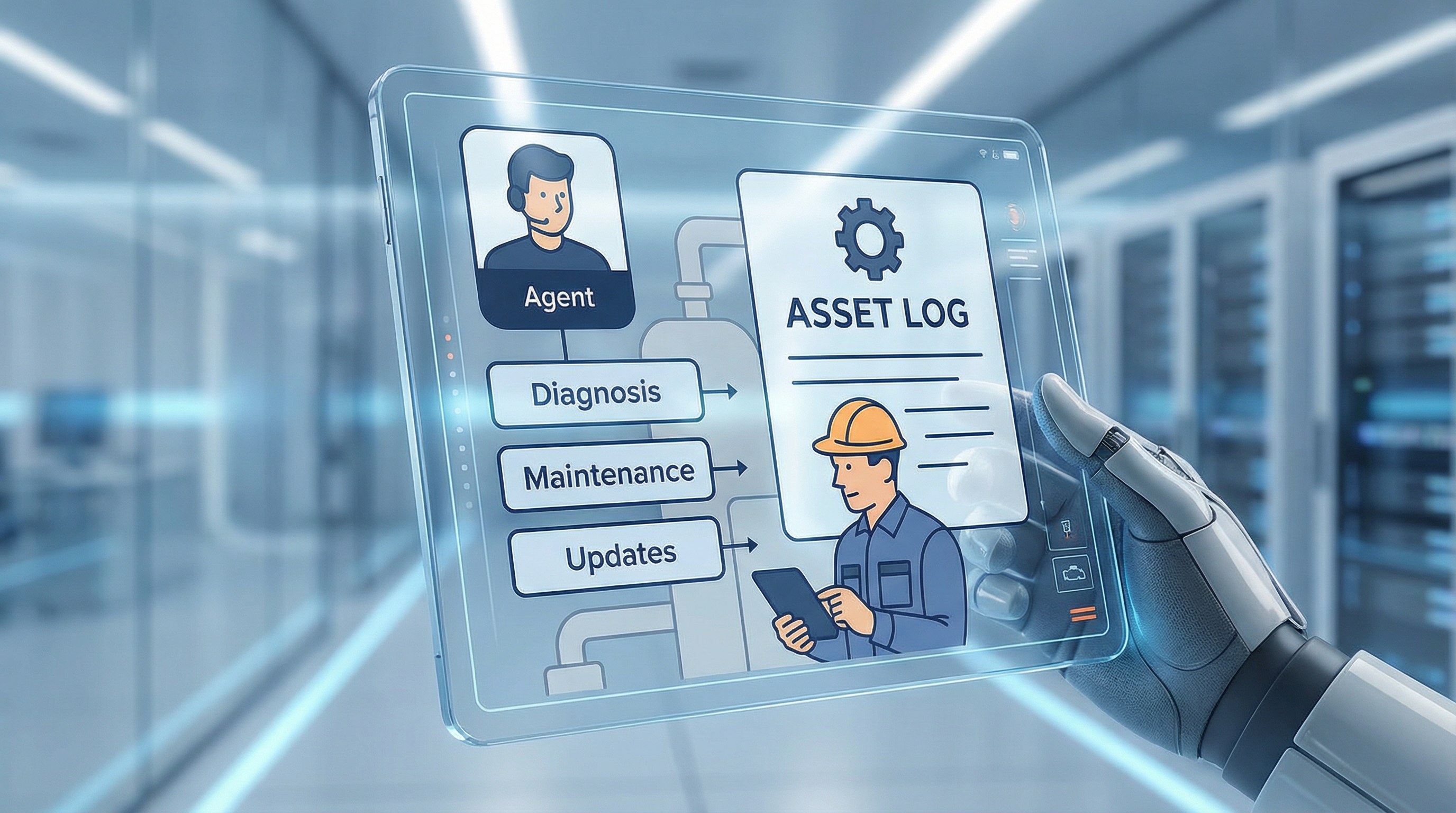
Existing benchmarks for AI agents are, frankly, a spectacle. They can teach neural networks to write code or mimic browser users, but when it comes to real-world production, all this "intelligence" instantly evaporates. IBM Research developers seem to have grown tired of seeing abstract models produce impressive paper figures while being completely helpless against thousands of signals from chillers and ventilation systems. Thus, AssetOpsBench was created – a tool that attempts to bring AI agents down to earth, honing them for tasks as close as possible to industrial realities. These are no longer "lab rats," but an effort to reconcile developer illusions with harsh industrial truths.
AssetOpsBench prioritizes multi-agent interaction. This is appropriate, as managing industrial assets rarely involves a single "superhero" handling all issues. More often, it requires the cooperation of multiple systems that must jointly process data streams, respond to failures, and manage complex work orders. To evaluate this teamwork, the benchmark utilizes 2.3 million sensor data points, over 140 scenarios with 53 different failure types, and 4.2 thousand work orders. Forget abstract numbers – this assesses AI performance in real, sometimes dangerous, conditions.
The main distinction of AssetOpsBench lies in its six metrics that truly matter to industry. This goes beyond a simple "task completed." It evaluates decision-making quality, logical reasoning, failure comprehension, and the ability to handle incomplete or noisy data. Among the criteria are: information collection accuracy, result verification, correct action sequencing, justified conclusions, and, of course, the level of "hallucinations." Early tests have already shown that universal agents, despite their apparent competence, stumble on multi-step coordination, failure semantics, and temporal dependencies. The conclusion is stark: they are not yet suitable for critical industrial tasks.
Why should this concern you? AssetOpsBench is designed to end the era of purchasing "pretty" results from lab tests that have as much relevance to actual production as a tractor has to a spaceport. For CEOs and CTOs, this means the opportunity to make more informed investment decisions. You can now select AI solutions that genuinely enhance asset operational efficiency and safety, rather than merely simulating work. This is a chance to transform AI agents from expensive toys into reliable operatives.