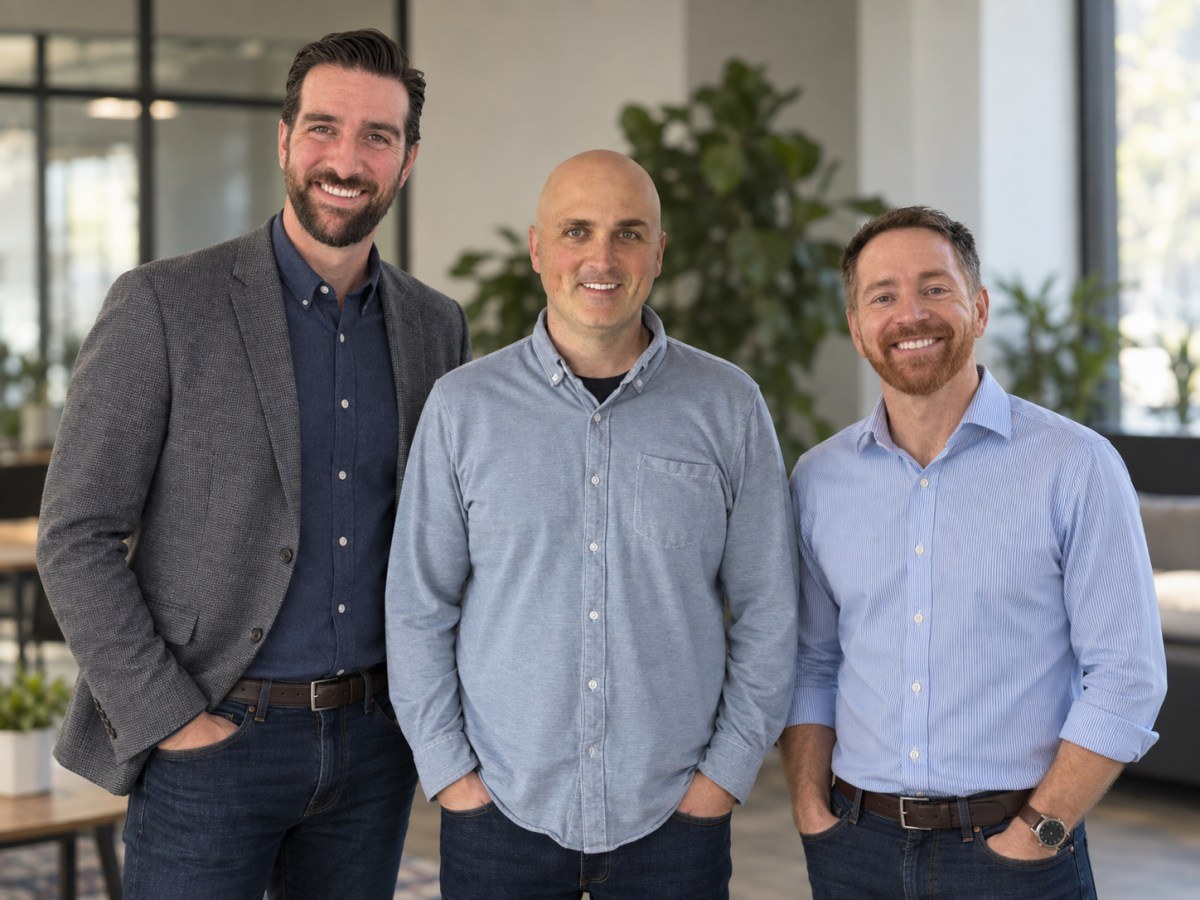
When standard spreadsheets choked on rapid planning adjustments during Tesla's 2018 Model 3 production push, the automaker's operations crew built an internal tool to simulate scenarios and balance inventory. Co-founders Michael Rossiter and Neal Suidan subsequently exited stealth mode to commercialize that exact methodology through Boston-based supply chain startup Atomic.
Now, as confirmed by funding disclosures, the company has secured a $12.5 million Series A round led by Klass Capital and Madrona Venture Group, pushing its total haul past $15 million. Along with the fresh capital, longtime Tesla planning director Jeff Goodrich has joined Atomic as its CTO and third co-founder.
Autonomous Execution at Scale
Instead of merely surfacing passive inventory dashboards, Atomic's agentic software simulates supply chain variables and directly executes purchasing orders across enterprise networks. Early adopters like DoorDash and HelloFresh have already deployed the technology to automate stock distribution and slice through food waste metrics.
"The product has evolved from being an optimization platform that gives recommendations to a platform that not only gives recommendations but it makes decisions, so it's fully autonomous in that sense, and so DoorDash is running, I think, 90% of its purchasing across hundreds of sites."
As explained by Jon McNeill, an Atomic board member and former Tesla president who incubated the startup at DVx Ventures, this level of automated purchasing across hundreds of DoorDash facilities marks a structural shift toward hands-off operations. According to company disclosures, Atomic's annual recurring revenue has quintupled since the start of the year as enterprise clients hand over routine inventory routing to algorithms.
Compounding Decision Speed
As CEO Michael Rossiter points out, supply chain management represents a virtually infinite search space where underlying conditions shift constantly, making autonomous algorithms the only practical tool for finding viable planning paths. Chief Product Officer Neal Suidan engineered the underlying models to extract implicit operational rules directly from staff workflows, allowing systems to bypass manual approvals entirely.
Handing critical enterprise purchasing over to autonomous agents suggests operations executives are more than ready to swap human oversight for software logic—provided the algorithm takes the blame when supply chains inevitably fracture.