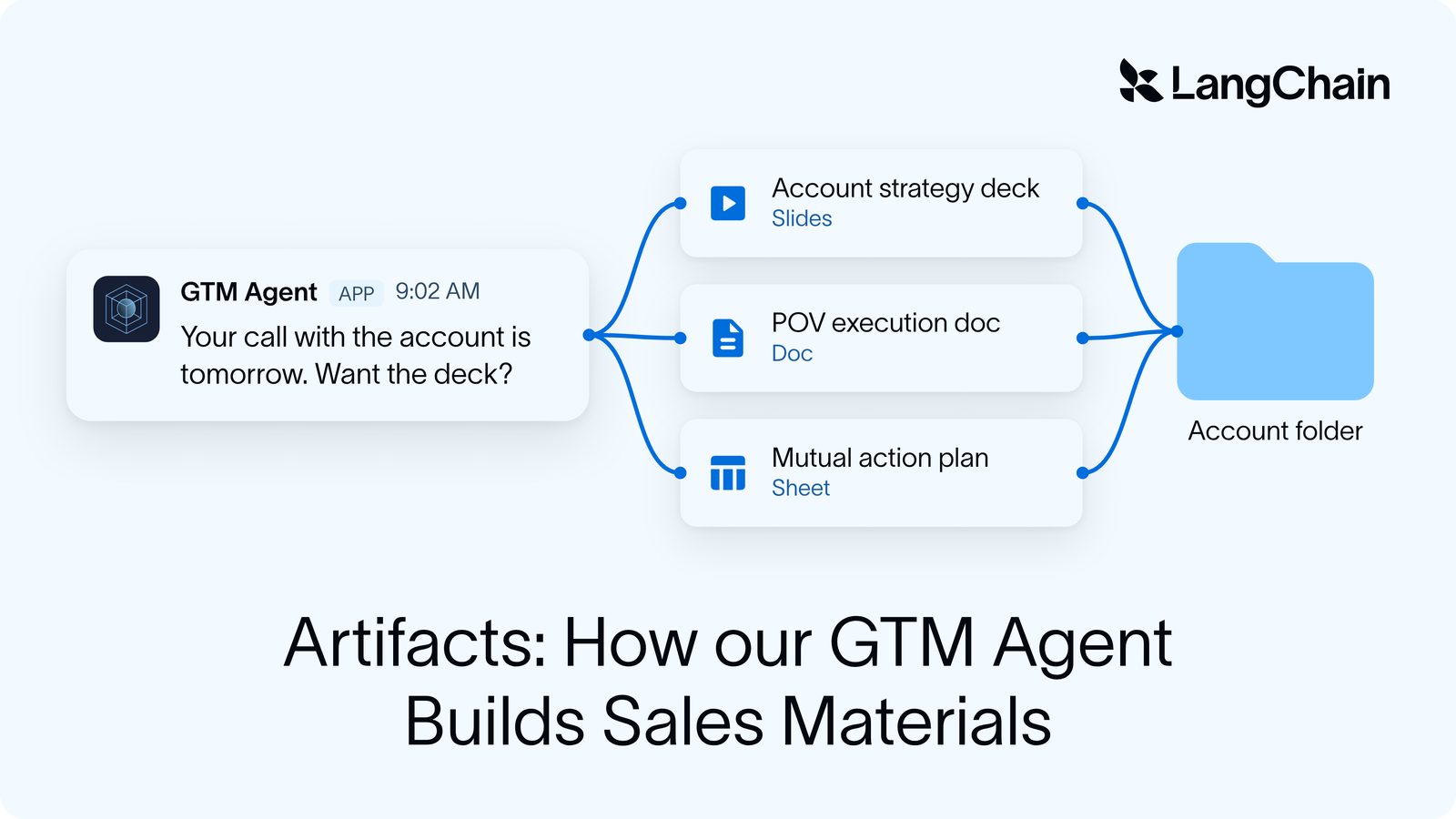
Thousands of working hours across sales workflows have been reclaimed by LangChain's internal GTM Agent over a 12-week operational run. In that timeframe, the system produced 1,540 sales artifacts, replacing the manual, account-by-account collateral creation that sales representatives handled previously. Rather than treating artificial intelligence as a chat interface for drafting one-off materials, the software provider embedded pipeline logic directly into autonomous execution.
Automating routine document generation reduces sales operating costs effectively when an agent is bound to operational context rather than conversational prompting. The core issue facing commercial leaders evaluating autonomous operations is whether an agent can eliminate manual sales assembly without sacrificing brand consistency and deal governance. Account executives historically built proposal decks by pulling usage metrics into chat assistants and manually assembling slides, creating fragmented versions of collateral across the enterprise.
The Architecture of Deal Grounding
Operationalizing sales collateral generation requires encoding company sales gates directly into the agent. As LangChain documented, the GTM Agent holds the operational context for how the company runs a deal at every stage, including document templates, expected follow-up questions, and the authoritative source for each data point.
To construct every deliverable, the system ingests the company's Salesforce records, product usage metrics, customer call transcripts, recorded risks, decision criteria, and designated next steps. Instead of relying on manual prompt adjustments, the team deploys these capabilities via the Deep Agents harness, which supplies the underlying sandbox, operational skills, and memory layers through Managed Deep Agents. Beyond collateral drafting, the GTM Agent researches incoming leads, drafts personalized outreach for account representatives to review in Slack, and flags weekly expansion opportunities alongside deal risks.
Pipeline Conversion Economics
Standardizing deal materials through process context alters pipeline economics and conversion velocity across active accounts. During the 12-week deployment, the system maintained an output pace of over 100 artifacts per week, allowing sales personnel to avoid repetitive assembly while tracking active pipeline gates.
Most of the quality comes from the context we gave the agent rather than from prompt tuning.
Customer engagement metrics validated the relevance of these automated deliverables. Overall, 46% of generated artifacts were followed by a customer call within 14 days, demonstrating immediate commercial utility in active pipeline reviews. Materials that sales representatives forwarded directly to prospects accounted for 337 hours of saved representative time over the period.
The decisive financial return emerges in conversion velocity through pipeline gates. Deals where an account representative sent a GTM Agent artifact advanced to a later stage 47% of the time, compared with a 16% advancement rate for matched deals without one.
Against the field
Instead of wasting effort on prompt tweaks, the team locked the workflow directly into corporate Salesforce data and customer call transcripts. According to the company, feeding the agent verified enterprise context rather than raw chat instructions pushed deal pipeline stage progression to 47%.