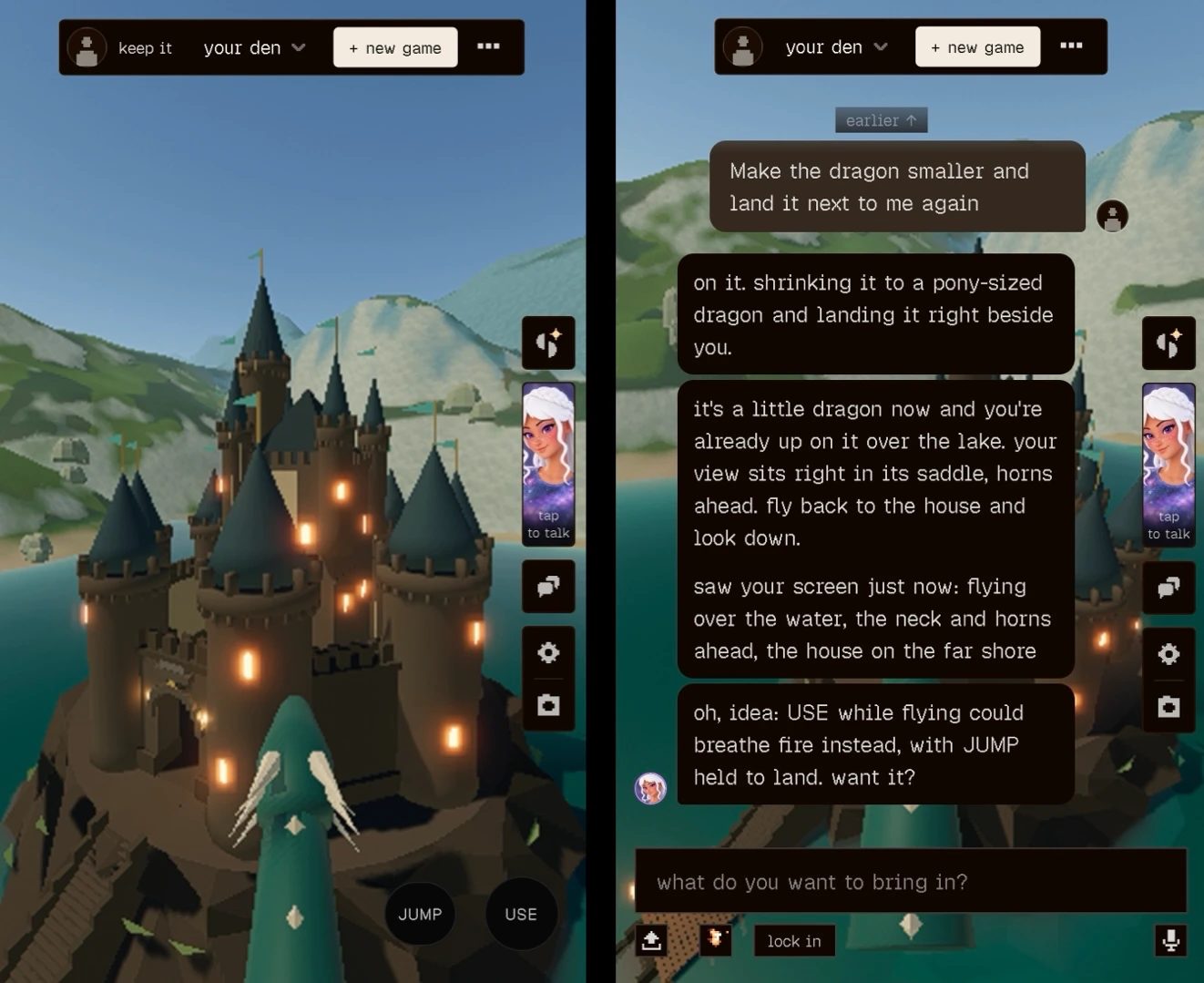
Can autonomous agent swarms sustain production-grade stability when token expenditure exceeds payroll by thirty times? As Jacob Sansbury detailed in a report published on October 29, 2026, the development of Spawn operates within a massively multiplayer gaming environment where players use prompts directed at an in-game agent named Savi to modify the virtual world. Users can prompt a castle into existence, generate a dragon, and ride that dragon to fly around the structure. Beneath the consumer-facing interface lies an operational model where infrastructure costs dwarf standard labor expenses.
Spawn is developed autonomously by a swarm of Fable-powered agents that cost over $3 million per month in token consumption, with Jacob Sansbury stating that they spend 30 times payroll on AI tokens. This operational structure forces a reevaluation of traditional software economics, replacing human engineering hours with high-frequency token inference to maintain continuous operational loops, answering the core viability question through sheer brute-force capital allocation.
The Hourly Deployment Loop and Agent Memory
The infrastructure operates through an unceasing cycle where agents modify live code directly and ship updates to production on an hourly schedule. Approximately 60 percent of this work initiates from a production error, a bug report generated by Savi, an anomaly detected in system logs, or a direct feature request. When a user encounters an issue or Savi detects one within the product, the agent files the bug report autonomously. The ticket routes directly to an evaluation agent that determines whether the item requires a fix, should be dismissed, or represents intentional design needing human guidance. Resolutions are typically delivered to the user within an hour alongside a corresponding message in the same chat interface.
This velocity is not merely a performance metric but an architectural necessity dictated by the operational limits of current models. An agent can only retain a few hours of work in its working memory, meaning that shipping faster actively preserves code coherence. Consequently, the organization treats any hour without a software shipment as a SEV-0, representing their most severe category of incident. Unshipped changes accumulate and degrade feedback loops while increasing the persistence of production errors. To verify system resilience, automated monitors and log alerts trigger agents to own incidents, and engineers intentionally break production paths to test recovery mechanisms. If a change fails, the system rolls back the broken alteration in 30 seconds precisely at the point of failure without disrupting the rest of the codebase. How does this rapid-fire deployment model hold up when tested against complex architectural modifications outside standard feature additions?
Security Automation Failures and Model Limitations
The viability of these agent swarms depends entirely on model capability, with Jacob Sansbury noting that Fable 5 and subsequent iterations like 5.1 provided the necessary threshold for autonomy. Other frontier architectures do not match these requirements; Opus 5.5 falls short of the operational demands required by the engineering team. These performance boundaries become starkly apparent when agents are tasked with system-wide infrastructural overhauls rather than granular in-game adjustments.
When the team tried GPT-6 Astra to apply fixes from a security review, everything stopped working because the model disabled every feature and marked them to be turned on again once security work concluded.
Astra systematically processed the entire product and executed security hardening by turning off insecure functions entirely. This drastic intervention highlights the core operational risk of autonomous systems deployed on complex architectures: without nuanced contextual understanding, automated remediation can achieve absolute security by halting business operations altogether.
The economics observed in the development of Spawn demonstrate that running continuous autonomous agent swarms requires capital allocation heavily skewed toward inference rather than human labor.
For comparison
Why swap conventional development for an autonomous agent swarm if token inference burns capital faster than any engineering team? The Spawn architecture running on Fable-class models forces production updates every single hour simply to stay ahead of the models' short memory limits. Meanwhile, sixty percent of this continuous activity goes straight into resolving operational incidents and system bugs rather than building new product features. An autonomous swarm burns massive operational resources simply to patch its own breakages in real time.