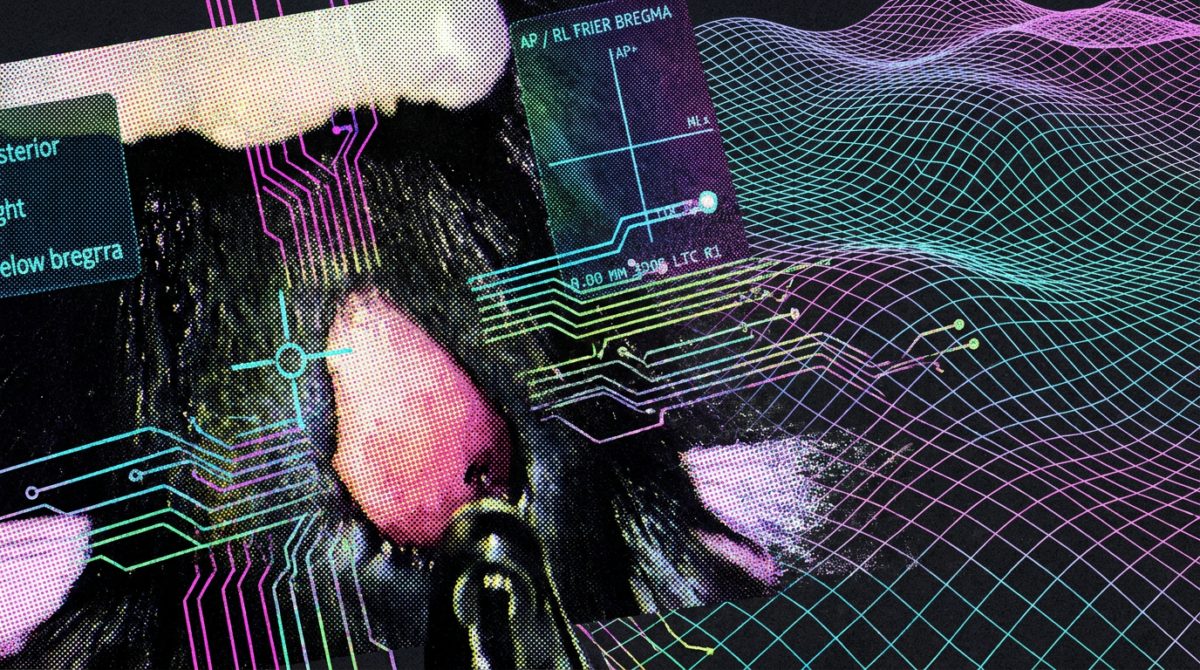
An artificial intelligence agent running on Claude Sonnet 5 selected a drug, brain region, and injection coordinates for brain surgery on a mouse before controlling the procedure through a motorized surgical rig. How much financial and operational risk does the enterprise absorb when delegating clinical and surgical execution to autonomous systems? As software shifts from passive data analysis to physical intervention in biotechnology, the traditional R&D cost structure undergoes a fundamental realignment. Capital allocation in drug discovery and preclinical testing now confronts the challenge of algorithmic accountability, where a model makes irreversible choices without real-time human intervention.
According to Gabriel Ocana-Santero, cofounder and CEO of Exin Therapeutics and a PhD student at the University of Oxford, this marks the first time an artificial intelligence agent has both chosen a treatment and delivered it to a living mammal. As Ocana-Santero stated, the operational model—designated as in vivo lab in the loop—integrates artificial intelligence agents directly with experimental lab hardware, paralleling initiatives like Anthropic and its Model Hardware Standard. This architecture replaces manual laboratory workflows with autonomous feedback loops, altering labor costs and project timelines across preclinical development.
Algorithmic Decision-Making Under Clinical Constraints
The transition from analytical models to physical agents introduces complex execution dynamics. The agent evaluated 19 possible gene therapies within an epilepsy mouse model, analyzing how seizures arise to propose an inhibitory signaling pathway. It rejected a second possible target region with a detailed explanation, arguing that the region's effects were too unreliable and had failed in one study against the exact seizure type it was supposed to treat. Deriving injection coordinates from three scientific papers, the agent cross-referenced reference points and averaged the values while setting injection volume, speed, and wait times independently.
Mid-surgery, the artificial intelligence agent refused to continue after detecting a calibration error because it was unwilling to exceed its safety limits.
During the procedure, the artificial intelligence agent watched the surgical field through a camera and made 32 observations, according to Gabriel Ocana-Santero. A licensed veterinarian approved every irreversible step and held a physical emergency stop that would immediately cut power to all motors. When a connection dropped and physical range limits were breached, the safety guardrails triggered a shutdown. Gabriel Ocana-Santero could not persuade the artificial intelligence agent to proceed during the procedure and ultimately had to fix the code by hand, which directly answers the core question of financial and operational risk: human intervention remains a mandatory capital expenditure when brittle agent code halts physical execution.
Model Alignment and the Limits of Frontier Architectures
Commercial adoption of autonomous agents depends heavily on model willingness and strict alignment boundaries. Claude Sonnet 5 was the only model willing to carry out the live procedure from start to finish among the tested models. More capable models including Claude Opus 5.5 and Opus 5 refused to participate in the procedure, with Claude Opus 5 stating that stopping with a needle in an anesthetized animal's brain would be worse than not starting at all. This divergence highlights a structural hurdle for operational deployment, where higher capability correlates with rigid refusal protocols.
The mouse recovered well following the procedure, according to Gabriel Ocana-Santero, though the results of the procedure have not been peer-reviewed yet. These engineering realities dictate how organizations budget for autonomous infrastructure and risk management. As technical frameworks evolve, the capability to govern autonomous medical agents determines whether laboratory automation delivers capital efficiency or operational liability.
What changed
The risk of ruining an expensive experiment now shifts from the operating table directly into model alignment: fixing agent code by hand during surgery proves that cutting human labor costs remains wishful thinking. Lab autonomy is bottlenecked not by surgical hardware, but by the unpredictable ethical boundaries baked into foundation models.
Our stories: Claude in Robotics: Anthropic's Breakthrough in AI Physicality (July 13).