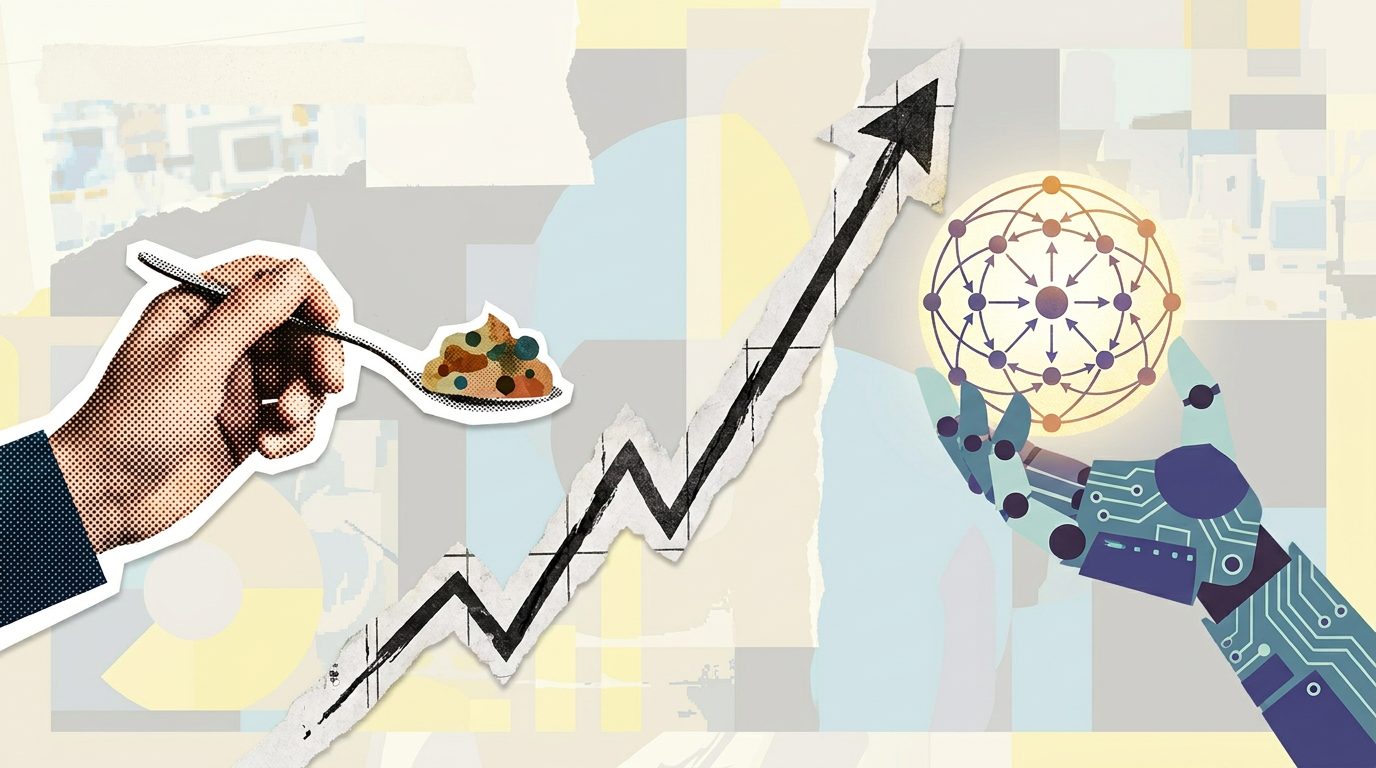
The horizon for recursive, self-improving AI has quietly shifted inward, and the implications for corporate R&D budgets are stark. According to Anthropic co-founder Jack Clark, the timeline for artificial intelligence systems capable of independently training a stronger successor has been pulled forward to 2027, with the odds of reaching this threshold pegged at roughly 30 percent by 2027 and nearly 60 percent by the end of 2028.
This shift is not driven by marketing narratives, but by concrete benchmarks tracking autonomous research capability. A new evaluation framework known as TasteVal measures how effectively AI systems can design experiments and interpret their results without human intervention. As P-Zero Research outlines, research taste relies on three distinct pillars: identifying which research questions are actually worth pursuing, designing rigorous experiments to answer them, and correctly interpreting the resulting data.
In testing, the methodology pits models against eight fixed research goals drawn directly from AI model development, complete with measurable scoring rubrics. A fixed coding agent executes all experiments on a single Nvidia H100 GPU. To establish a baseline, the researchers enlisted 24 human experts who had recently worked at labs like OpenAI, Google DeepMind, Nvidia, and Microsoft Research.
The results expose a widening efficiency gap. The top-performing system in the evaluation, Anthropic's Opus 5.5, achieved a compute multiplier of 2.3, hitting expert-level scores while consuming less than half the computational resources. More importantly from a financial perspective, a single automated run cost roughly one-thirtieth of the average expense required for a human expert attempt.
Even more telling is the velocity of improvement. Across successive model generations, the compute multiplier has roughly doubled every three months since December 2025. When machine capability doubles quarterly while unit costs drop to a fraction of human labor, traditional R&D cost models break down entirely. This dynamic forces a structural reallocation of corporate capital: budgets must rapidly shift away from expanding human headcount for exploratory trials and toward automated compute infrastructure capable of running thousands of concurrent virtual experiments.
For enterprise leadership, this structural shift forces an uncomfortable recalculation. With a compute multiplier of 2.3 allowing AI systems to match expert output at less than half the resource expenditure, enterprise experimentation timelines collapse from months to hours. Capital allocation toward large, human-led research teams and protracted experimentation cycles risks funding approaches that will soon be priced out of relevance by autonomous systems operating at a fraction of the cost and time.
Editorial analysis
The company openly urges the entire industry to slow down through self-regulation, yet pulls its timeline for recursive self-improving AI right into 2027. As we reported in late September, Dario Amodei publicly demanded restraint while his own alignment lead estimated the risk of human extermination above 10%, shortly after we wrote in April about their dataset of 81,000 responses tracking shifts in corporate hiring and job duties. Jack Clark's estimate of a 30% probability by 2027 and nearly 60% by late 2028 turns autonomous R&D from an abstract thought experiment into a hard deadline for enterprise budgets. Calls for industry restraint now run parallel to an accelerating timeline where the models themselves take over the research bench.
We covered this: April 26, September 26