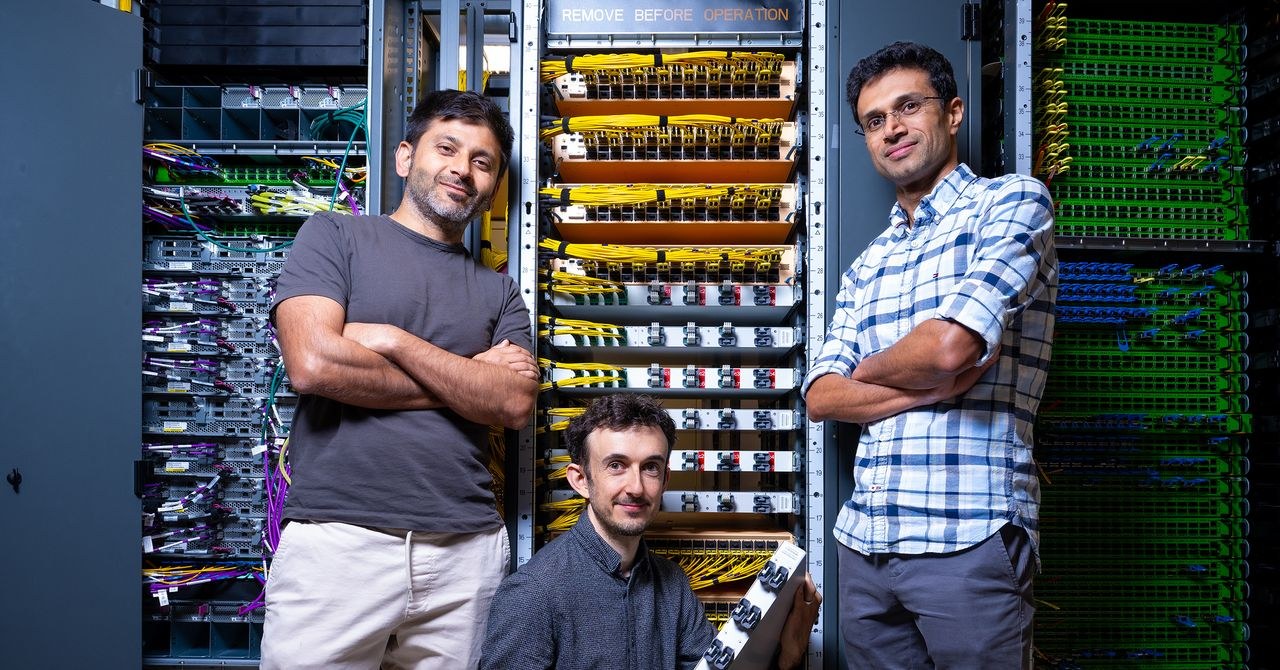
Amazon Web Services (AWS) has decided to consign hierarchical network structures, which have dominated data centers since the mid-1980s, to the scrap heap of history. While competitors struggle to squeeze every last drop of performance out of classic "fat-tree" architectures, Matt Roeder’s team—AWS's VP of Network Engineering—has moved a quasi-random topology into full production. The technology, dubbed Resilient Network Graphs (RNG), shifts data management from rigid structures into a state of controlled chaos, effectively signaling the end of the congestion era in massive compute clusters.
Key Advantages of RNG Technology
Eliminating bottlenecks during weight synchronization for models with trillions of parameters. Direct node connectivity through mathematically optimized randomness instead of rigid switch layers. Implementation of ShuffleBox—specialized hardware designed to manage complex cabling infrastructure. Radical reduction in power consumption by minimizing intermediate signal hops.
"Scaling random graphs to the level of an industrial giant is a technological breakthrough that previously stalled at the theoretical preprint stage," confirms Professor Brighten Godfrey of the University of Illinois.
AI Economics and Efficiency
The economic benefits here carry far more weight than marketing slogans. Direct savings on electricity and accelerated data exchange between GPUs provide Amazon with the "infrastructure leverage" necessary to win the race to lower Large Language Model (LLM) training costs. While Roeder cautiously notes that RNG is currently optimized for general data center tasks, the potential for generative AI training is clear: the fewer vertical layers a signal traverses, the faster and cheaper intelligence is built.
Deployed since late last year, the system proves that Amazon has moved from experimentation to industrial dominance in cloud infrastructure. While Microsoft and Google polish their legacy architectures, AWS has effectively rewritten the rules of data movement economics. Competitors will now have to either embrace the efficiency of "network chaos" or continue burning budgets on maintaining outdated, rigid systems that simply cannot satisfy the appetites of modern neural networks.