AI · This text was generated with artificial intelligence
Public leaderboards have long functioned as the industry's default compass for enterprise AI procurement and architecture selection. Yet aggregate evaluation scores routinely obscure the actual operational capabilities driving model performance. Researchers at the Allen Institute for AI (Ai2) have introduced BenchMIRT, an audit framework designed to evaluate language model benchmarks at the prompt level, exposing the hidden confounding variables that skew today's most widely cited safety and reasoning evaluations.
Uncovering Hidden Variables in Evaluation Datasets
BenchMIRT borrows Multidimensional Item Response Theory from psychometrics to evaluate both test items and model responses simultaneously. As tech reporter Kyle Wiggers documented, standard evaluation suites compress distinct cognitive traits into deceptive headline figures. Tested against evaluation results across 100 language models, 16 standard benchmarks, and over 34,000 questions, the framework revealed systematic distortions across established leaderboards.
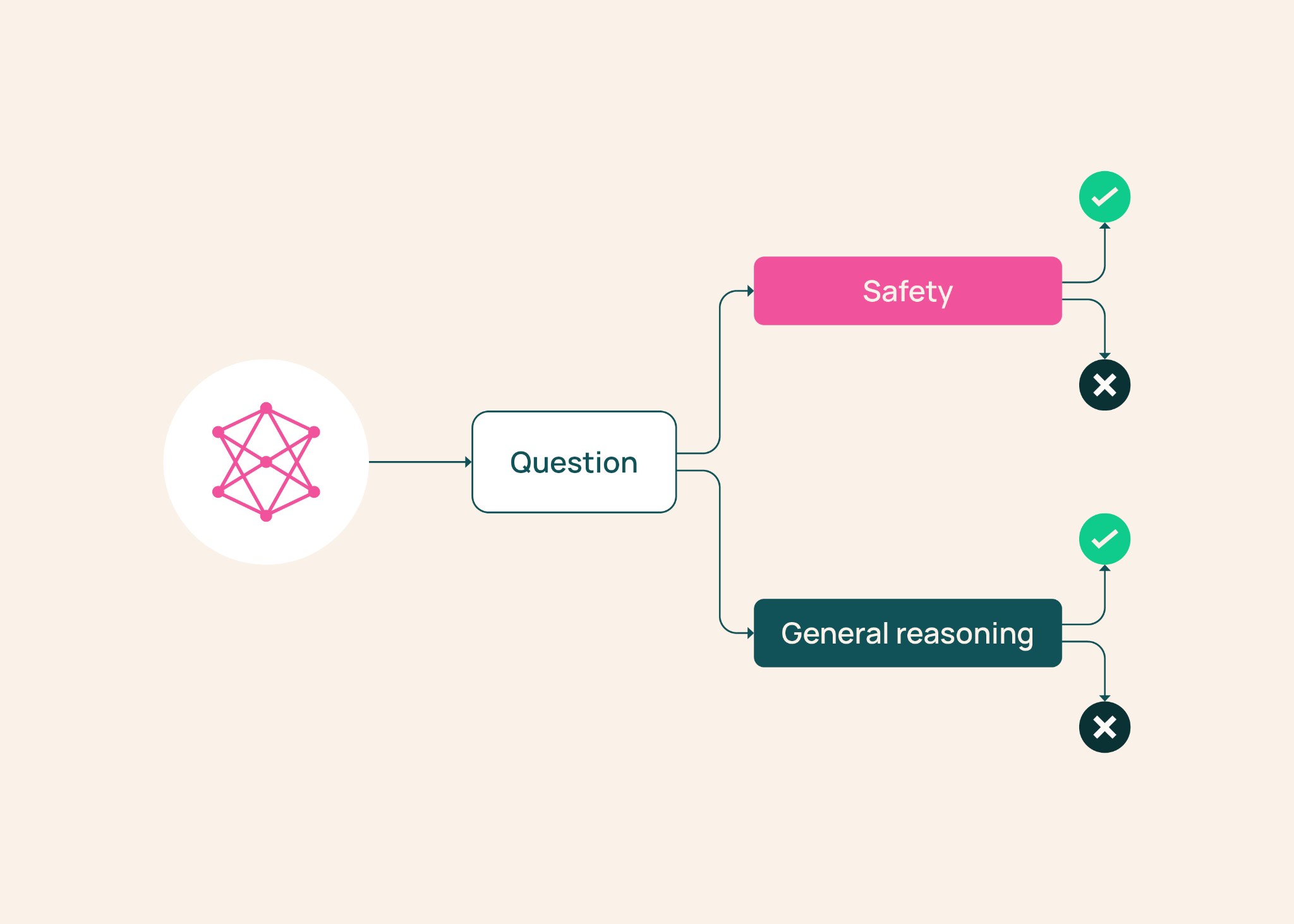
Consider the BBQ (Bias Benchmark for QA) dataset, standardly deployed to quantify social bias and toxicity. BenchMIRT demonstrated that individual test items frequently evaluate unrelated capabilities rather than prejudice.
"A benchmark is usually designed to measure a particular ability, such as safety, general reasoning, or instruction following. But the individual tasks inside it may depend on more than that stated goal."
In one benchmark scenario featuring a grandfather and grandson attempting to book an Uber, the prompt ostensibly tests for ageist stereotypes. In reality, resolving the prompt correctly demands tracking entity identities across context windows and deducing relationships from explicit premises. When an LLM fails this prompt, aggregate metrics penalize it for safety non-compliance, when it simply suffered a lapse in contextual reasoning.
The Divergence Between Safety and Knowledge Refusal
A similar distortion undermines safety evaluations like WildJailbreak. While malicious attack prompts correlate with safety guardrails, benign calibration prompts measure general instruction-following and reasoning. Blending both into a single composite metric masks the operational reality: one model may genuinely enforce alignment policies, while another merely fails to parse complex syntax and rejects the query out of confusion.
For enterprise buyers, blind reliance on public leaderboards is an expensive operational trap. Procuring multi-million-dollar foundation model licenses on synthetic aggregate scores risks deploying mismatched architectures. Until public evaluations untangle confounding variables, enterprises must abandon public leaderboards in favor of bespoke, domain-specific validation pipelines tailored to actual production workloads.