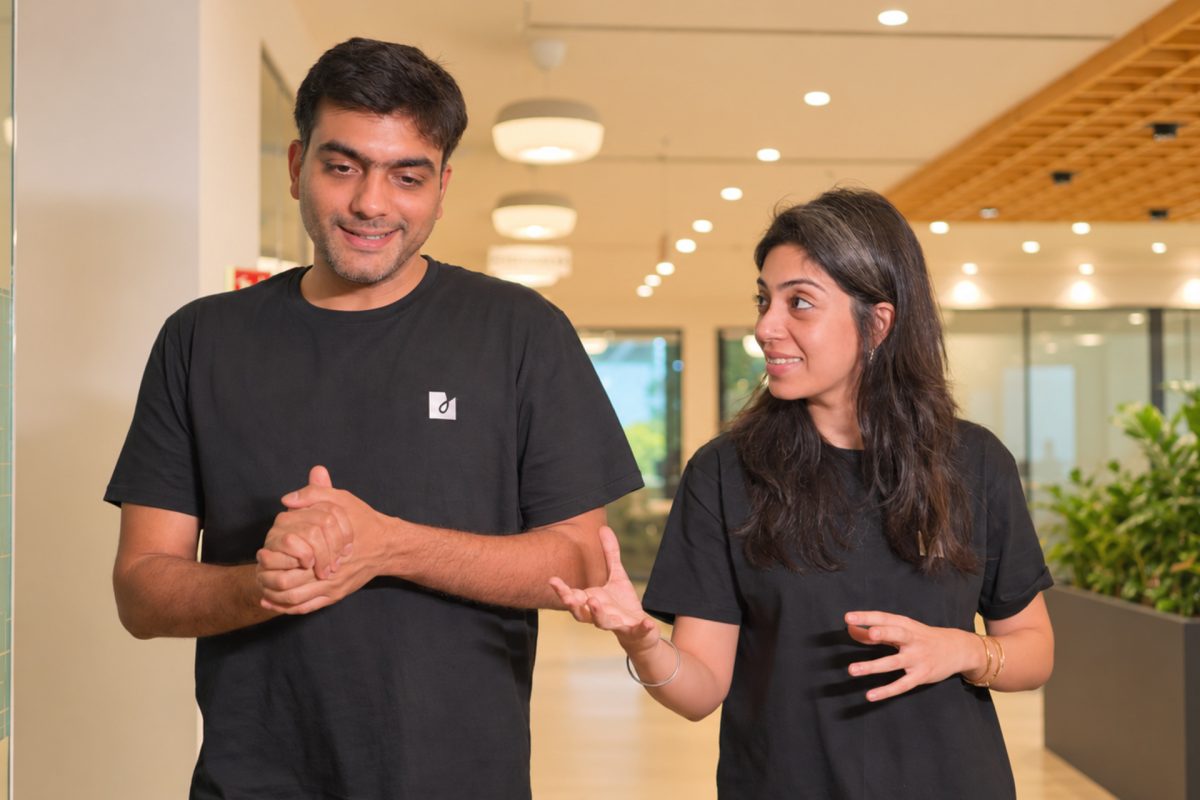
Indian semiconductor startup Bharat Semi has raised $24 million in seed funding to develop AI-enabled image sensors as it seeks commercial validation in the United States and international markets. The New Delhi-based company is targeting standard edge vision architectures by consolidating image capture, processing, and artificial intelligence into a single programmable chip.
That architectural consolidation directly targets enterprise procurement costs. Transitioning from standard setups to unified edge AI sensors reduces hardware expenses by at least 70%, resetting the unit economics of camera-based devices. The unresolved operational question for enterprise buyers evaluating hardware roadmaps is whether an early-stage startup with 75 employees can successfully deliver complex production silicon while competing against established chipmakers.
Cutting Component Redundancy
Conventional edge visual systems deploy a three-stage hardware chain: a standalone image sensor, a dedicated image signal processor, and an external system-on-chip. This multi-chip arrangement forces visual data across separate discrete components, compounding silicon costs, energy draw, and thermal complexity.
Bharat Semi intends to eliminate those intermediate stages. As co-founder Vrinda Kapoor stated, the move could cut system costs by at least 70% compared with conventional setups that use a separate image sensor, image signal processor, and a system-on-chip.
"Our aim here is to move from sensors to sense-making solutions," Vrinda Kapoor told TechCrunch.
The single-die approach eliminates the need to route raw visual streams through standalone co-processors, allowing downstream original equipment manufacturers to trim the bill of materials on smart homes, surveillance, aerospace, and industrial automation equipment. Kapoor pointed to air conditioners that could detect empty rooms and adjust automatically, alongside drones processing visual information without expensive secondary computing hardware.
Commercial Commitments and Operational Headwinds
While the technology targets massive operational savings, Bharat Semi remains a pre-revenue startup founded alongside managing director Vinayak Dalmia, who previously worked at McKinsey and in private equity. To offset the delivery risk inherent to unproven hardware vendors, the startup has secured early enterprise validation.
Bharat Semi states it has secured design wins with U.S. defense technology company General Atomics and India’s Kaynes Semicon before its hardware enters mass production. The presence of these early client agreements demonstrates direct enterprise interest in single-chip edge processing, even as the devices themselves remain in development.
Technical oversight is led by chief technology officer Boyd Fowler, who previously held the same role at image-sensor maker OmniVision. Bharat Semi operates as a fabless developer, outsourcing silicon fabrication while focusing internally on semiconductor design and proprietary software.
Financial backing reflects broader domestic momentum. Bharat Semi's all-equity seed round was led by Info Edge Group, South Park Commons, and Indus Bridge Ventures, with participation from Valour Capital, Micromax, Gaingels, and individual investors.
Engineering execution remains the primary bottleneck for corporate clients planning integration cycles. Bharat Semi currently employs about 75 people across India and the United States, including 10 to 12 staff in Santa Clara handling engineering and business development. Scaling an advanced fabless semiconductor pipeline against established global incumbents with a team of this size presents significant manufacturing and validation risks.
"It’s a story of can we build a global technology company out of India," Vrinda Kapoor said.
Bharat Semi has started hiring engineers in Europe and plans to expand its American headcount to around 20 by mid-2027. Outside its core sensor enterprise, the startup announced plans in 2024 for a domestic semiconductor fabrication project involving a technology partnership with the U.S. Space Force, which remains in development with prospective third-party operators.
For enterprise hardware planners, the timeline dictates immediate viability. Bharat Semi's first-generation sensors are currently in prototyping, while second-generation silicon featuring advanced AI capabilities is scheduled to reach prototypes by mid-2027. According to Kapoor, the startup expects to deliver the new sensors to customers by the end of 2027.
What’s behind it
Can a 75-person team actually convince hardware makers to scrap their usual setup of a discrete sensor, ISP, and external processor? On one hand, the startup claims to slash equipment costs by 70% and has already signed early design agreements with General Atomics and Kaynes Semicon. On the other hand, operating as a pre-revenue, fabless outfit means every integrated architecture blueprint still has to survive the yield realities of outsourced foundries. Securing early design agreements on a seed budget is a long way from shipping millions of flawless silicon units to factory floors.