Hepatocellular carcinoma (HCC) is both a diagnostic nightmare and the perfect trap for AI "black boxes." The core issue is that two patients with identical survival forecasts may die for diametrically opposite reasons. One might succumb to the sheer aggressiveness of the tumor, while the other faces liver failure because their functional reserve is simply exhausted. Standard multimodal models (VLMs) typically lump these factors together, creating a muddled latent representation. The result is an "average temperature across the hospital"—statistically correct but clinically useless.
Biological Factor Decomposition
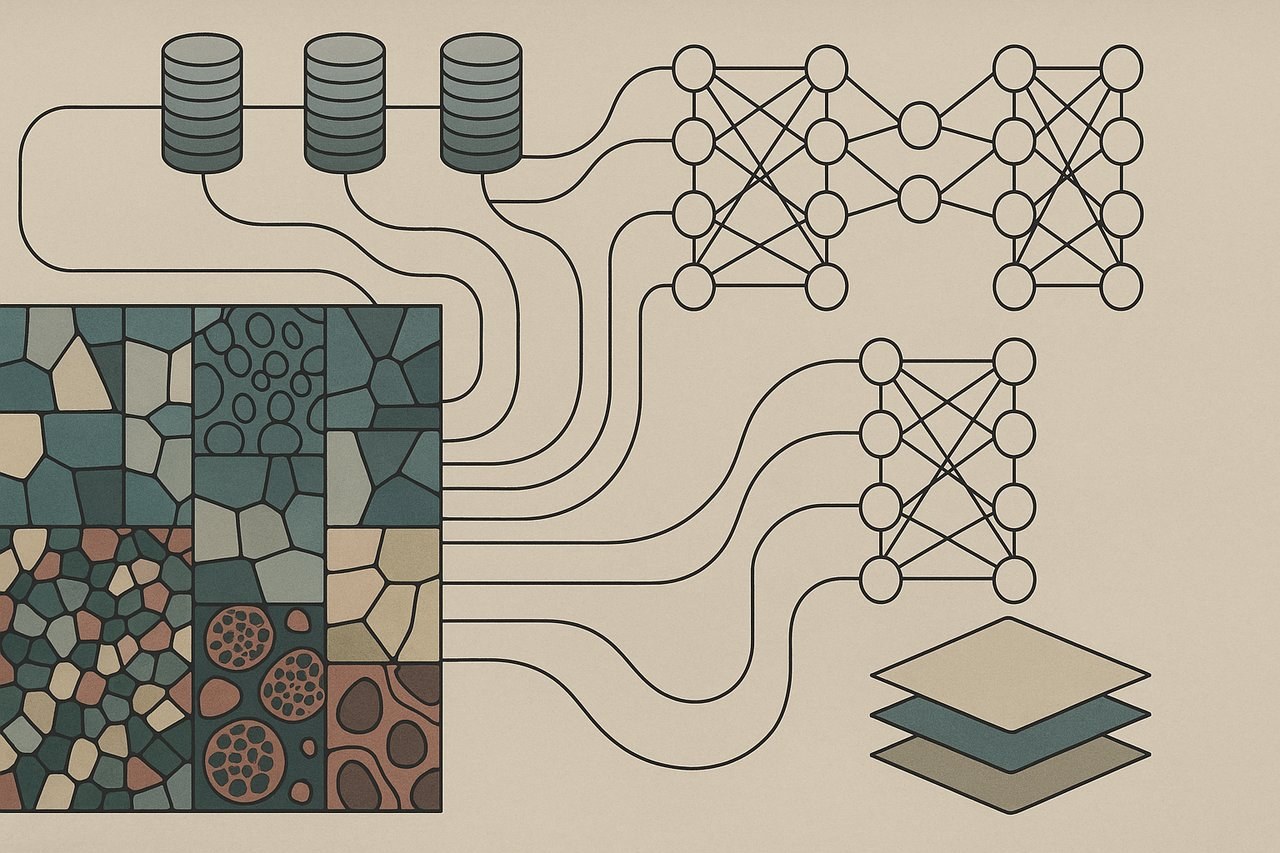
Researchers at Yale University, including Junlin Yang and Julius Chapiro, have tackled this head-on by embedding a biologically grounded inductive bias into the BioFact-MoE architecture. Instead of allowing the Mixture of Experts (MoE) model to distribute tasks chaotically, they forced individual "experts" to specialize in specific domains. While conventional MoE models learn routing implicitly, BioFact-MoE strictly separates liver condition factors from tumor characteristics. The team used 3D MRI pairs and clinical reports to train specialized experts that independently encode organ health and cancer progression during the contrastive pre-training phase.
Existing prognostic models create tangled representations by mixing hepatic and tumor factors, which kills both accuracy and interpretability.
This architectural shift moves away from organizing data by semantic granularity in favor of real-world biological pathways. In a cohort of 588 patients, the model achieved an AUC of 75.33% for 12-month survival and 73.96% for two-year survival. The figures prove a vital point: factor decomposition outperforms the "brute force" approach of feeding a neural network raw data and hoping it figures out the biology on its own.
Risk Stratification Through Phenotypes
The technical value of BioFact-MoE lies not in the final score, but in what is known as phenotype-aware risk stratification. By analyzing the weights of the gating network, physicians can identify exactly what is driving a patient’s decline. Validation revealed that liver and tumor embeddings selectively correlate with real biomarkers (p < 0.05), even though the model wasn't directly trained on them. The gating network independently recognizes which biological pathway is more critical for a specific case, uncovering heterogeneity often missed during standard examinations.
Smart routing via gating networks reveals clinically significant, treatment-related survival heterogeneity.
For healthcare executives and developers, this case is a clear signal: the era of one-size-fits-all VLMs in medicine is ending. Precision in analyzing complex diseases requires respecting the physiological "silos" of the human body. While dependence on high-quality 3D MRI and detailed radiology reports remains a hurdle, the direction is set. We are seeing a move away from the black box toward systems that mirror a specialist's logic, separating functional reserve from oncology. This isn't just a software update; it’s an attempt to make AI think in terms of physiology rather than just pixel correlations.