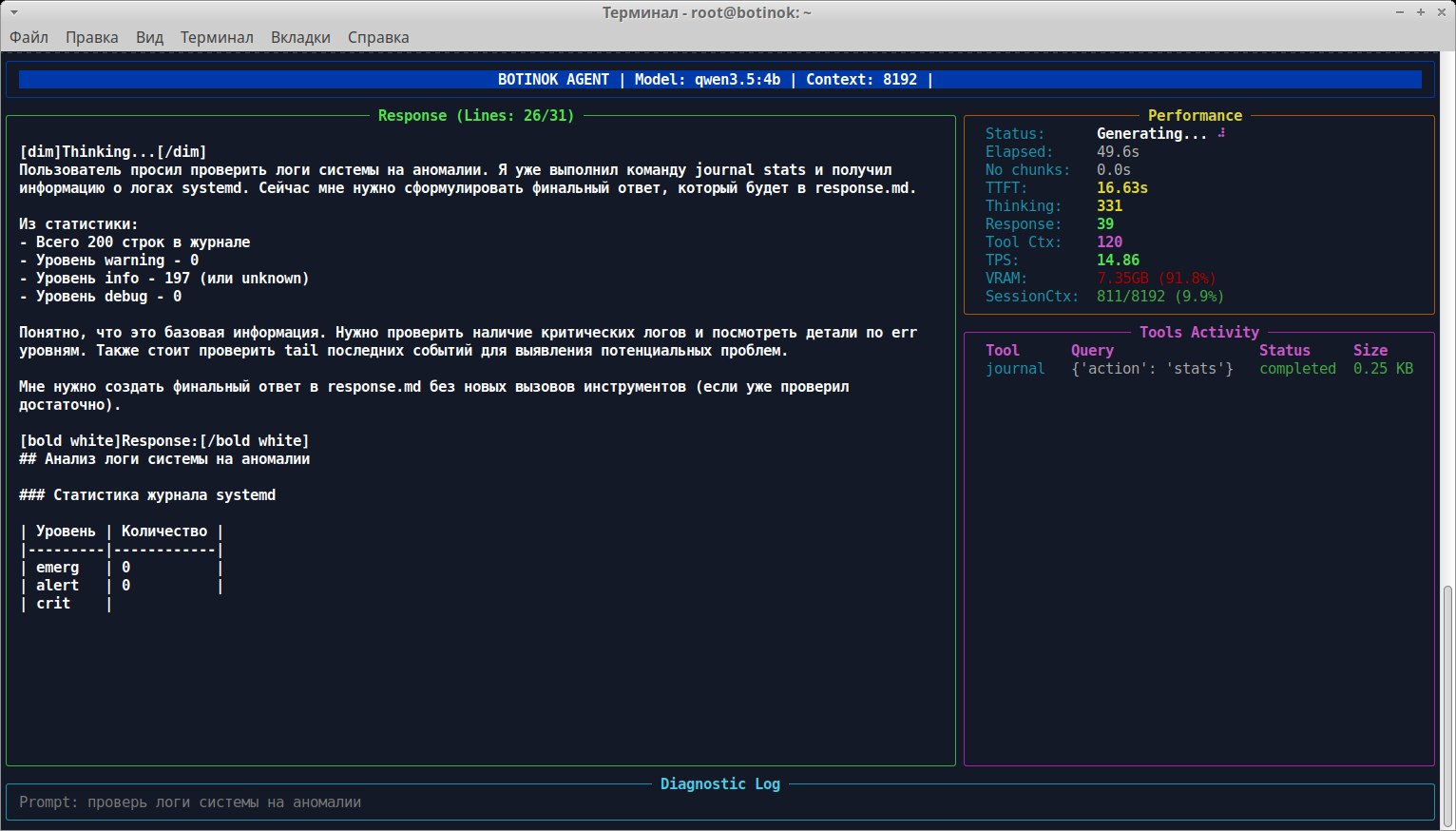
Fifteen years in the Linux terminal is a significant period, representing a true school of life. The creator of "Botinok" has clearly navigated this rigorous path, moving from manual configuration to tools like Ansible and Kubernetes, and then dealing with the inevitable rollbacks when things went awry. Scripts multiply, documentation becomes outdated, and servers remain as temperamental as ever. Now, on top of this technological zoo, language models are emerging, capable of generating Nginx configurations or deciphering log files. The problem is straightforward: switching between the terminal and a chatbot, copying commands and responses, is an exercise in sadism that crushes productivity. The need is for something more natural, where a model understands the server context and works autonomously, without constant human oversight.
Amidst the general AI hype, large players like OpenClaw have emerged. Their concept is impressive: a self-hosted AI agent operating 24/7, integrated with messengers, managing email and calendars, and even checking you in for flights. This sounds like a dream personal assistant. However, for a system administrator who simply needs to SSH in, quickly fix an issue, and exit, such a complex system is overkill. Its complexity, focus on "lifestyle" automation rather than real tasks, continuous resource consumption, and reliance on messenger interfaces make OpenClaw a tool for those who don't actively work with Linux servers but perhaps aspire to have them.
This is where "Botinok" enters the picture, directly addressing the unmet demand for practical, lightweight, and terminal-oriented AI. Its key distinction is that it's not a background monster consuming resources around the clock. It's a standard application: launch it, perform your task, and close it. There are no background daemons, web servers, or other complications. This approach is a lifesaver for those who do not possess a farm of NVIDIA H100 GPUs and tens of gigabytes of VRAM. "Botinok" focuses on automation directly within the console via SSH. This means that diagnosing problems, changing configurations, and analyzing logs can be done without switching to external interfaces and without astronomical hardware costs.
Why is this important? "Botinok" offers a pragmatic approach to AI automation in IT infrastructure. It alleviates the burden of requiring top-tier hardware, making AI agents accessible to ordinary IT professionals who work with Linux and cannot afford to deplete their budgets on VRAM. This opens avenues for optimizing routine tasks and enhancing the efficiency of server administration.