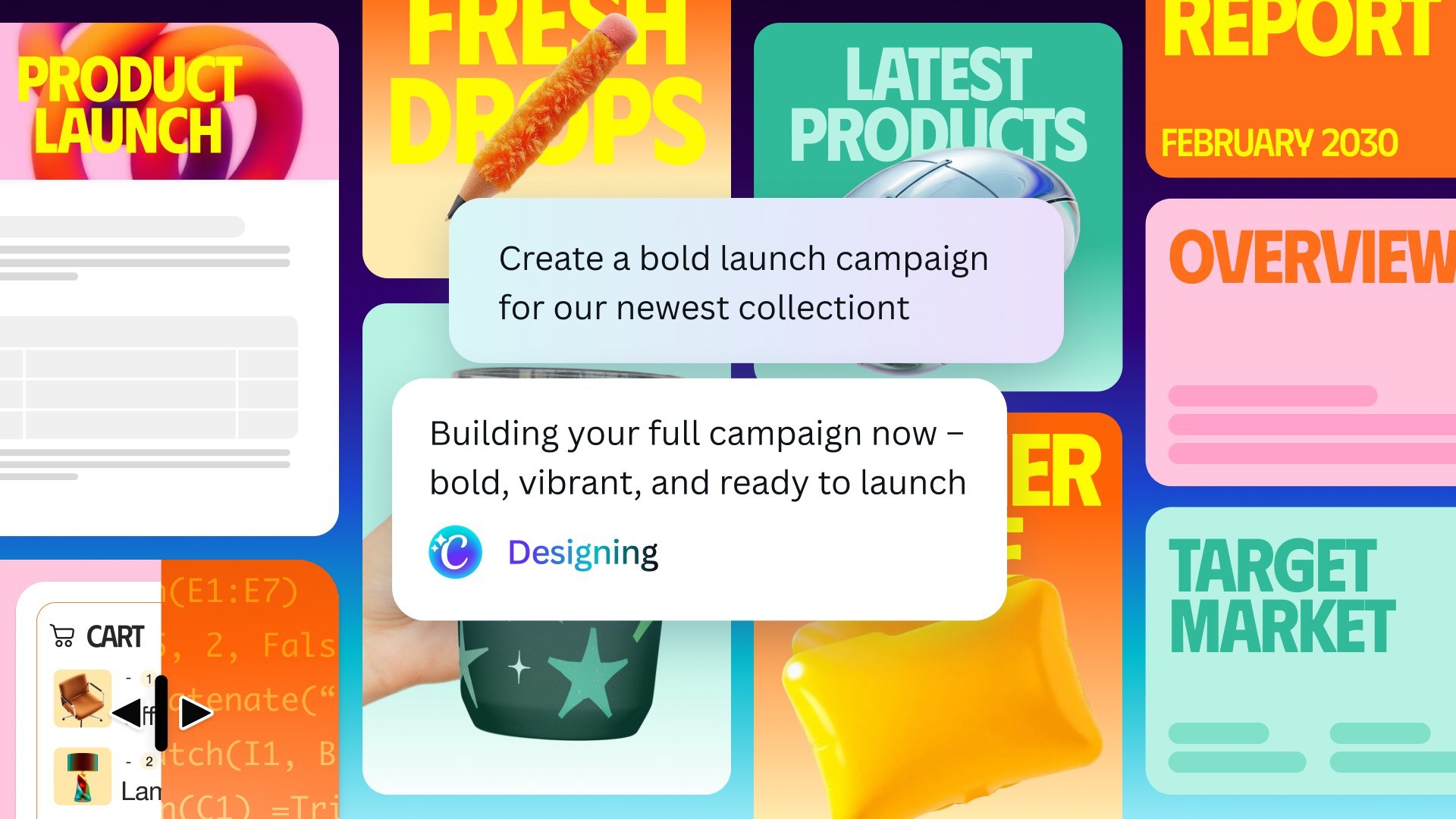
Canva has unveiled its AI 2.0 update, transforming the platform into a comprehensive command center for creative production. The most significant shift lies in the orchestration layer: users can now manage the entire suite of tools through a unified text interface. Canva has officially confirmed a transition to an "agentic" paradigm. In practice, this means AI is evolving beyond a simple image generator into a creative partner that coordinates the entire workflow—from initial ideation to final publication—within a single window.
The update poses a major challenge to traditional marketing production by enabling the creation of complex campaigns via a single prompt. The system analyzes a product description and autonomously generates a promotion plan alongside production-ready layouts for all communication channels. With the introduction of "object-oriented intelligence," users no longer need to manipulate layers manually; fonts, styles, and elements can be modified through direct text commands. Furthermore, the AI now features persistent memory, allowing it to retain brand identity and team-specific workflows, eliminating the repetitive task of manually aligning logos and styles.
Technologically, Canva AI 2.0 now supports HTML imports and offers deep integration with external workspaces including Slack, Gmail, Google Drive, and Calendar. The company describes this update as its most significant milestone since moving graphic design to the browser. Currently, the update is available in early access for the first million users.
For businesses, this shift represents a lower barrier to entry for high-quality production. Where adapting layouts previously required an entire production staff, the AI orchestrator is now taking over the "manual labor." This serves as a critical signal for executives to re-evaluate budgets: as algorithms handle the routine tasks, the human role is being refined to focus on strategy and final quality control.