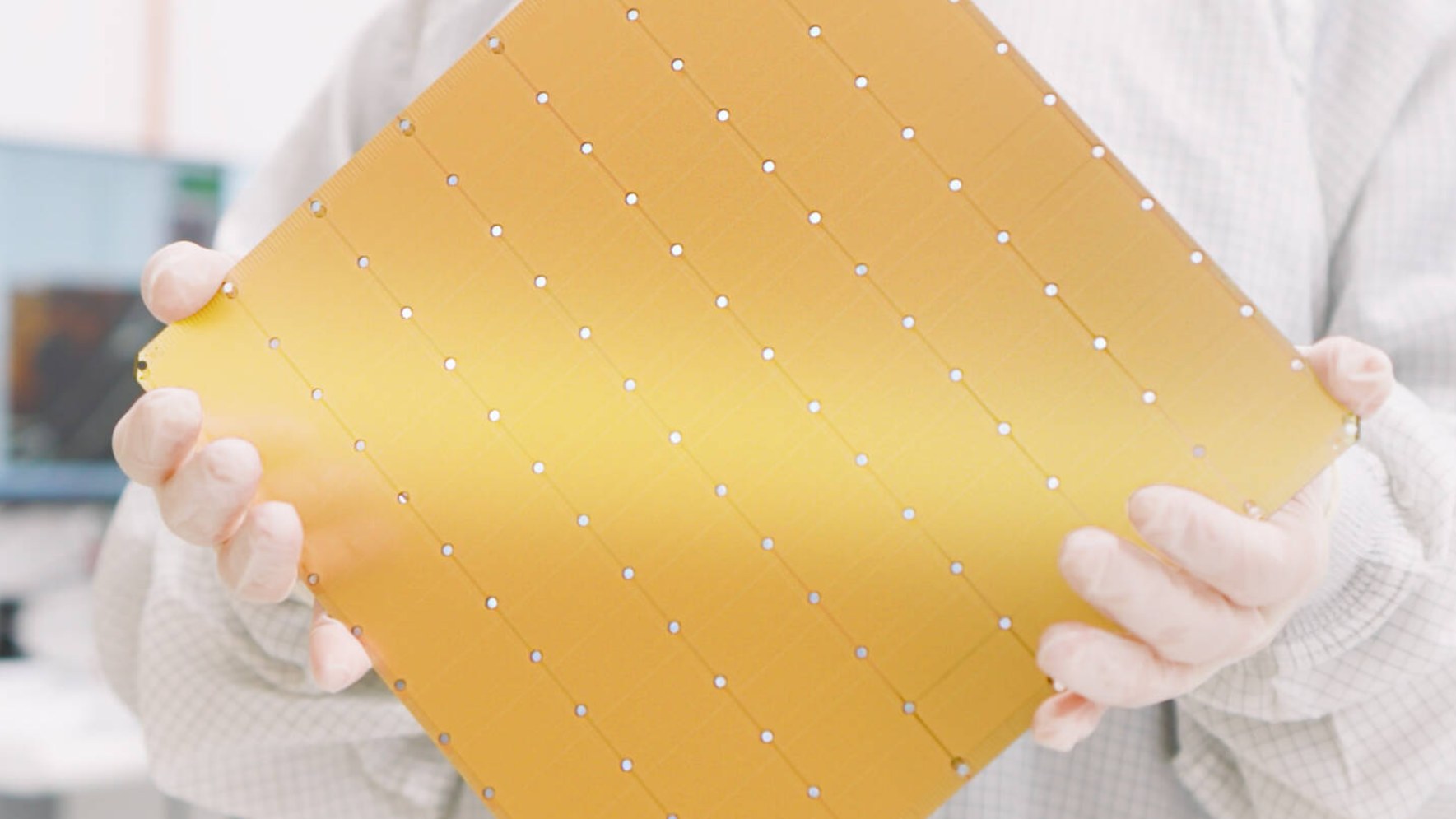
Cerebras has rolled out its CS-4 rack-scale platform, effectively doubling the compute output of the previous CS-3 without moving off TSMC's 5nm process node. Instead of waiting for a next-gen lithography shrink for its massive WSE-3 wafer-scale engine, CEO Andrew Feldman pushed clock speeds by overhauling power delivery and liquid cooling. The engineering squeeze allows three full wafers to fit inside a single datacenter cabinet rather than two.
The hardware design targets low-latency serving bottlenecks, claiming single-user inference throughput of up to 4,400 tokens per second—a metric Cerebras claims outpaces legacy Nvidia GPU clusters by up to 30x. Yet this speed-up comes with familiar trade-offs: on-chip SRAM remains capped at 44 GB per wafer, keeping the architecture laser-focused on extreme execution speed rather than massive single-chip parameter residency.
To ease integration, Cerebras introduced the modular "Backpack" form factor and is pushing disaggregated serving setups alongside hardware like AWS Trainium and AMD platforms. While SemiAnalysis analysts note that the interconnect bandwidth gains remain modest, the rack-level packaging forces a critical question on enterprise IT: can specialized wafer-scale economics break Nvidia's grip on generative inference costs?