Total funding reached $4 billion following a successful $1 billion closing round. Investor base shifted toward sovereign wealth funds, pension funds, and industrial giants. Google has already pre-purchased 50% of the capacity from the upcoming Arc commercial plant.
Commonwealth Fusion Systems (CFS) has boosted its total capital to a massive $4 billion after closing its latest $1 billion round. However, the real story lies not in the figures, but in the profile of the participants: venture capital optimists have been replaced by heavyweights—sovereign wealth funds, pension funds, and industrial leaders. These institutions aren't investing in a green dream; they are buying insurance against an energy collapse in a world where neural network appetites are growing exponentially.
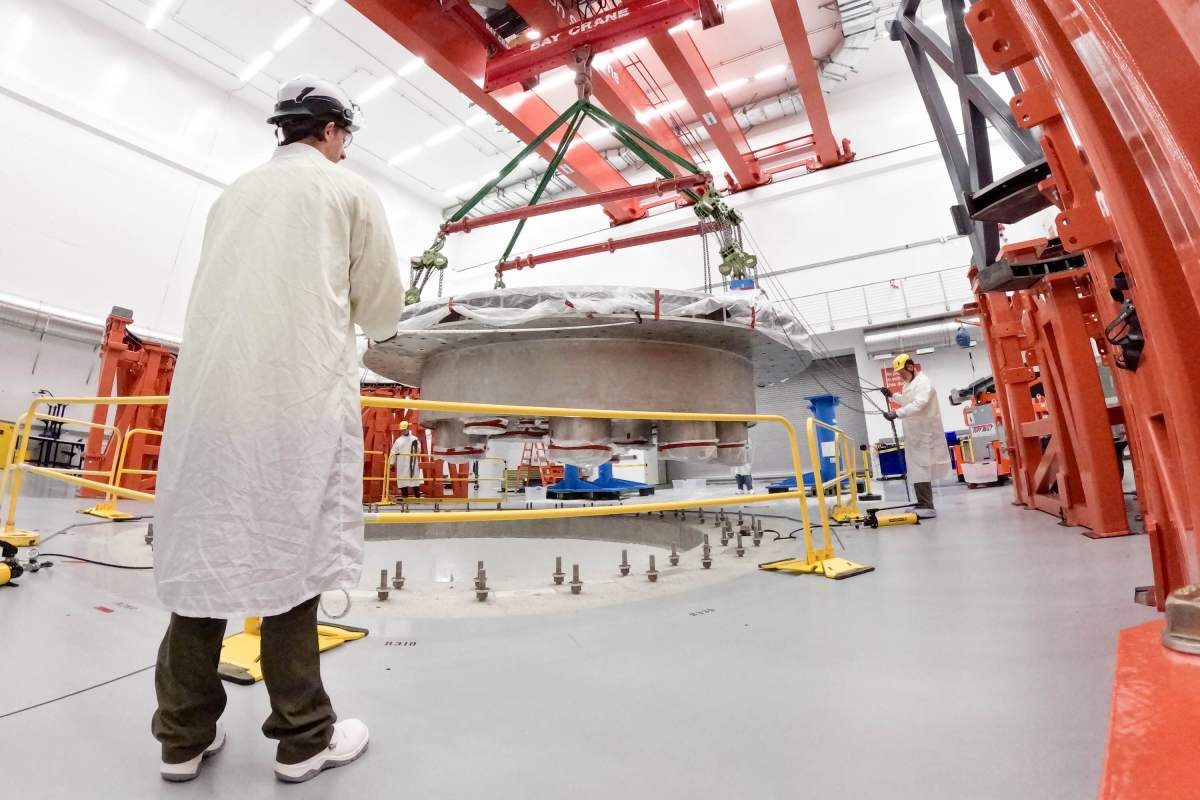
The cash flow is earmarked for completing the Sparc demonstration reactor and designing the first commercial plant, Arc, in Virginia. As CEO Bob Mumgaard notes, CFS will continue to tap the market until magnetic confinement technology reaches full-scale commercialization. The irony is that nuclear fusion has ceased to be an environmental agenda item and has become a hard necessity for sustaining next-generation computing clusters.
"Energy scarcity has become the primary bottleneck in scaling AI, and there are simply no alternatives to controlled fusion for meeting terawatt-level demands."
Tech giants like Google and Nvidia have been in the game for some time, with Google moving beyond the role of a mere investor. The company has already contracted to buy 200 megawatts of electricity from the future Arc station—exactly half of the facility's projected output. While skeptics debate timelines, the market is de facto acknowledging the critical dependence of IT infrastructure on stable power generation.
Strategic context
A realistic outlook requires keeping deadlines in mind: CFS aims to achieve scientific breakeven at the Sparc reactor by 2027. This is the moment the reaction produces more energy than it consumes, though feeding power into the grid will still be a long way off. Nevertheless, for institutional players like Italy's Eni, which has already pledged $1 billion to purchase Arc's energy, this serves as a sufficient signal.
The bottom line
Investors are betting that it is better to fund a monumental physics challenge today than to be left tomorrow with the world's most powerful GPUs and no way to plug them in. Fusion is becoming the foundation for Big Tech’s survival in the computational arms race.