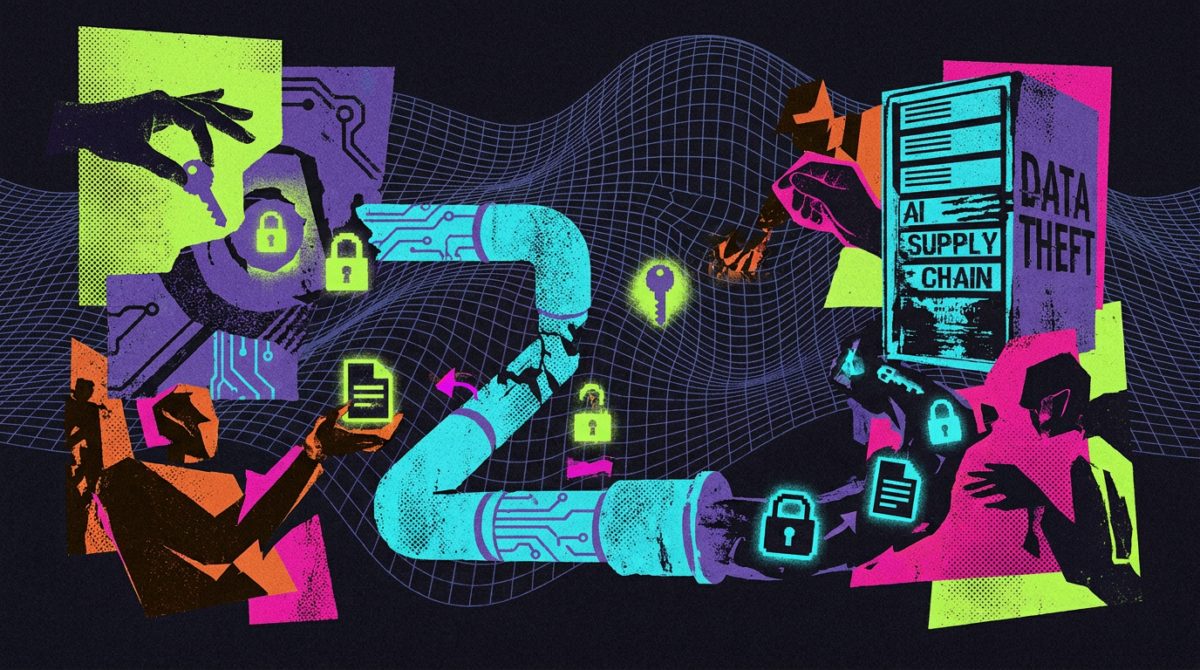
Security researchers at Dragos exposed major security flaws across artificial intelligence services by sending roughly two million test requests loaded with fake credentials. Their investigation, conducted from July through November 2026, uncovered at least three compromised providers where attackers were actively stealing user data undetected for several months. None of these three intermediaries knew intruders had compromised their systems until Dragos notified them. Routing calls through third-party services with cheap inference overlooks what occurs inside intermediary routing pipelines.
Routing prompts through third-party aggregators and intermediaries introduces vulnerabilities, allowing unauthorized actors to intercept transmitted data. The main risk lies in the compromise of access keys and credentials transmitted in requests. The incident raises the question of how the risks of using low-cost model aggregators weigh against savings on compute.
How Intermediary Routing Hops Harvest Data
Aggregators such as OpenRouter provide users with a single API to access models developed by different companies. However, requests get passed through a pool of providers across multiple network hops, and Dragos found that each hop can read the entire request and response. Resellers on these open exchanges do not even require sophisticated technical exploits to access confidential inputs. Listing a model at the lowest available price and enabling logging is sufficient to capture incoming corporate payloads.
"Where your prompts go is a decision, and if you don’t make it, the lowest price will make it for you."
Chief Research Officer HD Moore at Dragos made that observation to highlight how automated cost-routing abdicates architectural governance. In the largest single incident uncovered by Dragos, attackers harvested hundreds of AWS keys, capturing credentials even from requests the provider rejected prior to processing. Attackers tested the stolen credentials within hours, searching S3 storage buckets and attempting to establish persistent access, while one attacker deployed ARTEX, an AI-powered attack tool. In another incident, an actor on a residential internet connection in France used intercepted passwords to attempt an SSH login.
The Breakdown of Zero Data Retention Guarantees
Marketing commitments regarding data privacy offer little protection along complex supply chains. Commitments like Zero Data Retention were frequently ignored across intermediary nodes. Dragos observed that a Chinese AI lab accessed secret test URLs embedded in more than half of all requests, even when those calls originally flowed through US providers. This mirrors an analysis published by the Oxford China Policy Lab, which detailed how Chinese proxy services route requests to Western models such as Claude through servers abroad, retaining the technical capacity to read requests in transit.
Platform operators argue that using low-cost inference providers yields vital operating savings and emphasize that aggregators act quickly once compromises appear. Following the research findings, OpenRouter removed three providers from its platform and revoked Zero Data Retention approval for 125 endpoints, acting partly on evidence and partly as a precaution. OpenRouter also contacted affected customers to warn them that third parties may have read requests sent to MiniMax models, while intermediaries such as Novita, AtlasCloud, and StreamLake had sat between OpenRouter and MiniMax. Affected entities including Novita, Together, which runs its own infrastructure, and Phala, which has roots in Web3, subsequently issued preliminary security reports.
Intermediaries sit between users and model developers, view the requests, and pass data to third parties without users knowing.
Remediation after the fact does not alter the underlying vulnerability of marketplace architecture. Intermediaries remain an uncontrolled link in corporate infrastructure as long as routing algorithms automatically favor the lowest bid. Dragos advises organizations to check their privacy configurations, actively manage how prompts route to model endpoints, and deploy canary tokens with fake credentials that trigger alarms the instant someone uses them. Delegating infrastructure routing to unchecked price aggregators saves pennies on inference while surrendering operational keys to unverified third parties.
What’s behind it
What is the true cost of chasing cheap AI inference through public model aggregators? Routing traffic purely by lowest price created an architecture where brokers silently intercepted prompts for months without detecting breaches until Dragos intervened. Any reseller in the chain could simply offer a rock-bottom rate, turn on logging, and harvest incoming credentials without needing complex exploits. Zero Data Retention pledges quietly evaporated the moment corporate traffic hit intermediaries whose only real qualification was being the lowest bidder.