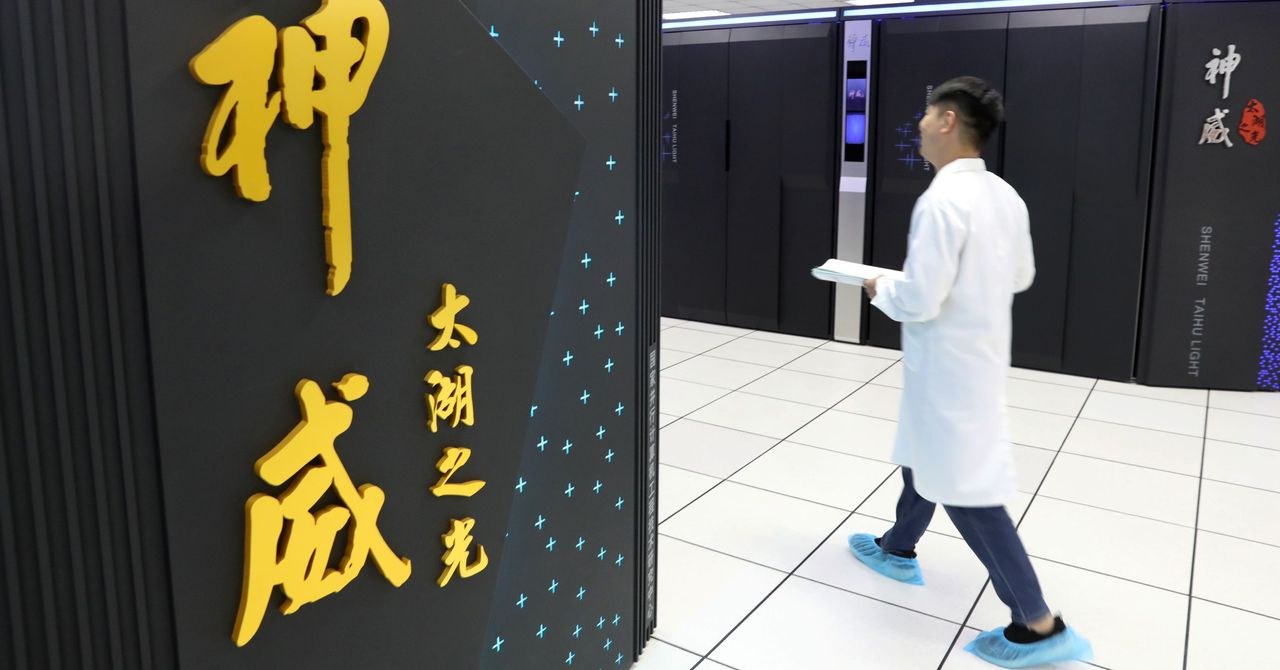
China has officially reclaimed its status as the world’s leading computing power, demonstrating that American export restrictions are acting more like fuel for local engineers than a genuine barrier. According to the latest TOP500 rankings, the Chinese LineShine system—deployed at the National Supercomputing Center in Shenzhen—has unceremoniously pushed America’s El Capitan off the top spot. The report indicates that LineShine delivers 2.198 exaflops, exceeding the US flagship’s peak power by 20%. This marks Beijing's triumphant return to the summit after nearly a decade of absence from public rankings.
Architecture of Independence
The LineShine architecture serves as a direct manifesto of technological autonomy. While the rest of the world hunts for scarce Nvidia GPUs, Shenzhen has bet on its proprietary LingKun platform and 45,000 LX2 processors. The specifications are formidable:
Each chip carries 304 cores with a clock speed of 1.55 GHz. System scaling is implemented using proprietary CPUs. Nodes are connected via the high-speed LingQi network running the domestic Kylin OS.
This solution completely shields China's critical infrastructure from the impact of Western regulators.
Implications for Business and Investors
For businesses and investors, this shift signals the end of illusions regarding China's "technological ceiling." The effectiveness of tariffs and bans imposed by both the Biden and Trump administrations has proven questionable in the face of architectural flexibility. Beijing has demonstrated its capability to deploy exascale-level power—the foundation for training massive LLMs and advanced cryptography—without access to American resources. In the global AI arms race, engineering ingenuity and vertical integration have proven far more resilient than any supply chain tied to political climate.