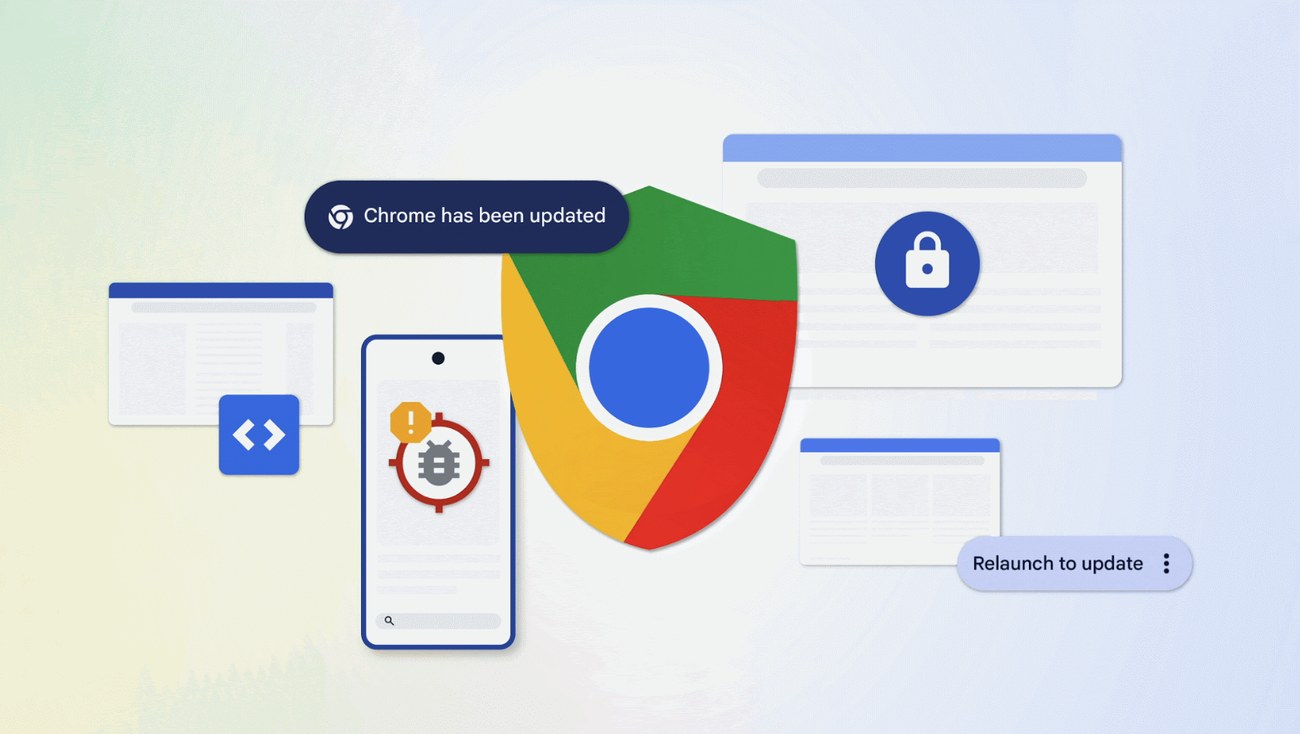
The Chrome security team has effectively begun dismantling the traditional cybersecurity market. In early 2026, Google recorded an anomalous spike in vulnerability detection—not driven by headcount expansion, but by the deployment of an agentic framework powered by Gemini. The system’s most significant trophy is a sandbox escape that allowed a compromised renderer to extract local user files. This flaw had persisted in the code for over 13 years, successfully evading dozens of audits and thousands of human-hours. It is now evident: the capacity of LLMs to find vulnerabilities scales faster than the expertise of even the most expensive security specialist.
Autonomous search architecture
The transition from experimental scripts to an industrial pipeline took roughly two years: from Project Naptime in 2024 to an alliance with DeepMind and Project Zero under the Big Sleep initiative. The resulting architecture is a multi-agent system capable of digesting Chrome’s massive Git repository. To ensure the AI understands context, engineers fed the models the entire commit history and CVE database. Even SECURITY.md files are used to calibrate threat perception, serving as a map of trusted zones for the agents. The system implements interoperability: the Chrome Security Team mixes proprietary solutions with open-weight models, forcing them to cross-verify one another.
"LLMs open up possibilities for autonomous bug hunting that are simply beyond human intelligence due to limitations in speed and memory volume."
Solving the hallucination problem
The primary weakness of neural networks—hallucinations and non-determinism—was addressed by introducing a 'critic' agent role. The system runs search cycles through the code multiple times, accounting for model weight updates. This transforms security from a periodic audit into a continuous process. The only remaining bottleneck is the speed at which the organization can implement patches. Consequently, the Google Vulnerability Reward Program (VRP) has already been overhauled: the corporation is no longer willing to pay for obvious bugs that their AI finds in bulk. Third-party researchers are now required to submit truly unique cases that the machine misses.
Barriers and the new patching paradigm
Granting AI access to modify critical code always carries risk, so agents operate in isolated sandboxes without direct internet access. Any network requests are intercepted and filtered against strict allow-lists. Sub-agents are restricted in their permissions; they cannot change system settings or move beyond assigned source directories. While classic fuzzing remains useful for finding long-term interactions, Google’s strategic goal is automated triage. This turns a critical 0-day vulnerability into a routine software bug that is fixed within hours, before it ever becomes a full-fledged threat.
Chrome continues to invite external hackers to participate in its VRP, but the tone has shifted. It is now an invitation to compete against an algorithm. The corporation still values creativity but acknowledges a hard truth: if a bug lasted 13 years only to be caught by an agent, the human-centric security model requires a radical rethink. We are witnessing the economics of security shift toward raw computing power, where the cost of a discovered vulnerability converges with the cost of the electricity used for inference.