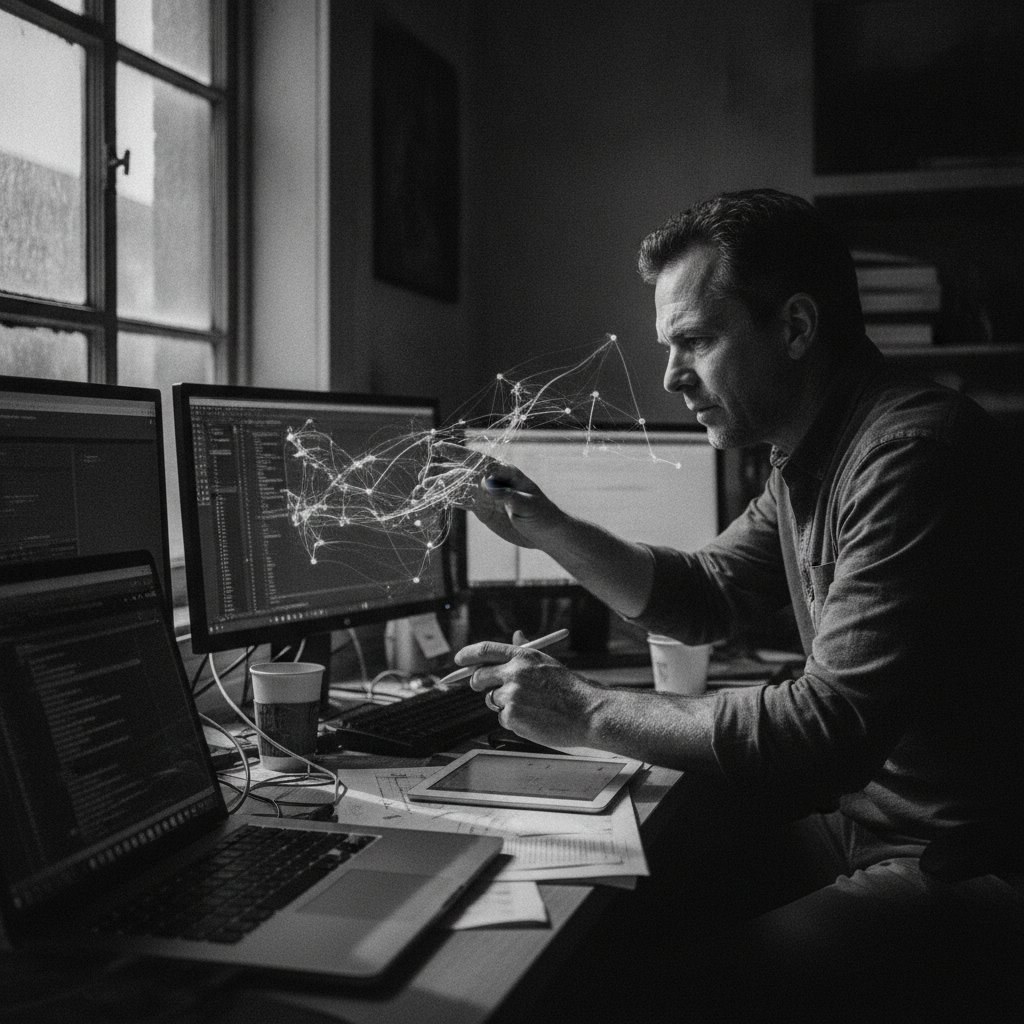
The era of LLMs as parasitic external tools is coming to an end. As Andrej Karpathy notes, the launch of Claude Tag marks the third paradigm shift in neural network interfaces. The evolution has been rapid: the model began as a website you simply visited, then transitioned into a desktop application. Now, Claude is transforming into an autonomous, persistent, and asynchronous entity integrated into the very fabric of the company. It is no longer a chat window; it is a full-fledged team member operating within a unified infrastructural field.
The Technical Foundation of Integration
Moving AI into the workspace requires a serious engineering overhaul under the hood. To make the "it just works" magic a reality, Anthropic had to provide Claude with seamless access to corporate tools, computing environments, memory, and security protocols. Once this technical foundation is set, Claude embeds into workflows so natively that the line between human and machine activity begins to blur.
The model functions as an asynchronous colleague with access to context and communication channels, allowing you to delegate tasks and pivot to high-priority goals.
A New Efficiency Paradigm
The concept takes some getting used to, but the shift from a reactive chatbot to an autonomous participant fundamentally changes unit economics and user experience. Claude’s integration relies on native access to organizational tools, enabling the model to handle significant workloads without constant "pinging" from a human operator.
The model ceases to be an external service and becomes an infrastructure layer. AI no longer waits for a command; it lives within the context of your business. Autonomy reduces the cognitive load on employees.