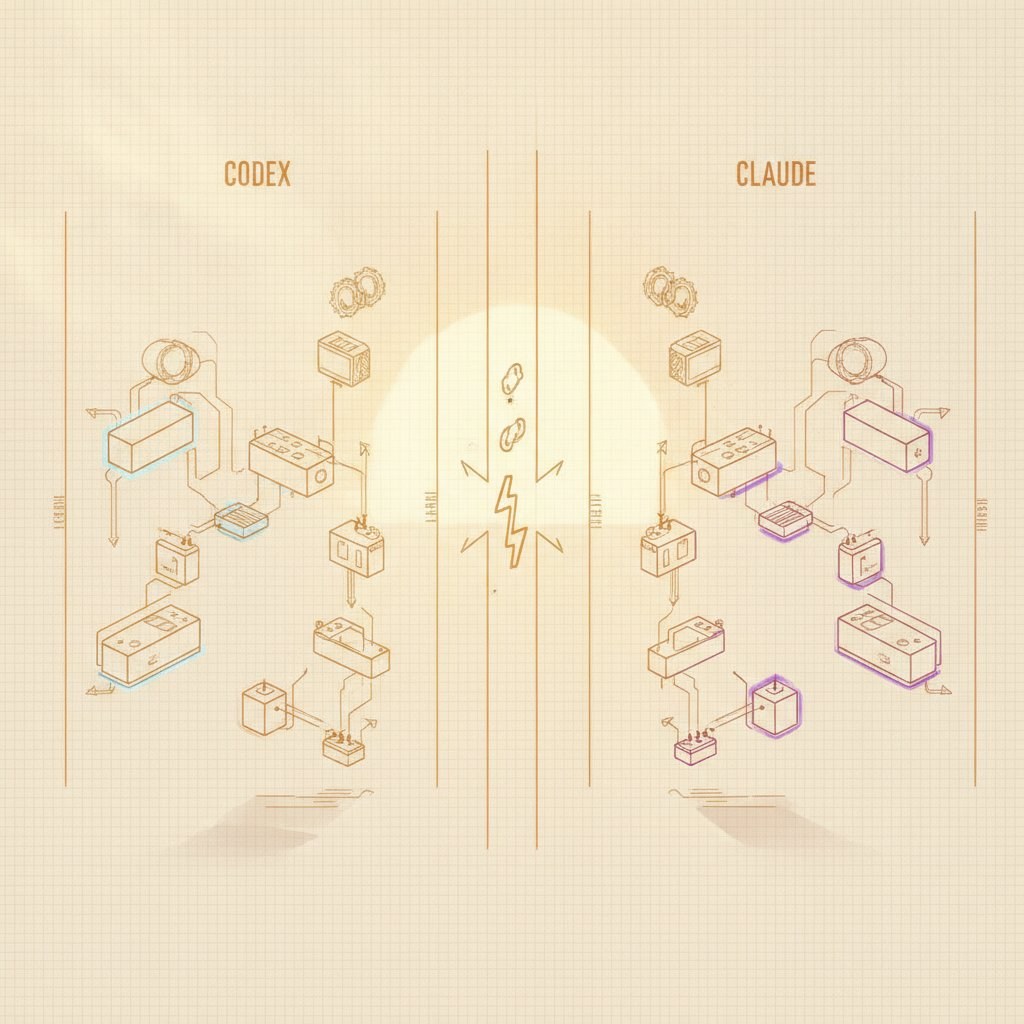
Lucian Ghinda pitted Codex against Claude across a week-long Ruby on Rails production sprint, exposing stark trade-offs between a dedicated coding agent and a general-purpose LLM. In pure code generation, Codex delivered leaner, concise implementations with minimal clutter. Claude, by contrast, gravitated toward defensive over-engineering, verbose Sorbet typing, and heavy abstraction layers.
Yet tool integration and developer ergonomics quickly leveled the playing field. While Codex handled Model Context Protocol (MCP) authentication cleanly through explicit CLI prompts, its workspace autonomy derailed during routine Git operations. Codex repeatedly rebased against main instead of designated target branches, generating bloated pull requests exceeding 4,000 lines. Claude maintained sharper context across complex branching logic and Jira workflows, prompting engineers to reflexively revert to it whenever high-pressure debugging arose.
Raw generation speed proved deceptive. Codex applied initial code patches faster, but that advantage dissolved entirely as the agent burned compute cycles endlessly looping through test reruns and review steps. For engineering leads, the takeaway is unequivocal: raw agentic autonomy remains secondary to tooling ergonomics and workflow predictability. Until dedicated agents master team-level Git hygiene and state management, engineers will treat specialized tools as experimental accelerators while keeping dependable LLMs on standby for fire drills.