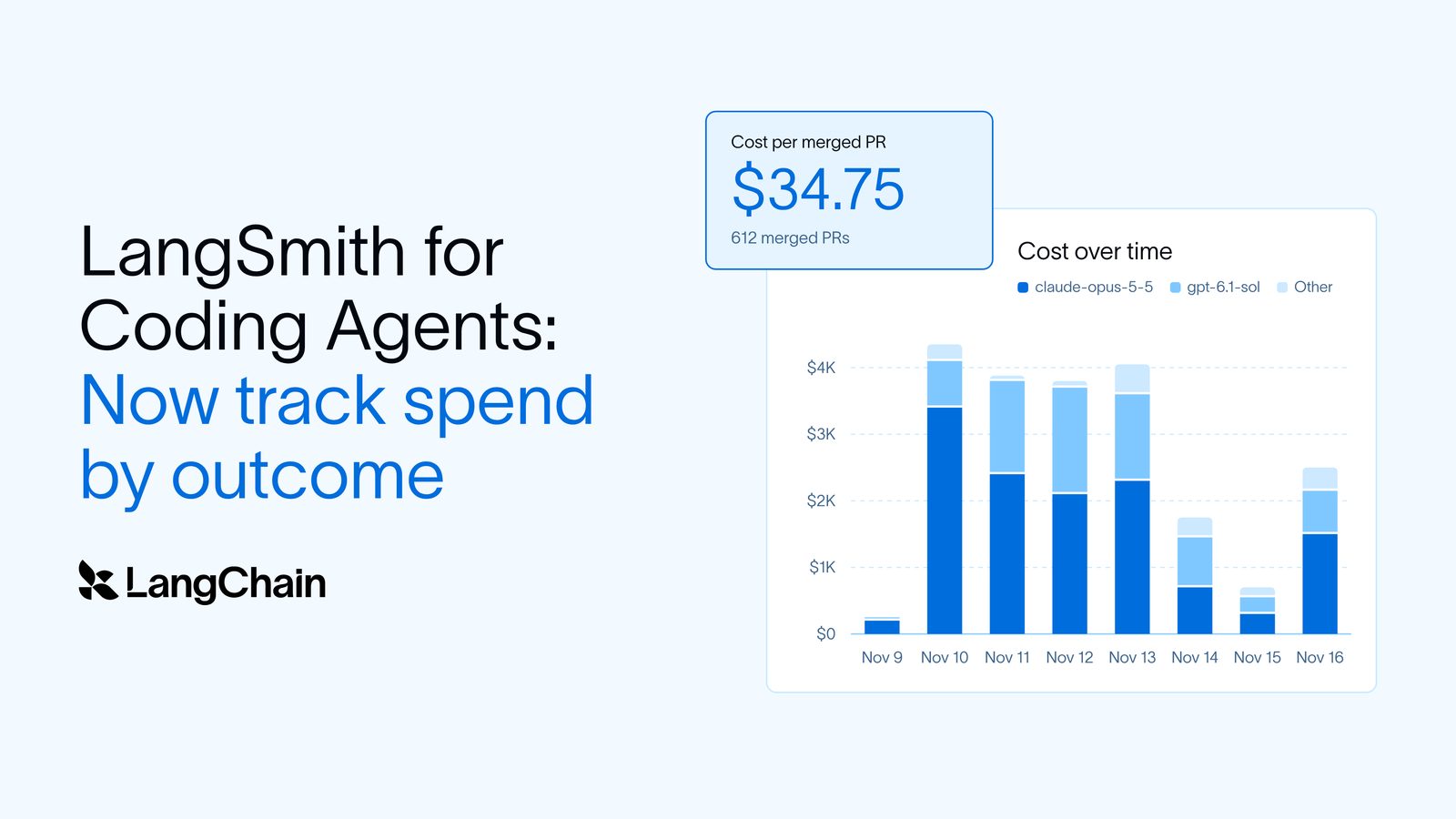
Enterprise budgets for software engineering face an immediate reckoning as coding emerges as the largest category of enterprise AI application spend, reaching $34 billion in 2026. Despite this massive capital allocation, most engineering leaders still cannot tell their executive boards what that spend actually delivers in concrete output. The unmonitored consumption of model inference has created a blind spot in corporate balance sheets, where engineering departments absorb escalating computational costs without tying them to verified production assets.
Businesses are funding coding agents without financial visibility, and only a direct link between inference spend and software outcomes restores budget discipline. Autonomous agent loops continue to consume resources at unpredictable rates. Analysis revealed that compounding execution loops cause a single coding agent task to use 10 to 50 times more tokens than a basic chat prompt. That baseline created severe internal disparities: the top 5% of users generated most of the consumption, and the heaviest user consumed roughly 450 times more than the lightest user on the same license. To confront this operational drain, LangSmith now offers reporting built for coding agents, introducing capabilities that tie agent spend directly to the pull requests they produce.
The Ledger Behind the Trace
The new LangSmith Agent Platform operates around the agent entity itself, where each agent maintains its own operational record and belongs to a designated agent type that governs dashboard reporting, data connections, and performance evaluations. Coding agents represent the first specialized agent type within this architecture, presenting data on pull requests as an observable indicator of useful production work. LangSmith already traces coding agents across disparate model providers, including Claude Code and Codex.
Under this updated architecture, the inference spend in each execution trace is automatically attributed to the pull requests that each agent contributed to. This attribution logic accounts for operational reality, handling cases where a single thread opens several pull requests, as well as complex initiatives where completing one pull request requires several agent threads.
"Coding is the largest category of enterprise AI application spend, reaching $34B in 2026. Every company now wants to know what all that spend returns, but most engineering leaders still can’t give an exact answer to what it's buying."
As stated in its release documentation, connecting spend to tangible engineering outcomes replaces vanity metrics with measurable return on investment. The architecture consolidates fragmented development footprints by supporting Claude Code, OpenAI Codex, Cursor, GitHub Copilot in VS Code, and Deep Agents for organizations deploying custom harnesses. But how does this financial attribution translate into cross-organizational cost control?
Accounting for Review and Abandoned Code
The new coding agent overview page aggregates execution expenses and maps them directly to the pull requests worked on by autonomous systems. The platform segments financial metrics by pull request status, breaking down spend across open, closed, and merged branches. This segmentation separates capital committed to merged code from expenses absorbed by abandoned or closed pull requests.
Engineering leadership frequently points out that software value extends beyond merged code to include architectural planning, debugging, and code review. LangSmith incorporates this reality by tracking code review and technical investigation spend separately as unattributed costs. The platform labels each thread by the specific work requested, such as features, bug fixes, investigation, or code review, while reporting the exact cost share for each category.
"LangSmith also breaks spend down by the state of each PR (open, closed, or merged)."
Organizations retain the ability to define off-topic threads based on internal policies, preventing engineering allocations from subsidizing unapproved tasks. Operational efficiency also depends on basic usage hygiene. Claude Code cost guide recommends clearing context between tasks for the same reason, preventing cascading token bloat from multiplying baseline inference fees.
When a single autonomous coding task can burn 50 times more tokens than a standard chat interaction, will enterprise engineering organizations that spend toward the $34B market total in 2026 continue funding unattributed agent threads, or will boards mandate that every token trace justify its existence against a merged pull request?
What doesn’t add up
Hidden software development expenses now come with an itemized invoice as LangSmith links inference bills directly to generated pull requests. The tension surfaces immediately between engineering velocity and budget discipline. In early November it became clear that a single coding agent task consumes up to 50 times more tokens than a standard chat prompt, with a tiny fraction of power users driving most of the bill. Autonomous agents were hired to write code faster, yet the tracking dashboard primarily quantifies how much capital vanishes into rejected branches.
Our stories: Agentic Coding Economics: Token Costs and Developer ROI (November 2); LangSmith Centralizes Enterprise AI Governance to Curb Agent Costs (November 16).