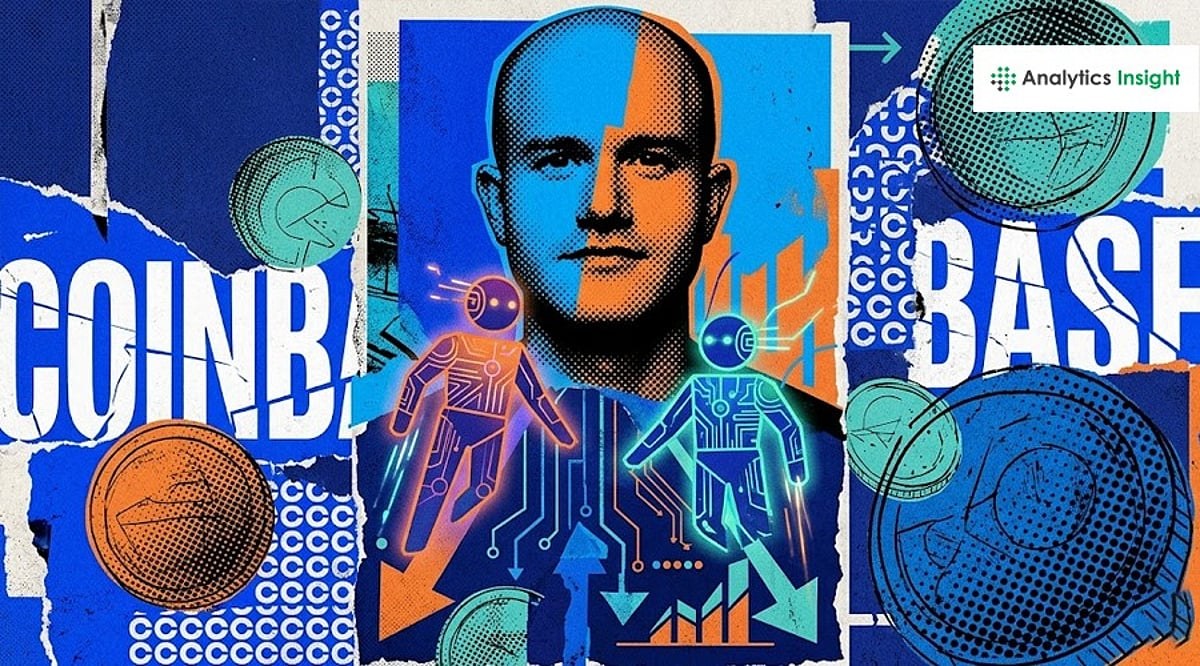
A shift from selling shovels to mining for gold: Coinbase has changed strategy and started testing the agent economy on itself. As reported by Yusuf Islam, CEO Brian Armstrong launched a pilot project of “virtual teammates” deeply integrated into internal processes. These are not just chatbots, but full participants in the operational cycle, acting inside Slack and corporate email. It seems Coinbase decided that the best way to prove the viability of agentic commerce is to have algorithms support real business decisions.
At the center of the experiment is a functional duo with a clear division of roles. The agent “Fred” (named after co-founder Fred Ehrsam) is responsible for strategy: document analysis and long-term planning. Its counterpart “Balaji” (a nod to Balaji Srinivasan) generates “creative chaos,” questioning assumptions and pushing risky experiments. Armstrong emphasizes that in the future, AI identities will become modular and will be determined not by the names of famous personalities, but by the functions they perform. Every employee could eventually create personalized AI agents for specific tasks.
The implementation economics look pragmatic: AI is already part of the RAPIDS decision-making system, where algorithms write input alongside humans. Armstrong’s position here is very firm: according to reports, the company dismissed employees who failed to adopt AI tools into their work without a valid reason. According to the CEO's view, these agents could soon outnumber human employees, a major shift in how work gets organized inside the company.
For business, this means the role of the manager is transforming. Coinbase demonstrates that survival in the industry now depends on the ability to manage a synthetic workforce. If you haven't started defining functional roles for your virtual assistants, you may already be losing speed to algorithmic management, which organizes work directly inside the communication tools employees use every day.