AI · This text was generated with artificial intelligence
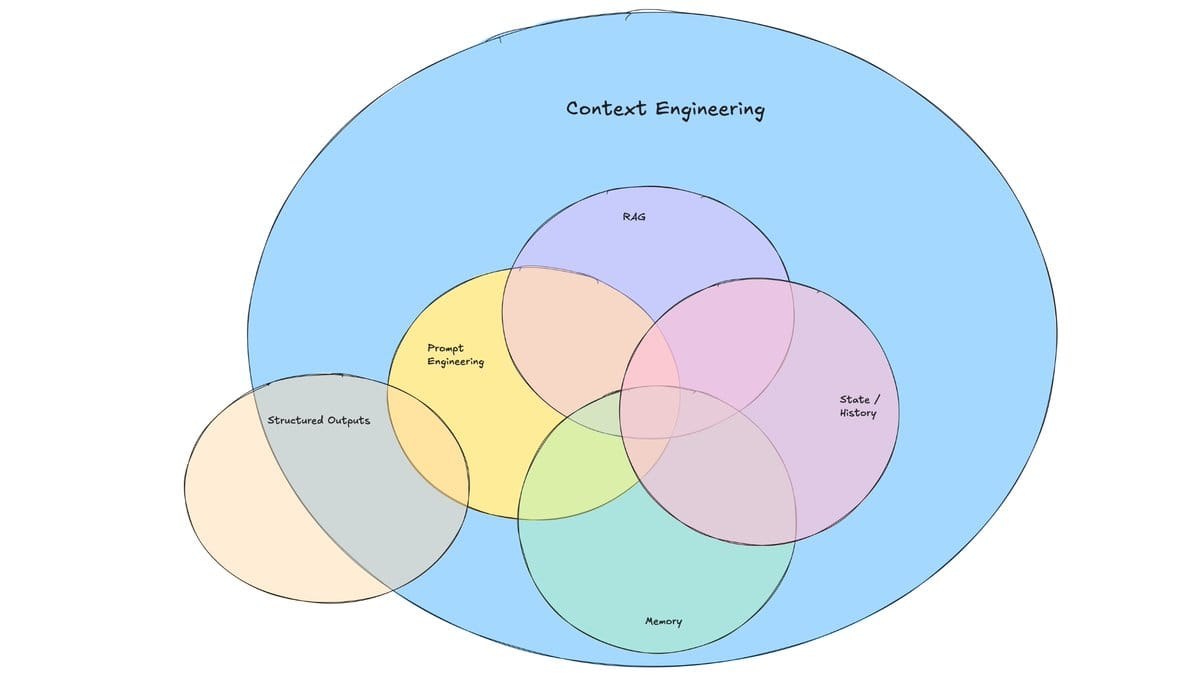
Enterprise AI is finally shedding its obsession with "magic prompts." As production workloads shift from isolated chatbots to autonomous agentic architectures, the engineering bottleneck has moved entirely. Most agent failures do not stem from inherent model deficiencies; they happen because systems feed the model broken, incomplete, or noisy context. Context engineering—the discipline of building dynamic pipelines that deliver the exact data, state graphs, and operational tools required for execution—is replacing prompt tinkering as the real differentiator. This operational framework synthesizes practical insights from industry practitioners including Tobi Lütke, Ankur Goyal, and Walden Yan.
The Root Causes of Agent Failures
When autonomous agents break down in enterprise environments, engineering teams tend to blame the foundation model. That diagnosis is usually wrong. From first principles, large language models fail for only two reasons: either the underlying foundation model lacks the raw reasoning capacity, or the runtime environment failed to supply the necessary context. In practice, the vast majority of agent crashes trace back to flawed instruction formatting, missing runtime parameters, or poorly scoped tool interfaces.
"Most of the time when an agent is not performing reliably the underlying cause is that the appropriate context, instructions and tools have not been communicated to the model."
Because language models cannot infer missing operational context, production architectures must dynamically synthesize context across disparate enterprise systems. Working state must be pulled in real time from system prompts, user payloads, multi-turn history, API responses, and live database queries. When these inputs arrive poorly structured or burdened with irrelevant telemetry, the model hallucinates or executes erroneous API calls simply because its operational grounding was broken upstream.
Moving Beyond Static Prompts to Dynamic Frameworks
Prompt crafting is no longer a serious standalone discipline; it is merely a trivial subset of context engineering. Modern agent infrastructure demands dynamic state management, selective tool exposure, and active working-memory pruning. The technical challenge is no longer about finding clever phrasing, but about structuring live data pipelines so an LLM receives only pristine, task-relevant state at every turn.
For enterprise leadership and engineering executives, this architectural reality reshapes capital allocation and hiring. Chasing magical prompt templates or waiting passively for hyperscalers to release a flawless model is a failing strategy. Sustainable ROI belongs to engineering organizations investing heavily in enterprise data integration, state filtering pipelines, and deterministic retrieval infrastructure.