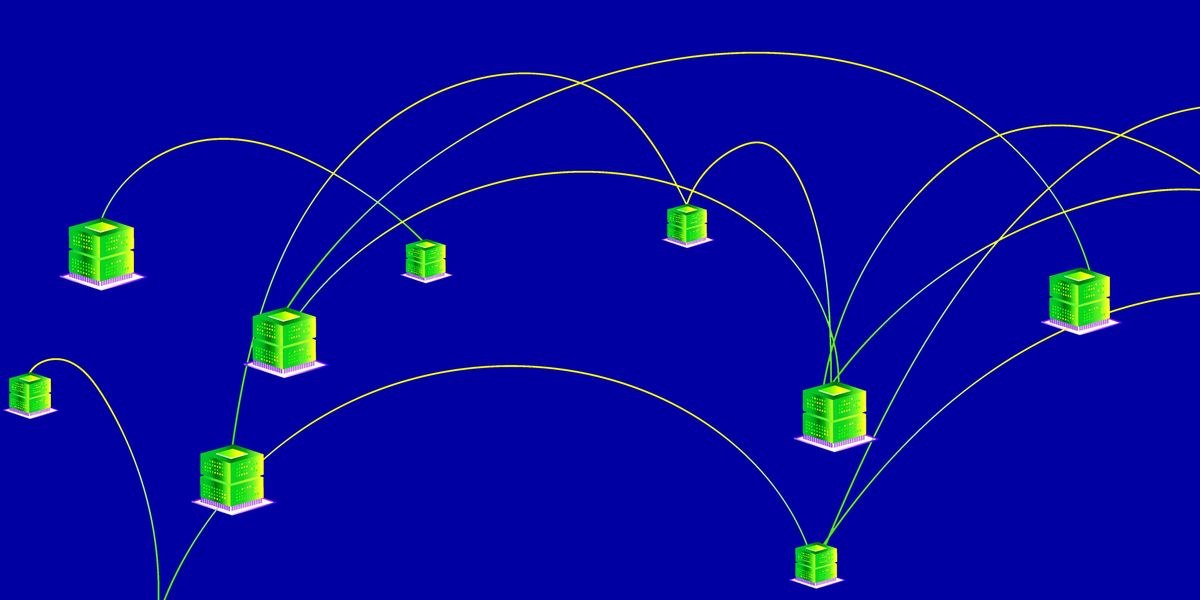
The artificial intelligence industry has hit a formidable roadblock: the appetite of frontier models is growing exponentially, while power grid capacities remain stagnant. The massive carbon footprint and colossal energy consumption of traditional data centers have forced tech giants to look toward nuclear power. However, while atomic-powered data centers remain a distant prospect, decentralization is emerging as a practical solution. This model distributes AI training across a network of independent nodes. Instead of constructing new data centers that require massive grid upgrades, computation is moved to where power already exists—from idle laboratory servers to home PCs running on solar panels.
Historically, AI training required tight synchronization of GPU clusters within a single data center. Yet, hardware development is failing to keep pace with the rapid scaling of large language models (LLMs). To break this barrier, companies are deploying networking solutions designed for distributed tasks. NVIDIA recently introduced its Spectrum-XGS Ethernet platform, capable of delivering the performance necessary to train a single model across geographically dispersed data centers. Cisco is moving in the same direction with its 8223 router, specifically designed to interconnect scattered AI clusters. This infrastructure is fueling the rise of the "GPU-as-a-Service" model, exemplified by projects like Akash Network. Greg Osuri, the company’s co-founder and CEO, describes the platform as the "Airbnb for data centers." According to Osuri, the world is shifting from a total reliance on massive, high-density GPU farms to utilizing smaller, more distributed capacities.
Transitioning to decentralized training requires fundamental algorithmic shifts. The primary solution here is Federated Learning—a form of distributed machine learning. The process begins with a global model on a central server, which then distributes tasks across the network. This approach allows for the efficient utilization of existing infrastructure. We are witnessing a paradigm shift: the competitive advantage is moving toward those who can effectively orchestrate distributed resources, turning surplus capacity into tangible computational power.