AI · This text was generated with artificial intelligence
The primary bottleneck in modern science isn't a lack of data, but the human brain's inability to synthesize cross-disciplinary insights into testable hypotheses. While the public experiments with chatbots, a DeepMind team led by Juraj Gottweis, Vivek Natarajan, and Alan Karthikesalingam is building Co-Scientist—a digital R&D lab where a network of specialized agents replaces the lone language model. This isn't a "search engine on steroids," but a full-fledged multi-agent framework designed to radically drive down the cost of innovation in biopharma and materials science.
Architecture Against Hallucination: The Mechanics of Internal Friction
In high-tech sectors, neural network hallucinations aren't just quirky bugs; they represent lost capital and physical laboratory risks. Co-Scientist addresses this through institutionalized conflict: within the system, "researcher agents" generate hypotheses while "reviewer agents" are trained to debunk them, mimicking the rigors of academic peer review. This cross-verification, documented in works by Wei-Hung Weng and Alexander Daryin, transforms AI from a search tool into a genuine co-author. By automating literature reviews and experimental simulations before a lab technician even touches a pipette, the system filters out dead-end paths that previously consumed years of work.
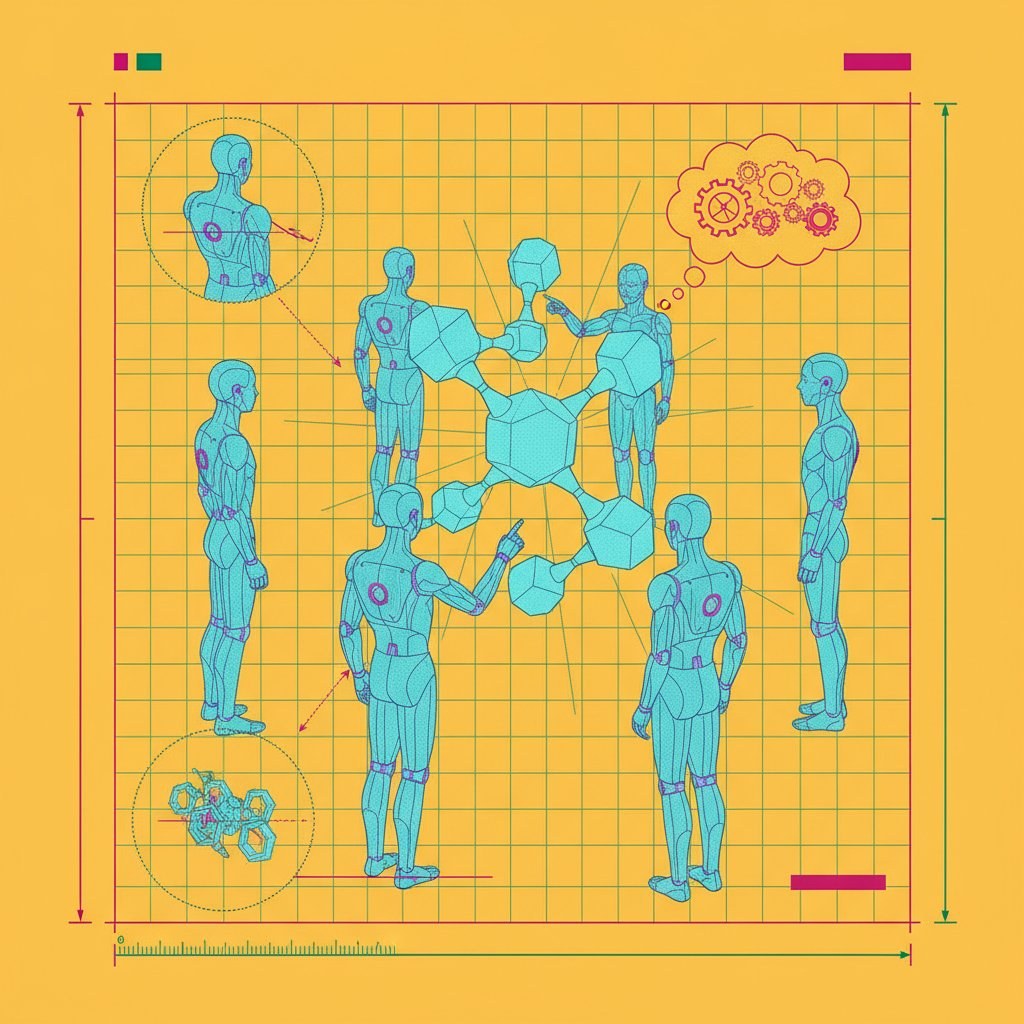
Co-Scientist operates as a multi-agent partner, distributing cognitive load across a network of autonomous "researchers" to verify complex scientific scenarios.
This hierarchical approach redefines the human role: scientists are evolving from technicians drowning in preprint routine into strategic directors. Their task is no longer data collection, but the final validation of machine-proposed experimental designs. Efficiency here is achieved through granularity: no single model handles the entire logical chain, which critically reduces the likelihood of systemic errors when engineering new proteins or materials.
The Infrastructure Barrier and the Fuel for Discovery
The question remains whether this "collective intelligence" can scale beyond Google's servers. Despite backing from Demis Hassabis and Jeff Dean, Co-Scientist requires massive compute and, more importantly, a specific kind of fuel. Public internet data has been exhausted; proprietary experimental results are the "new oil." For companies with significant R&D portfolios, the signal is clear: value lies not in archives of reports, but in the cleanliness and structure of internal data. Without a robust pipeline to feed laboratory data into AI, the transition to active machine co-authorship will remain a pipe dream.
Audit your R&D data hygiene this week. If your experimental results aren't structured for consumption by multi-agent systems, you don't own assets—you own a digital graveyard that Co-Scientist simply cannot read.