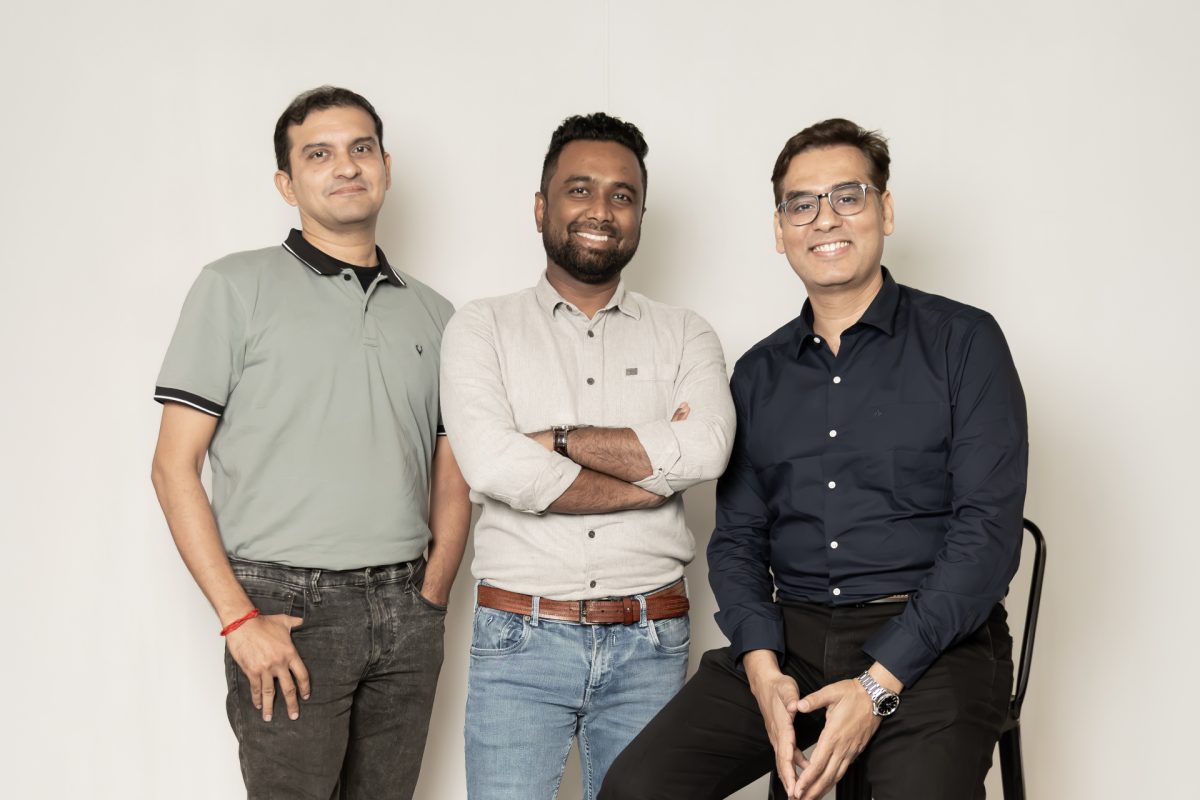
San Francisco-based startup Dreamteam has raised $53 million in seed and Series A funding led by Together Fund and Accel, with participation from Premji Invest, to challenge established software providers like Salesforce and HubSpot with an AI-native CRM platform. Founded in 2025 by former Freshworks executives Anand Venkatraman, Senthil Kanthaswamy, and Ramesh Parthasarathy, the company targets enterprise inefficiencies created by traditional data entry. Traditional systems force sales representatives to record customer interactions and manage deal details by hand, leaving corporate leadership with incomplete records and unverified pipeline visibility.
"In all these years, I have never come across an instance where I could click a button and get a forecast from the CRM."
Anand Venkatraman, co-founder and chief executive officer of Dreamteam, noted that over 25 years working in enterprise software at companies such as Salesforce and Freshworks, manual maintenance consistently prevented executives from generating reliable business forecasts. To eliminate that overhead, the startup developed an underlying architecture called the Company Brain. Functioning as a shared virtual memory, it ingests context directly from communication channels, meetings, and emails. Four built-in autonomous AI agents process this repository to conduct prospect research, write follow-up messages, identify deal risks, and set up workflow parameters, while keeping final messaging approvals under human sales rep control.
Early Displacement and Platform Acquisition
Dreamteam has signed up more than 100 paying customers across 13 countries within its first three months of active selling. The customer base includes deployments where the software replaced Salesforce at DMS Health and HubSpot across other commercial clients. Media streaming company Plex selected Dreamteam for its advertising sales operations over HubSpot and alternative AI offerings. Scott Olechowski, co-founder and chief product officer at Plex, cited the platform's direct integration with the company's existing artificial intelligence software as a decisive factor.
Corporate incumbents face acute engineering challenges when attempting to redesign operational systems around autonomous pipelines. On 2026-06-15, Salesforce shelled out $3.6 billion for the Fin platform, demonstrating that enterprise vendors often choose to buy working expertise rather than wait for internal engineering teams to resolve data integration hurdles and model hallucinations (we covered this on 15.06). This dynamic reflects an acute architectural window. Senthil Kanthaswamy, who spent over nine years at Freshworks before co-founding Dreamteam, argues that emerging challengers have two to five years to capture enterprise ground before legacy CRM platforms can successfully complete their underlying technical adaptations.
"We see this as an electric-car moment for systems of record."
As Anand Venkatraman explained, legacy database design cannot adapt to autonomous workflows simply by layering generative add-ons onto older tabular schemas; the transition demands completely overhauled systems of record. Dreamteam currently employs more than 35 people, splitting its workforce between engineering facilities in Chennai and go-to-market teams in the United States. While the founders declined to disclose their current revenue or valuation, Senthil Kanthaswamy stated the company aims to reach eight figures in annual revenue by the end of 2027.
The Platform Integration Question
Whether autonomous software can entirely replace entrenched enterprise infrastructure remains an open structural question. Venture capital firm Andreessen Horowitz argued that legacy CRMs will likely retain their status as underlying data repositories, predicting that a new tier of AI-driven tools will capture business value primarily by operating on top of existing databases rather than eliminating them entirely. Dreamteam's counter-strategy focuses on broadening its footprint across onboarding, support, and retention workflows, deploying a natural-language module called Magic Apps that lets users construct custom internal applications without writing software code.
Review existing CRM renewal agreements this week to isolate the exact cost allocated per seat for basic contact record keeping versus external intelligence software, and benchmark sales team weekly time expenditures spent on manual pipeline hygiene against automated ingestion tools.
For comparison
Four built-in autonomous agents with human sign-off on outgoing messages mark where enterprise trust in sales automation actually ends. While Salesforce spends billions acquiring outside expertise like Fin, this Freshworks alumni startup argues that legacy relational databases cannot handle autonomous pipelines without a complete rebuild. For legacy vendors, retrofitting systems of record presents a painful engineering lag of two to five years.