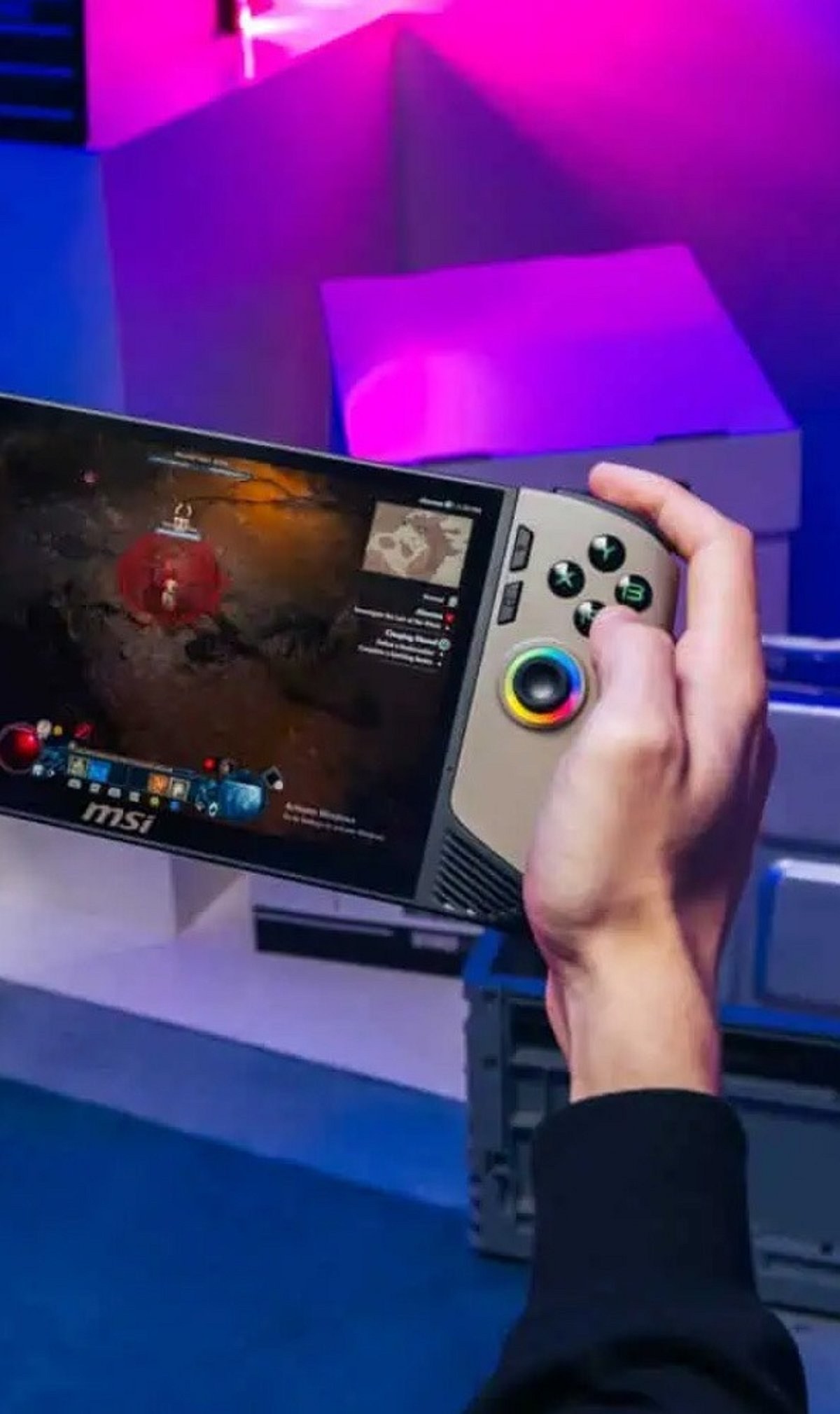
While theorists debate the merits of sovereign AI, the consumer hardware market is quietly building the foundation for local neural network execution. The announcement of the ASUS ROG Ally X (2025), powered by the AMD Ryzen AI Z2 Extreme chip with a dedicated Neural Processing Unit (NPU), is far more than a gamer’s plaything. It is a critical technical bellwether for the entire market. As Analytics Insight’s Simran Mishra notes, integrating NPUs isn't about aesthetics; it’s a pragmatic necessity for efficient resource management.
By offloading upscaling tasks to a specialized neurochip, these devices significantly boost image quality without overloading the primary system. In business terms, this translates directly to optimizing the Total Cost of Ownership (TCO) for any mobile high-performance system. The next generation of consoles from Microsoft, Sony, and Nintendo will inevitably follow this path, evolving from traditional compute nodes into adaptive, real-time systems. Using AI-driven denoising for ray tracing, for instance, allows hardware to maintain high-fidelity graphics while drastically reducing system strain.
Essentially, the gaming industry is currently subsidizing the creation of a global Edge AI infrastructure. Consider non-player characters (NPCs) that learn from user behavior: they are more than entertainment—they are a testing ground for autonomous agents. If a model can adapt to a human in real time without latency or cloud pings, it becomes viable for any corporate scenario where data privacy and autonomy are paramount.
However, this architectural optimism faces a harsh macroeconomic reality. Analysts point to obvious hurdles: pushing AI chips into the mass market inevitably inflates production costs against the perennial threat of semiconductor shortages. We are witnessing a clear cognitive dissonance: the industry promises seamless, independent Edge AI, yet the physical hardware remains tethered to volatile supply chains and the very data centers these chips were meant to replace. Until local compute power becomes cheaper than renting cloud resources, this "revolution" will remain an expensive experiment in a gamer’s pocket.