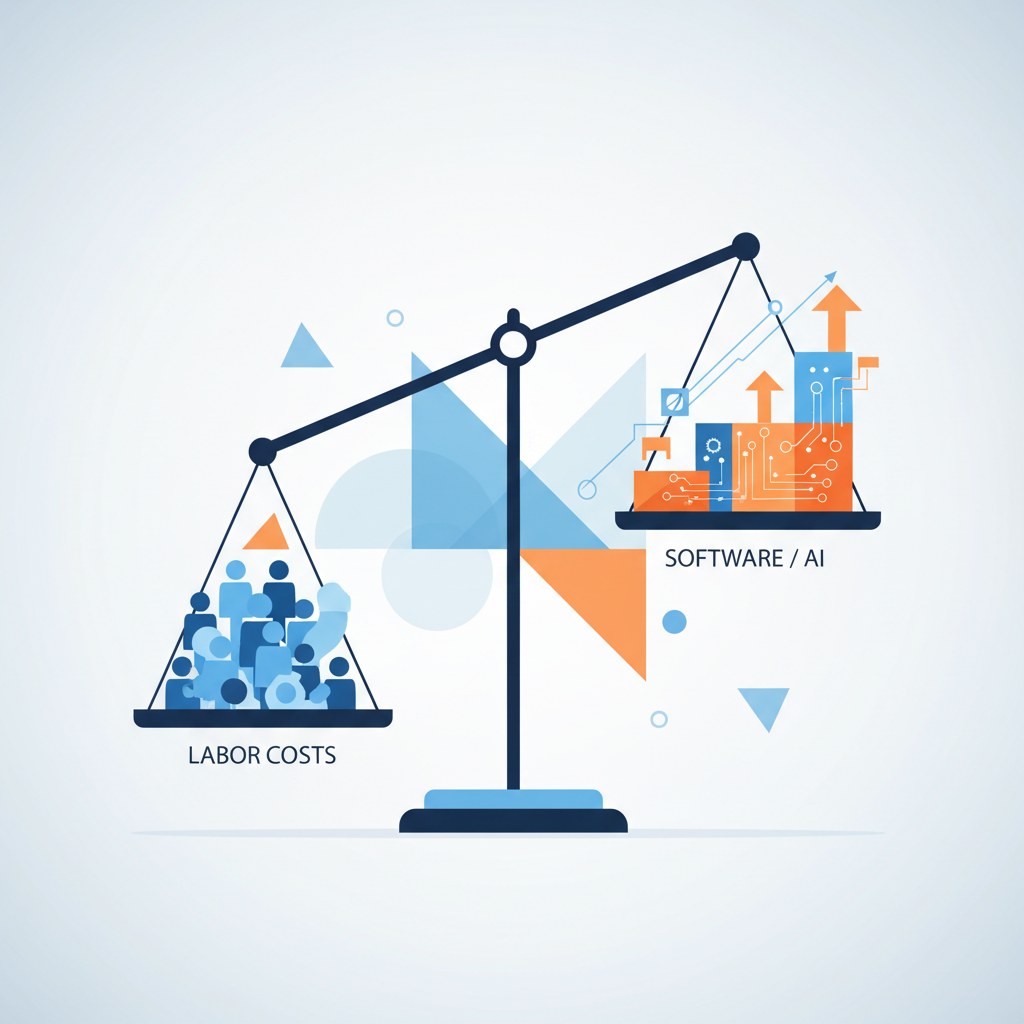
The classic SaaS model is facing an existential crisis. Vendors are no longer fighting for the scraps of your IT budget; they have set their sights on your total cost of labor. Venture capitalist Tom Tunguz, who is tracking this tectonic shift, notes that the old sales pitch of "how much do you spend on software in this category?" is being replaced by a cold calculation of the ratio between human and algorithmic costs.
Tunguz’s new framework forces executives to put their cards on the table: how much you spend on software, what your payroll budget looks like, and how you see that balance shifting over the next three years. This isn't just about buying another tool; it is an aggressive move by AI providers to capture the value created when headcounts are reduced. When a vendor pivots the conversation to cost ratios, they are effectively proposing a structural overhaul of your balance sheet—shifting expenses from bloated human OPEX into scalable, autonomous efficiency.
The biggest opportunities lie where the gap between software costs and labor costs is most absurd. Data from Attivo Partners and RepVue show that sales departments currently operate at a 10:1 ratio. The average sales specialist costs a company between $140,000 and $190,000, yet they use only $12,000 to $18,000 worth of software. In engineering, the disparity is even sharper: with a median salary of $191,000, tool spend ranges from just $7,000 to $20,000. This creates a staggering 25:1 ratio. As Tunguz points out, if AI can collapse the human side of this equation, the current software budget becomes a floor for pricing, not a ceiling.
Customer support is the first department on the chopping block. According to TSIA and LiveChatAI, labor consumes 60–70% of support budgets. MatrixFlows benchmarks confirm that software currently accounts for only 15–20% of spending in this area, but AI vendors are already targeting a 1:1 ratio. Essentially, they plan to claim half of the entire departmental budget by replacing human agents with autonomous systems. Meanwhile, the Anthropic Economic Index highlights that AI task coverage in customer service has reached a record 70%, while programmers and mathematicians sit at a more modest 36%.
For leadership, this shift serves as the ultimate filter to distinguish genuine transformation from legacy software with a chatbot bolted on. If a vendor cannot clearly explain how they will move your engineering ratio from 25:1 toward 5:1, they are selling a "productivity toy" rather than a structural asset. Audit the numbers for your three largest departments. This quarter, demand that every AI vendor demonstrate how their pricing is tied to a percentage of realized payroll savings, rather than simply issuing a flat invoice for licenses.