In just three years, Shenzhen-based startup Even Realities has evolved from a "garage project" by Apple alumni into a unicorn with a $1 billion valuation. Its $150 million Series B round wasn't just closed by venture funds, but by industry heavyweights Meituan and Tencent. This isn't merely another speculative bet on a "bright future"; it is a clear signal that Chinese Big Tech is launching a massive expansion into the AI hardware layer, preparing a symmetrical response to the activities of Meta and Snap.
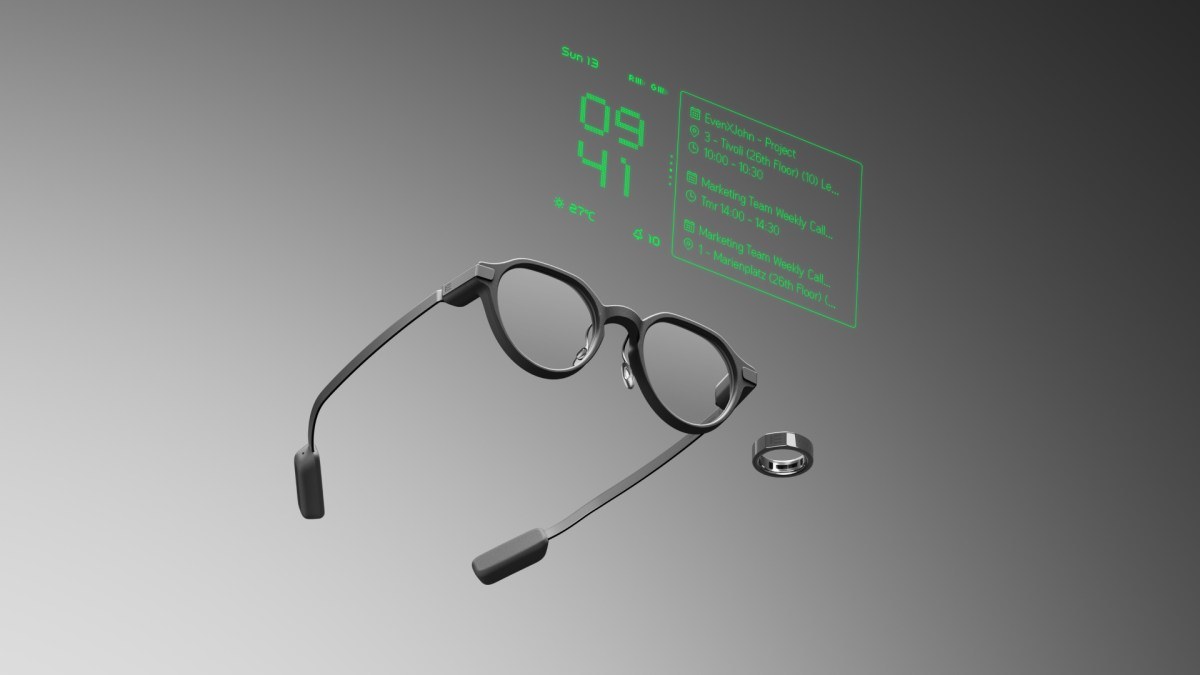
Even Realities’ strategy differs radically from the Western mainstream. While Mark Zuckerberg tries to turn users' faces into walking video cameras, the Shenzhen team has intentionally ditched cameras in favor of privacy and professional utility. Their flagship, the Even G2, is primarily a tool rather than a toy for social media stories.
Meituan’s investment looks highly pragmatic: the company plans to integrate the glasses into its delivery services, turning the gadget into a navigator and terminal for frontline employees.
Instead of capturing content, Even Realities glasses focus on displaying data via waveguide displays while maintaining the form factor of luxury eyewear.
Key highlights of their approach and technology:
Hardware Sovereignty: Tencent's involvement underscores Beijing's desire to build an independent ecosystem of wearables with a vertically integrated stack of software and hardware. Scaling Up: The company’s workforce has expanded to 400 employees, and sales of the first batch exceeded the projected 10,000 units. Business Applications: Built-in AI assistants are used for real-time translation and transcription of highly specialized jargon. Privacy by Design: Eliminating cameras allows the company to bypass regulatory hurdles and ethical debates that hamper their Western counterparts.
Interestingly, Even Realities is playing the long game, aligning with European data protection standards and utilizing an external ring controller, the Even R1, for navigation. While Western tech giants debate the ethics of surveillance, Chinese players are building a utilitarian tool ready for mass enterprise adoption today.